
H
Great company come out gave a good price and done the job straight away highly reccomend chris great guy
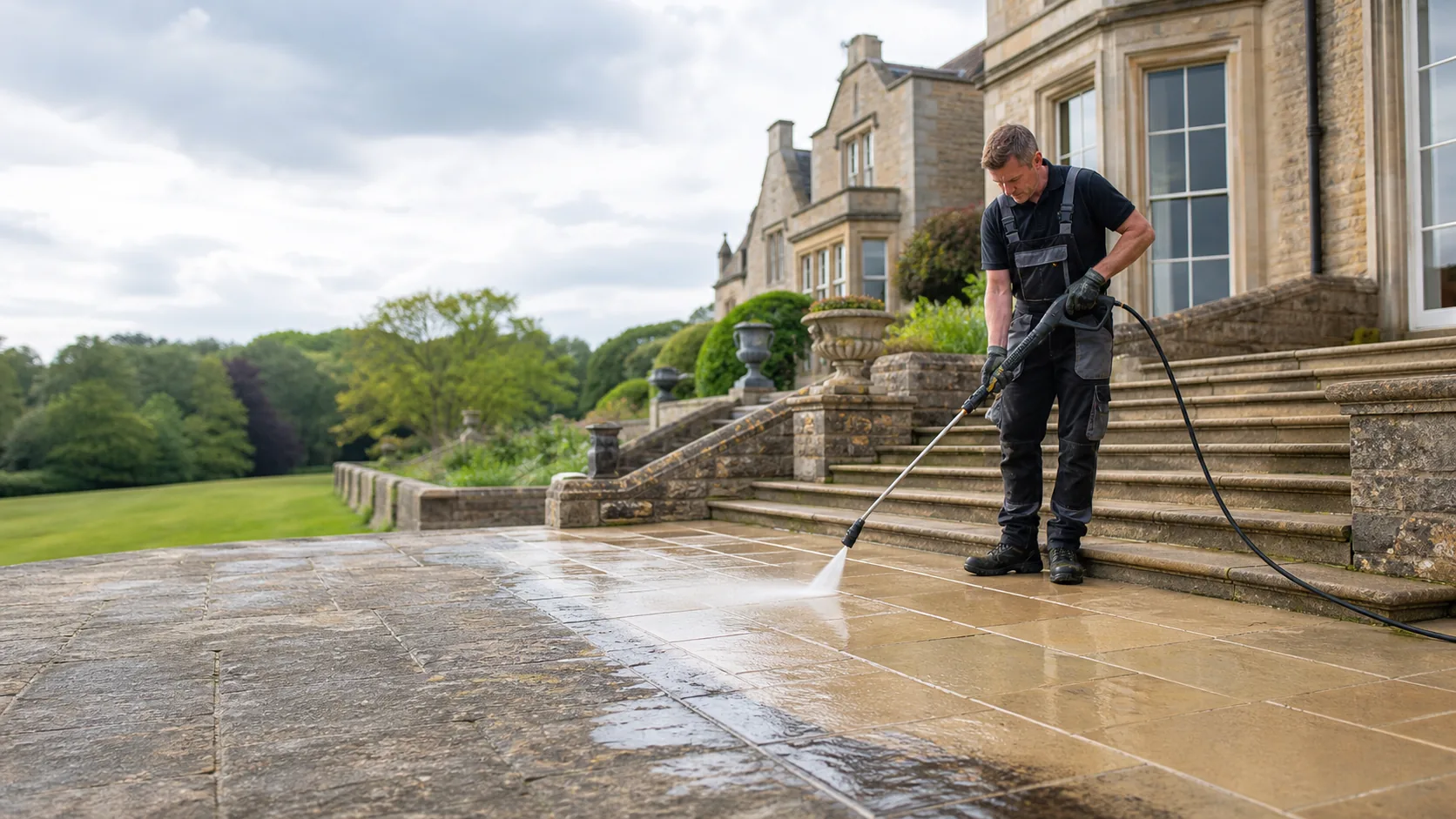
The single most expensive mistake on natural stone is using the product that worked on somebody else stone. Sandstone and limestone want opposite things.
Step 1 of 3 · no obligation, reply the same day
Everything about the method follows from what the stone is, so that is where we start:
Acid and calcium carbonate react. On limestone that reaction is not cleaning, it is dissolving: the surface goes dull, slightly rough, and often lighter in patches where the product sat. There is no product that puts it back. This is why a general purpose "patio cleaner" that did a lovely job on a neighbour sandstone can wreck a limestone terrace in one application.
The stubborn black dots on sandstone are lichen, biologically rooted into the surface rather than sitting on it. Pressure takes off the top of each spot and leaves the root, so it returns within months, and the pressure needed to actually cut them out takes stone with it. Black spot needs a specific treatment left to work over time. Some of it clears in days, the rest fades over following weeks, and we say that plainly rather than promising a same-day result we cannot deliver.
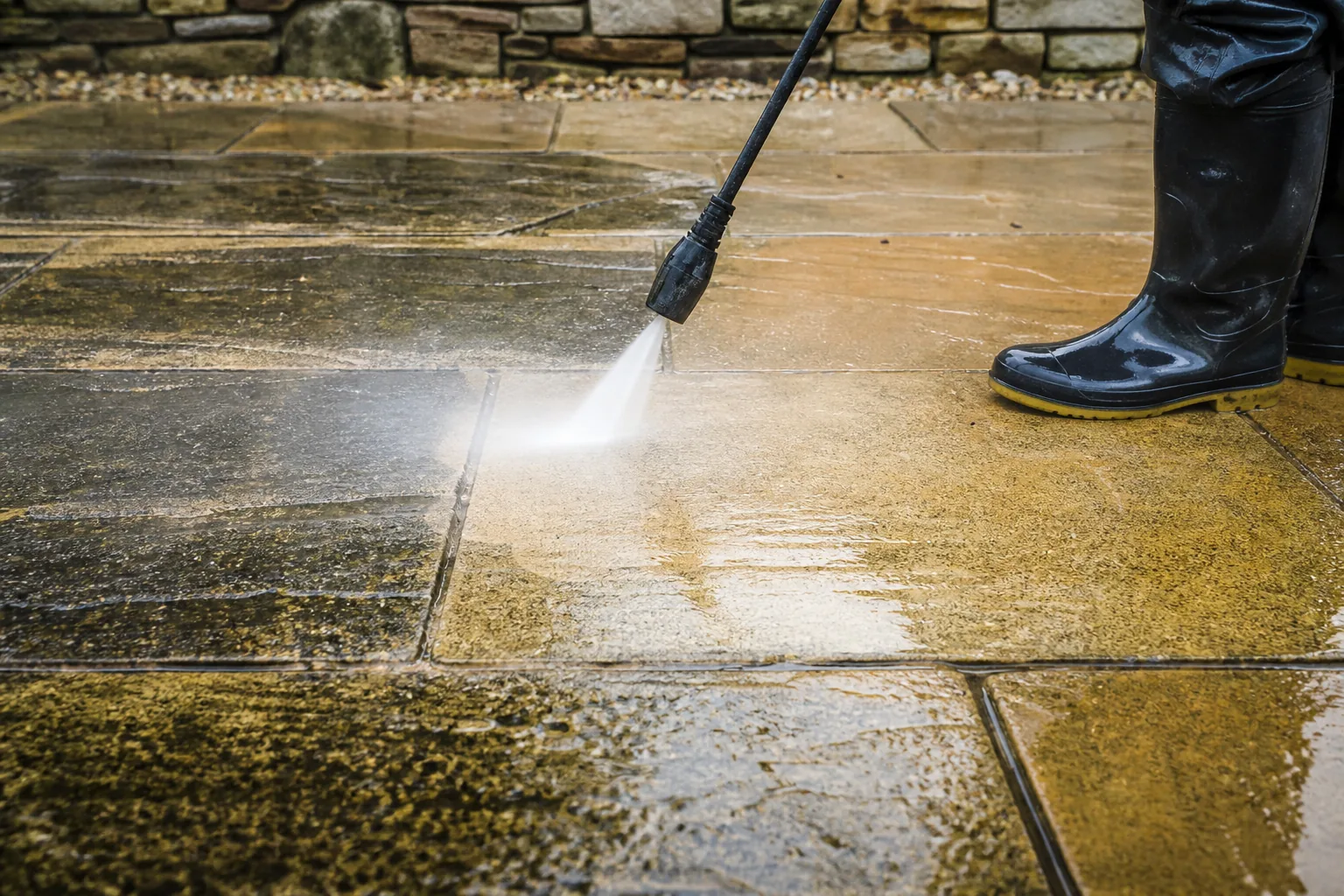
Soft wash by default. The stone is pre-wetted so nothing can be drawn deep, treated with the chemistry appropriate to that specific stone, given time to work, then rinsed at low pressure with a wide fan or a rotary head set to float rather than bite. Where a stone is sound and heavily soiled we may use hot water, which does more work at a given pressure and therefore lets us use less of it.
Joints get checked first. Old flags on lime mortar lose their pointing before the stone shows any distress, and washing out the joints is how a clean turns into a repair.
An impregnating sealer slows staining and makes the next clean easier. It has to be breathable, and the stone has to be genuinely dry before it goes on, which in Cardiff usually means a return visit rather than the same afternoon. We will not seal damp stone to save a trip, because trapping moisture under a sealer causes a cloudy bloom that is harder to fix than the original dirt.
Yes, but not with anything acidic. Limestone is calcium carbonate, so acid dissolves the surface and leaves it dull and etched permanently. We use acid free chemistry and low pressure on it.
Lichen, rooted into the stone rather than sitting on it. That is why pressure washing removes the top of each spot and it comes back. It needs a specific treatment and time.
Some lifts within days of treatment and the rest usually fades over the following weeks. Anyone promising every spot gone the same afternoon is either using enough pressure to damage the stone or is going to disappoint you.
It will return it towards its original colour, which can be a surprise if it has been dark for years. What it should not do is bleach or etch it, and that is what the wrong chemistry does.
On hard, sound stone with good joints, yes, set to float across the surface. On soft or worn sandstone and on limestone we would not use one.
It slows staining and makes future cleans easier, as long as the sealer is breathable and the stone is properly dry first. In Cardiff that usually means we come back on a separate dry day.
Yes. Steps, thresholds, window heads, sills and stone walls are all regular work, and steps in particular are worth doing because lichen on stone treads is slippery.
It means more than one method on one job, which is fine as long as whoever is doing it notices. It is a common reason mixed terraces end up with one section etched.
Great company come out gave a good price and done the job straight away highly reccomend chris great guy

Very reliable, showed up on time to give a quote, and started work straight away! Wanted the back done after the front. Stunning work on my front driveway and porch with the power washer, simply removed all the algae on my walls too that the pressure washer team we had last year couldn't do.

Hard working and reliable pressure washing company! Completely transformed my paving stones and patio

Very happy with the service provided from pressure washing Cardiff, also very friendly and professional many thanks, Simon
What a good quality service have provided done a superb job of pressure washing my driveway + house. Many thanks, Shane
My husband and I are very happy with the work done at our house, to our gutters, our pool area and other concrete areas around our house. You were a pleasure to deal with and I will definitely use your services again!
Pressure Washing Cardiff did a fabulous job: our concrete driveway and retaining walls look like new! What a delight to have a tradesman visit who takes pride in his work and does a thorough job.
These guys are experts and were able to give us a great quote for a complete exterior makeover. Power washing, gutter cleaning, window cleaning as well as pressure washing for our patio and driveway. Thank you so much!!
Send a photo and a rough size and we will come back with a price, usually the same day.
20% off enquiries via WhatsApp