
H
Great company come out gave a good price and done the job straight away highly reccomend chris great guy
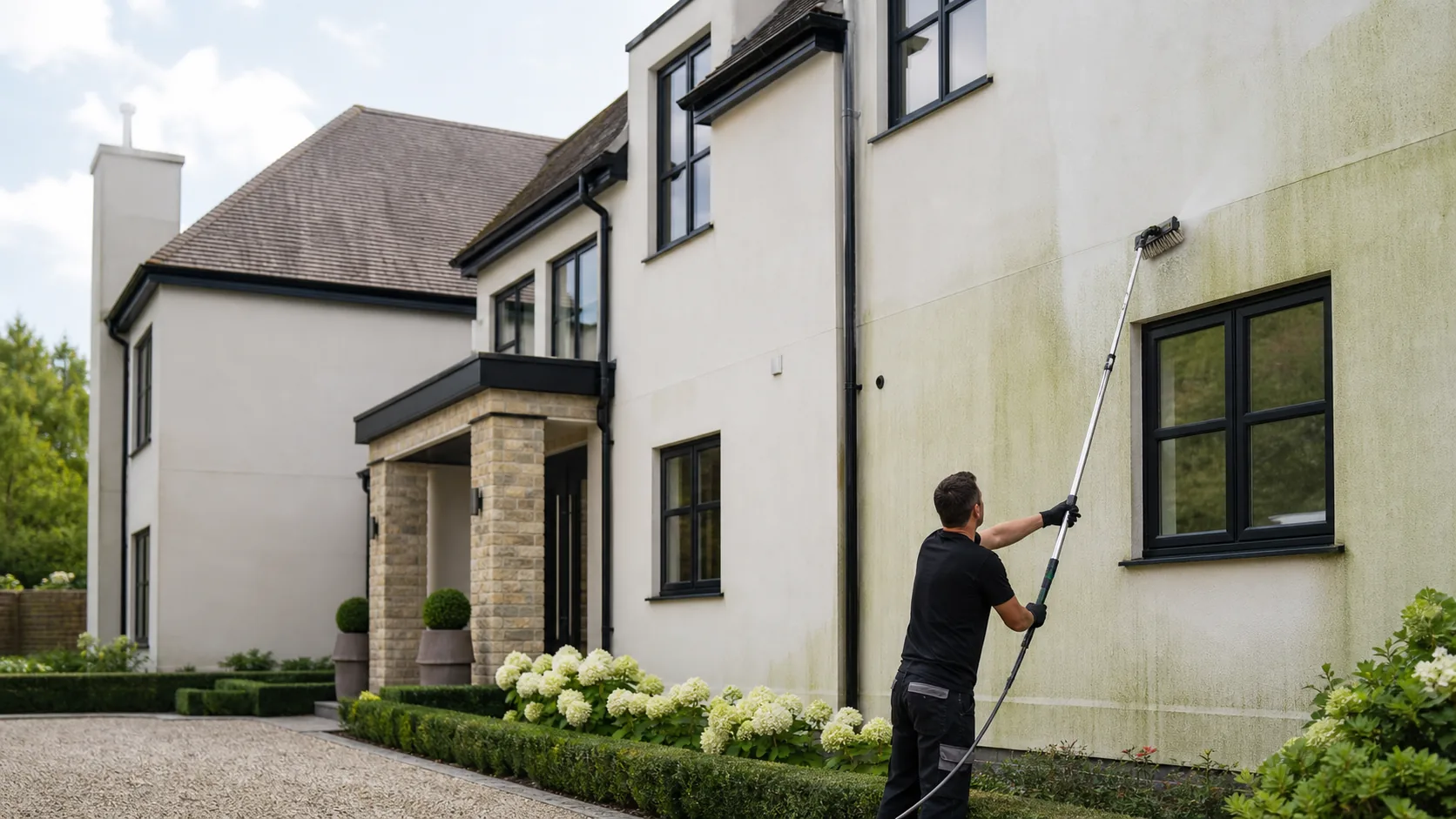
Softwashing in Cardiff works on one principle: the chemistry does the cleaning, not the pressure. A soft wash puts a biocide on the surface at roughly garden hose pressure, leaves it to dwell and kills the algae, lichen and moss where they sit. On render, roof tiles and painted walls it is the only safe way to clean.

Step 1 of 3 · no obligation, reply the same day
The same care and clear communication, whether it is a single path or a whole house.
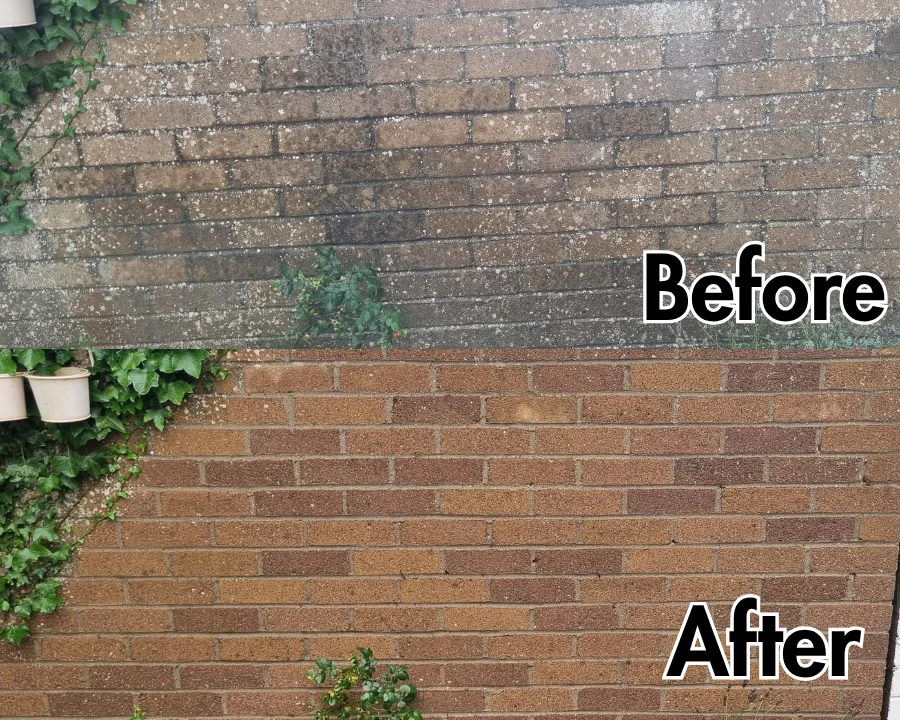
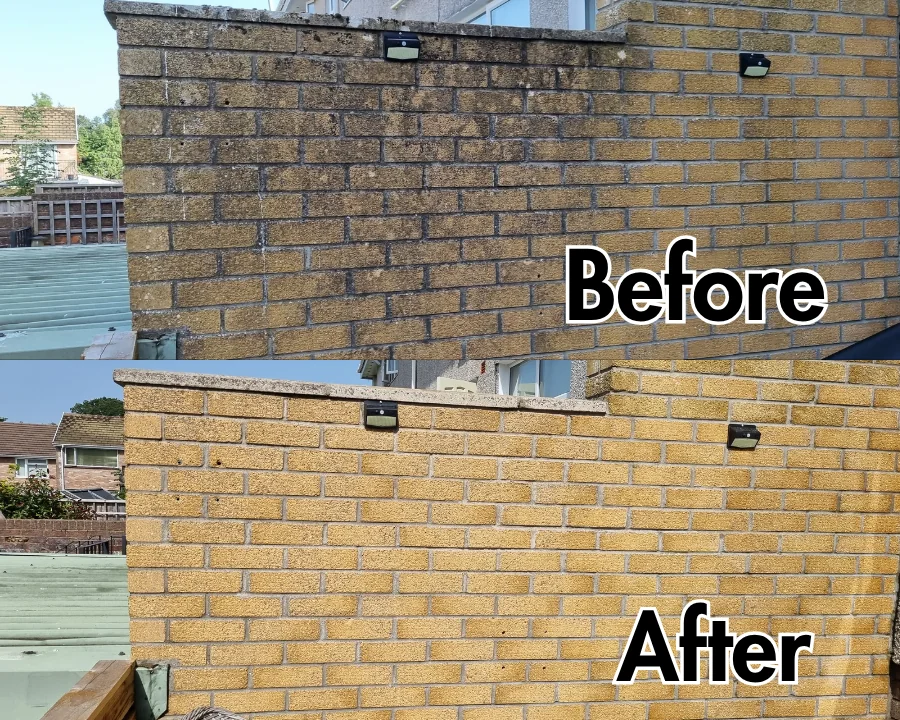
A pressure washer moves dirt by force. A soft wash kills what is growing and lets the surface release it. The pump on our soft wash gear sits between about 100 and 500 psi at the nozzle, against the 2,000 psi and upwards a rotary surface cleaner runs at on a concrete driveway. Standing in front of the fan feels like a strong garden hose.
The mix does the work. We blend a sodium hypochlorite cleaner or a quaternary ammonium biocide with a surfactant so it clings to a vertical surface instead of running straight off. It goes on elevation by elevation, bottom up, and then it sits. Nothing is scrubbed, nothing is blasted, and no water is driven into a joint, under a tile or behind a board.
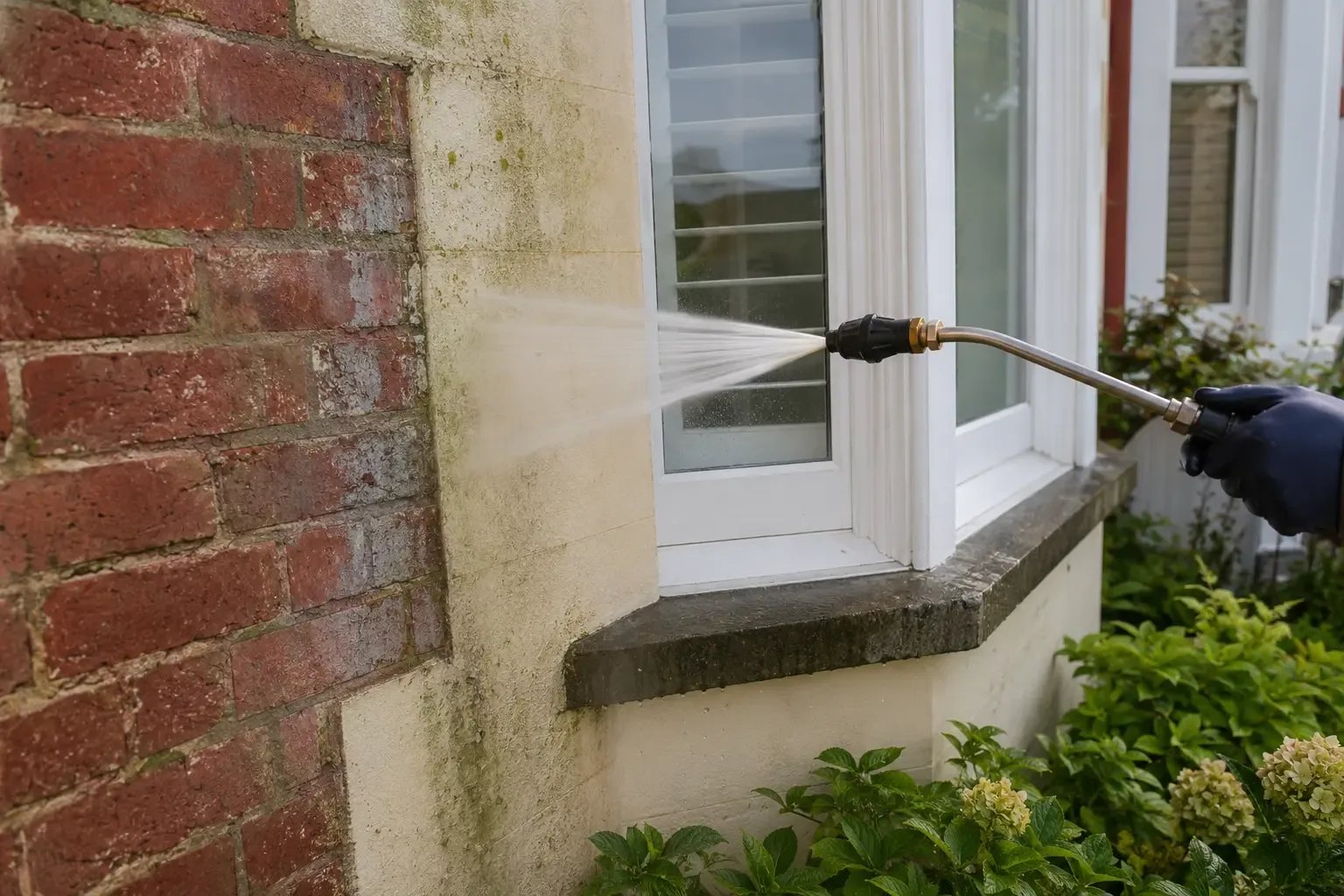
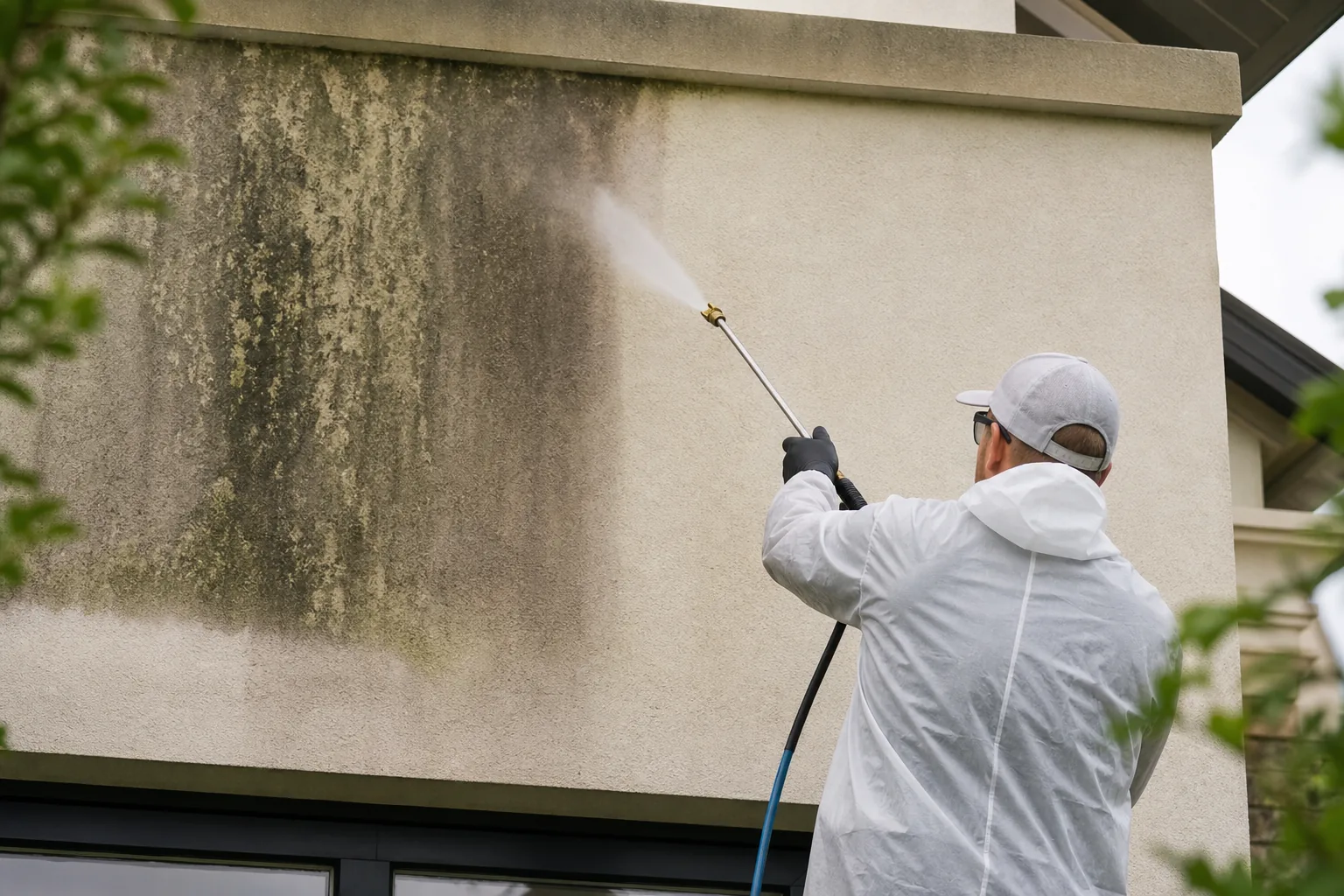
Algae, lichen and moss are not dirt sitting on top of a wall. They anchor into it. Lichen pushes fine strands down into the pores of a concrete roof tile or a textured render, which is why scraping it off leaves a pale ghost behind and why the colour comes back the following winter. A biocide gets into the surface and kills the organism outright, so there is nothing left to grow on from.
Dwell time is what allows that to happen. Ten to twenty minutes on most surfaces, longer on heavy lichen, and on some jobs the treatment is deliberately left on rather than rinsed. That is not a corner being cut. A leave on biocide keeps working after we have packed up, and the surface carries on lightening for weeks as the dead growth weathers off in the rain.
The payoff is regrowth, or the lack of it. Jet washing a north-facing render wall takes the green off and leaves every spore sitting in the pores, so it is back within a season or two. A soft wash kills at the root, so the wall stays clean for years rather than months. That is the whole argument for treating porous vertical surfaces this way.
Rainfall does most of the damage here. Wet westerly weather off the Bristol Channel keeps render damp for days at a time, and the growth follows the water. Green algae take the shaded north-facing and east-facing elevations first. Orange or rust coloured staining on a west-facing wall is usually Trentepohlia, an orange pigmented algae that gets mistaken for rust bleeding out of a fixing. Black spotting on concrete roof tiles is lichen, and the moss on a north pitch or in a gutter almost always starts under overhanging trees in the older, leafier streets around Penylan, Lisvane and Llandaff.
Which of those you have changes the mix and the dwell, not the method. Heavy lichen on a tile roof needs longer contact and often a second look a few weeks later, once the first application has weathered. Thick moss gets brushed or scraped off dry before anything is applied, because biocide cannot reach the tile through a wet sponge of it. On a pebbledash wall the growth sits deep in the aggregate, so the mix has to be worked in and left rather than flashed over.
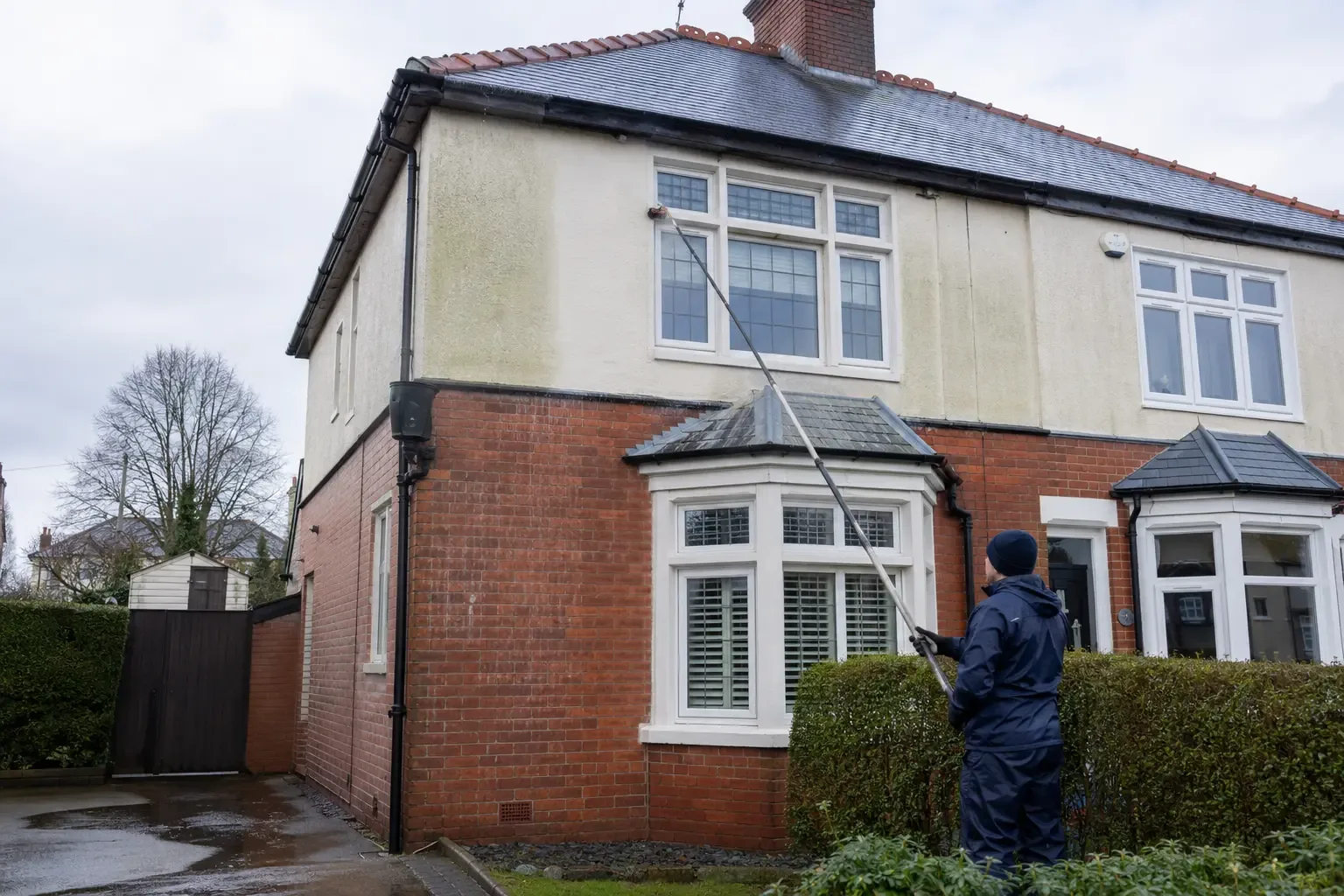
If a surface is porous, painted, coated or fixed with something water can get behind, it needs a soft wash. These are the ones we will not put a pressure washer near.
Hard, flat and unpainted still takes pressure, and we still use it. Block paving, concrete, flagstones and most patios come up faster and more evenly with a rotary surface cleaner, and tarmac gets a lower setting and a wider fan so the bitumen stays where it is. Plenty of Cardiff jobs are both. We soft wash the render, roof and uPVC, then jet wash the driveway and patio on the same visit and put kiln dried sand back into the block paving joints before we leave.
At the nozzle the solution is dilute, and it is more dilute again by the time it reaches the ground after a rinse. That does not make it harmless. Neat product will bleach a lawn, mark a car and pull the colour out of block paving, so the protection at the start matters as much as the wash itself.
Most of the application is done from the ground on a telescopic lance, which keeps ladders off soft borders and off your gutter line. Pets and washing stay indoors while we spray. We stop if the wind starts carrying the fan over a boundary, and we flood the ground below the elevation with clean water before, during and after. A surface water drain sitting directly under the work gets covered or diverted. Surface water drains in Cardiff run to the Taff, the Ely and the bay rather than to a treatment works, so nothing concentrated goes down one.
Prices move too much for a single figure, so here is the honest Cardiff range. A soft wash on a standard three bedroom semi usually falls between £250 and £450. A large detached house rendered on all four elevations is more often £450 to £700. Roof soft washing with moss removal included generally lands between £450 and £1,200 depending on pitch, size and access. Treat those as guidance rather than quotes.
What moves the number is height and access, how many elevations there are, how heavy the growth is, whether a conservatory or a tight side passage is in the way, and whether you want the gutters, fascias and driveway done at the same time. Bundling beats three separate visits on price every time. Quotes are free and we would rather look at the property than guess from a postcode.
On a Cardiff render wall in a normal position, two to four years is typical before another treatment is worth doing. Roofs often hold longer, four years and up, because nothing alive is left in the tile. North-facing elevations, walls under tree cover and anything shaded by the house next door come back first. A wall that sits damp all winter behind an overgrown hedge will always green up before the rest of the house, and cutting that hedge back buys you more time than another clean will.
We cover the whole city, from the painted render on the terraces in Roath, Canton, Pontcanna and Cathays to the pebbledash semis in Whitchurch, Rhiwbina and Llanishen and the newer thin coat render and cladding out at Lisvane, Cyncoed and Radyr. Grangetown, Splott, Rumney, Llanrumney, Llandaff and Penylan are regular ground for us, and we work in Barry, Newport and across South Wales. We have been cleaning exteriors here since 2019 and hold a 5.0 rating from five Google reviews.
Call 07576 128903 or email Liamdunn2406@outlook.com to get a soft washing quote booked in. We answer Monday to Sunday, 7:00 to 21:30, and we are based in Cardiff. Tell us the surface, roughly how big it is and which way the wall faces, and we can usually give you a sensible range before we visit.
It depends on the size of the property, how many elevations there are, the height, the access and how heavy the growth is. As a guide, a three bedroom semi is usually around £250 to £450, a large rendered detached house £450 to £700, and roof soft washing £450 to £1,200. Those are indicative ranges rather than quotes. A three storey elevation, a conservatory in the way or a wall that needs a second pass will move the figure. We quote free after looking at the property, and putting gutters or a driveway into the same visit costs less than booking them separately.
No, and that is the reason the method exists. The pump runs at roughly garden hose pressure, so nothing is forced into a joint, under a tile or behind a board. The damage you see on render and roofs comes from high pressure, which strips the topcoat off thin coat render, takes the granular face off concrete tiles and drives water where it should never go. We test a small area first on anything painted, coated or unusual, and coated surfaces, glass and painted metal are rinsed straight away so no product sits on them.
Most house washes are a single day. A terraced or semi detached house is typically 3 to 5 hours including protection, application, dwell time and rinsing. A large detached property rendered on all sides is usually a full day. Roof soft washing takes longer, commonly half a day to two days depending on pitch, size, access and how much moss has to be cleared off before treatment. Dwell time is a fixed part of the job and cannot be rushed, so a soft wash that looks slow from the window usually is not.
On render walls in Cardiff, two to four years is normal before another treatment is worth doing. Roofs often hold four years or more. Shaded and north-facing elevations, walls under trees and anything sitting damp through the winter come back faster than a sunny south-facing front. It lasts longer than pressure washing the same wall because the biocide kills the growth at the root rather than removing what is visible, so nothing is left in the surface waiting to regrow the moment it rains again.
Not for the whole job, but it helps if someone is there at the start. We need access to an outside tap and a look round for anything that matters: a pond, a prized border, a window that does not seal properly, a car that needs moving. After that you are free to go out. Windows and doors need to stay shut while we are spraying and pets need to be indoors. If nobody can be in at all, tell us in advance and we can usually arrange access and leave the property secure.
Planting within reach of the spray is soaked with clean water before we start and rinsed again afterwards, and anything delicate is sheeted. Wet leaves do not take up the solution, dry ones do, which is why the pre soak matters. Pets and washing stay indoors while we apply. On the ground we dilute heavily as we go, and a surface water drain sitting directly under the work is covered or diverted. Surface water drains in Cardiff discharge to the rivers and the bay, so nothing concentrated goes into one.
It works all year in Cardiff. The ideal conditions are a dry, still day with no heavy rain forecast for a couple of hours after application, and temperatures above freezing. Strong direct sun on a hot elevation is unhelpful, because the solution dries before it has dwelled properly. Autumn and early spring are the busiest periods, because that is when green growth is most obvious on a wall. Winter is perfectly workable in a normal Cardiff week and often has better availability if you are not in a hurry.
Pressure washing uses water at force, typically 2,000 psi and upwards, to lift dirt off hard surfaces like block paving, concrete and flagstones. Soft washing uses low pressure and a biocide, and the chemistry does the work. The rule of thumb is simple. Horizontal and hard takes pressure, while vertical, porous, painted or coated takes a soft wash. Most jobs we do are a mix of the two. We soft wash the render, roof, gutters and uPVC on a house, then jet wash the driveway and patio on the same visit.
Great company come out gave a good price and done the job straight away highly reccomend chris great guy

Very reliable, showed up on time to give a quote, and started work straight away! Wanted the back done after the front. Stunning work on my front driveway and porch with the power washer, simply removed all the algae on my walls too that the pressure washer team we had last year couldn't do.

Hard working and reliable pressure washing company! Completely transformed my paving stones and patio

Very happy with the service provided from pressure washing Cardiff, also very friendly and professional many thanks, Simon
What a good quality service have provided done a superb job of pressure washing my driveway + house. Many thanks, Shane
My husband and I are very happy with the work done at our house, to our gutters, our pool area and other concrete areas around our house. You were a pleasure to deal with and I will definitely use your services again!
Pressure Washing Cardiff did a fabulous job: our concrete driveway and retaining walls look like new! What a delight to have a tradesman visit who takes pride in his work and does a thorough job.
These guys are experts and were able to give us a great quote for a complete exterior makeover. Power washing, gutter cleaning, window cleaning as well as pressure washing for our patio and driveway. Thank you so much!!
Send a photo and a rough size and we will come back with a price, usually the same day.
20% off enquiries via WhatsApp