
H
Great company come out gave a good price and done the job straight away highly reccomend chris great guy
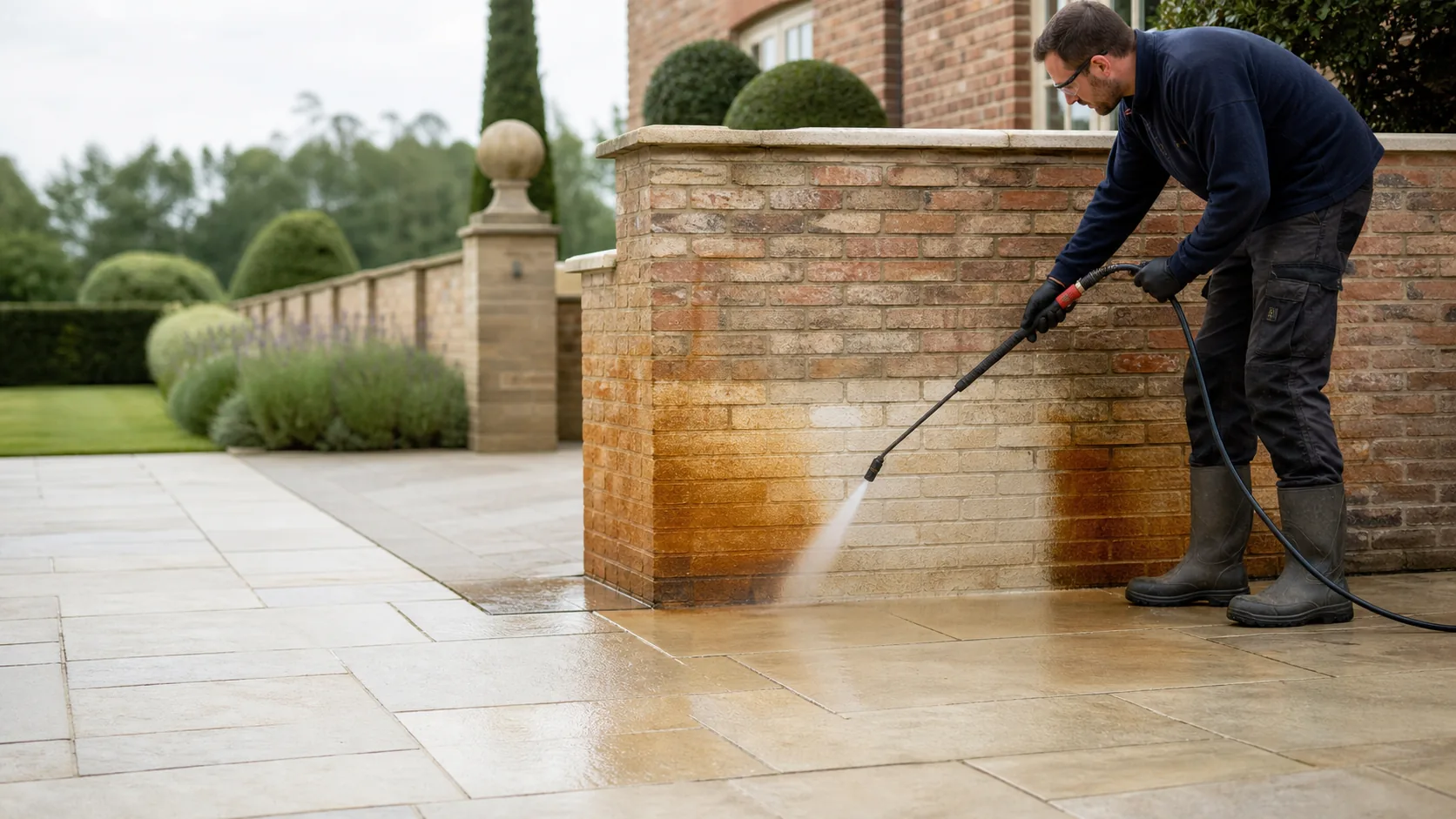
Rust marks do not respond to the things that clean everything else. Bleach, patio cleaner and pressure all leave the orange exactly where it was.
Step 1 of 3 · no obligation, reply the same day
Knowing the source changes the treatment, so it is the first thing we work out:
Rust staining is iron oxide bonded into the surface. Sodium hypochlorite, which is what most patio cleaners rely on, has no effect on it at all. Pressure removes the surface around the stain and leaves the stain standing proud of a cleaner slab. What shifts iron oxide is a reducing acid, usually oxalic or phosphoric based, which converts it to something soluble that can be rinsed away.
Rust removers are strong and they do not only act on the iron. On some concrete slabs they lighten the cement matrix, which trades an orange spot for a pale one. On limestone they etch. We test on an offcut or in a hidden corner, wait for it to dry, and look at the result before going anywhere near the middle of a patio.
Drying matters because a wet slab always looks fine. Half the disappointing rust jobs we get called to fix were signed off wet.
Fertiliser spotting usually comes out completely, and it is the most satisfying version of this job. Furniture rings usually come out. Stains fed by iron still in or under the slab will come back, and the honest fix there is to deal with the metal, not the mark. Iron bleeding out of the stone itself is part of the stone, and we will tell you that rather than sell you a treatment that cannot work.
Most rust on paving is preventable. Sweep fertiliser granules off hard surfaces before watering in, put feet or pads under metal furniture and planters, and move barbecues off the slabs when they are not in use. On a porous patio a sealer also slows how fast the next spill can bond.
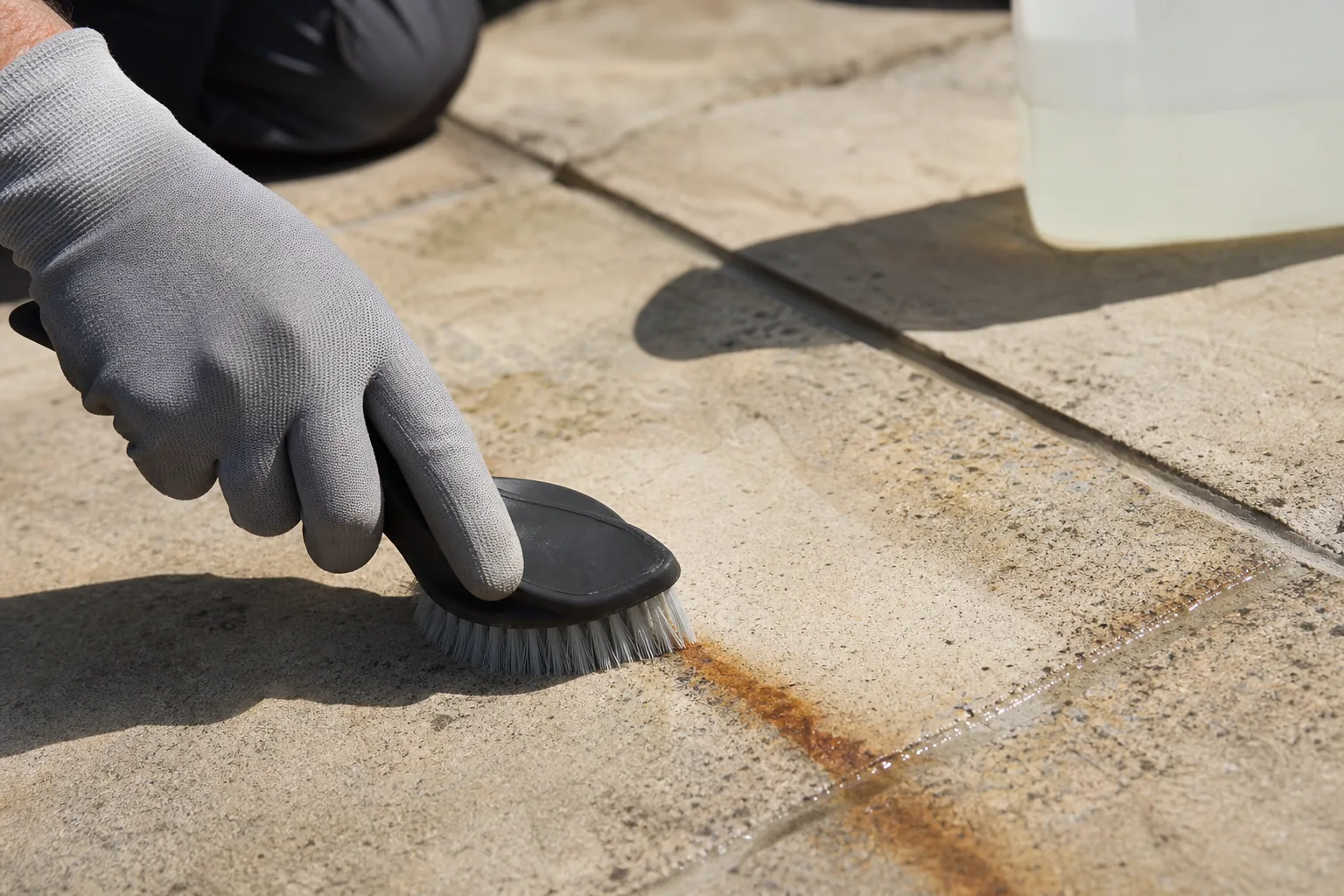
Most patio cleaners are bleach based, and sodium hypochlorite has no effect on iron oxide. Rust needs a reducing acid, normally oxalic or phosphoric based, to convert it into something that will rinse away.
No. It cleans the surface around the mark and leaves the mark, which usually makes it more obvious rather than less.
It can on some concrete slabs, which is exactly why we test a hidden area first and let it dry before judging. Trading an orange spot for a pale patch is not a result.
There is almost certainly iron still there, a fixing, a reinforcement bar, or a buried piece of metal. The stain will keep returning until the source is removed.
Usually not, and we would rather say so. Some sandstones contain iron that bleeds out as the stone weathers. It is part of the stone, and removing it means removing surface.
Very likely if the marks are small, hard and scattered. Iron sulphate in lawn fertiliser stains paving on contact once it gets wet.
With great care and only after testing. Acid etches limestone, so on that stone the question is often whether the mark is worse than the etch would be.
On a porous stone it helps, because it slows how quickly the next spill can bond to the surface. It is not a substitute for keeping fertiliser off the slabs.
Great company come out gave a good price and done the job straight away highly reccomend chris great guy

Very reliable, showed up on time to give a quote, and started work straight away! Wanted the back done after the front. Stunning work on my front driveway and porch with the power washer, simply removed all the algae on my walls too that the pressure washer team we had last year couldn't do.

Hard working and reliable pressure washing company! Completely transformed my paving stones and patio

Very happy with the service provided from pressure washing Cardiff, also very friendly and professional many thanks, Simon
What a good quality service have provided done a superb job of pressure washing my driveway + house. Many thanks, Shane
My husband and I are very happy with the work done at our house, to our gutters, our pool area and other concrete areas around our house. You were a pleasure to deal with and I will definitely use your services again!
Pressure Washing Cardiff did a fabulous job: our concrete driveway and retaining walls look like new! What a delight to have a tradesman visit who takes pride in his work and does a thorough job.
These guys are experts and were able to give us a great quote for a complete exterior makeover. Power washing, gutter cleaning, window cleaning as well as pressure washing for our patio and driveway. Thank you so much!!
Send a photo and a rough size and we will come back with a price, usually the same day.
20% off enquiries via WhatsApp