
H
Great company come out gave a good price and done the job straight away highly reccomend chris great guy
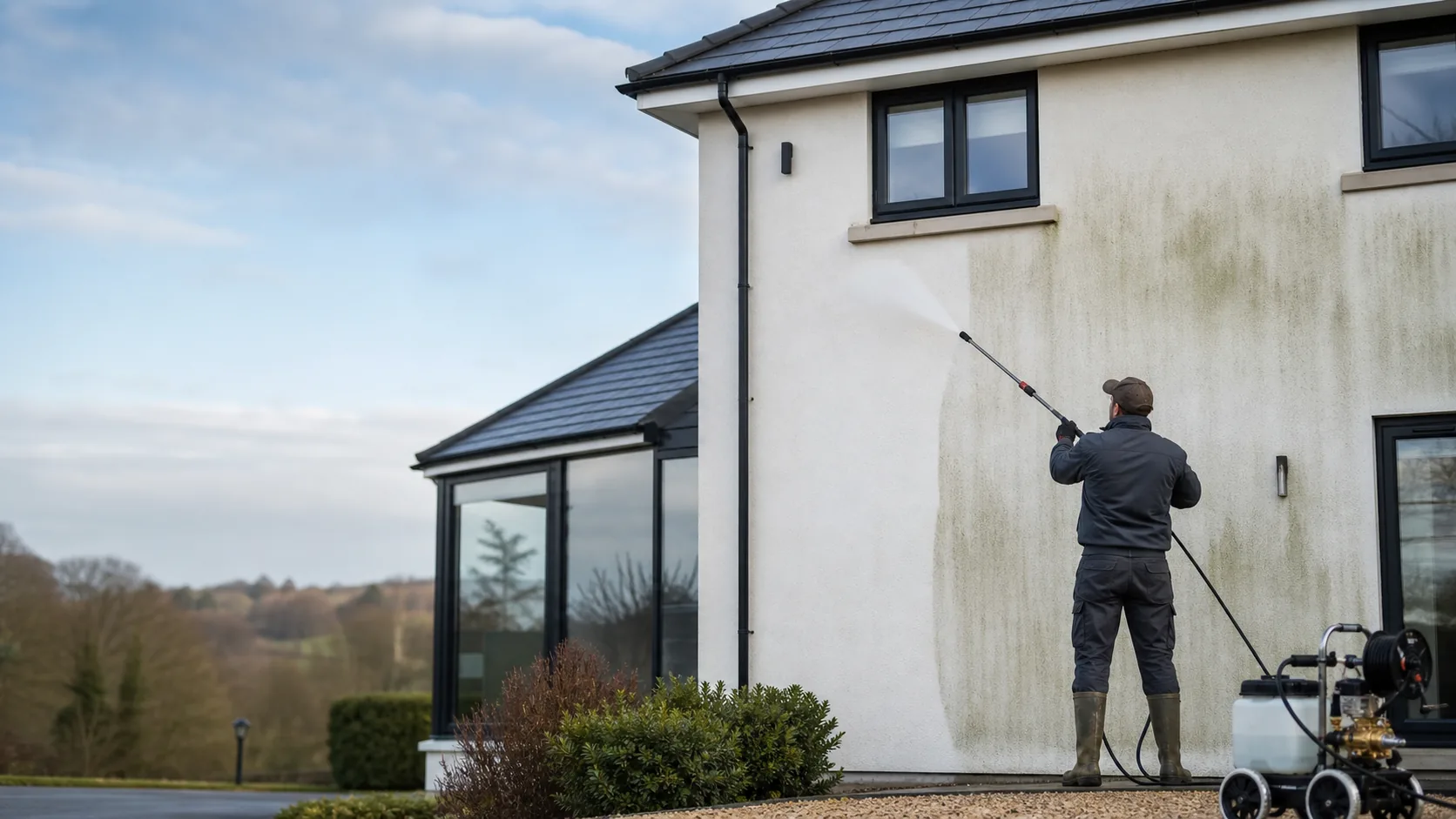
Render cleaning in Cardiff is not a pressure washing job. A lance held too close will strip the colour out of K Rend, blow the top coat off a monocouche and leave permanent tramlines you cannot undo. We clean render with a low pressure soft wash and a biocide that kills the algae in the wall rather than blasting it off the front.

Step 1 of 3 · no obligation, reply the same day
The same care and clear communication, whether it is a single path or a whole house.
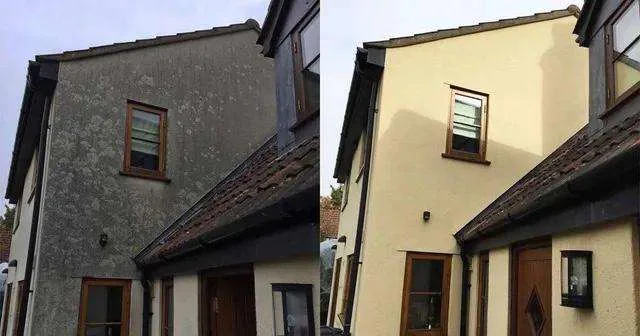
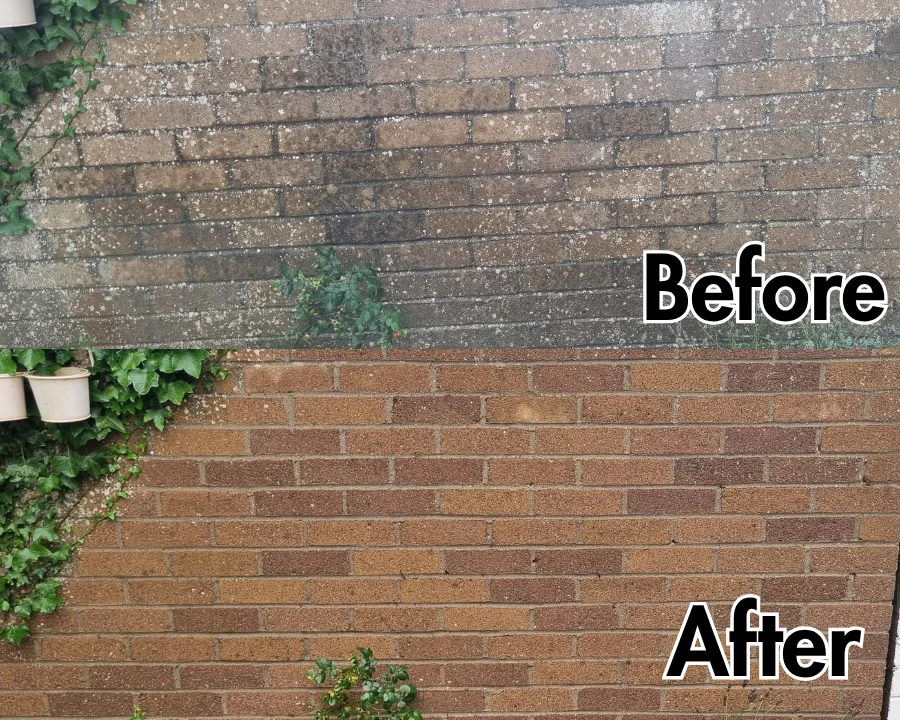
Render is a thin decorative skin over a backing coat, and on modern thin coat systems the colour lives in the outer few millimetres. A petrol machine on a turbo nozzle at 3,000 psi strips that layer faster than it strips the algae. You get a clean wall for a fortnight and a damaged one for good.
The worst of it is not visible on the day. Water forced behind a bell bead, into a hairline crack or past tired mastic sits in the wall and reappears months later as blown patches, salt bloom and rust staining where an old steel bead has corroded behind the finish. The face you opened up then holds dirt better than it did before.
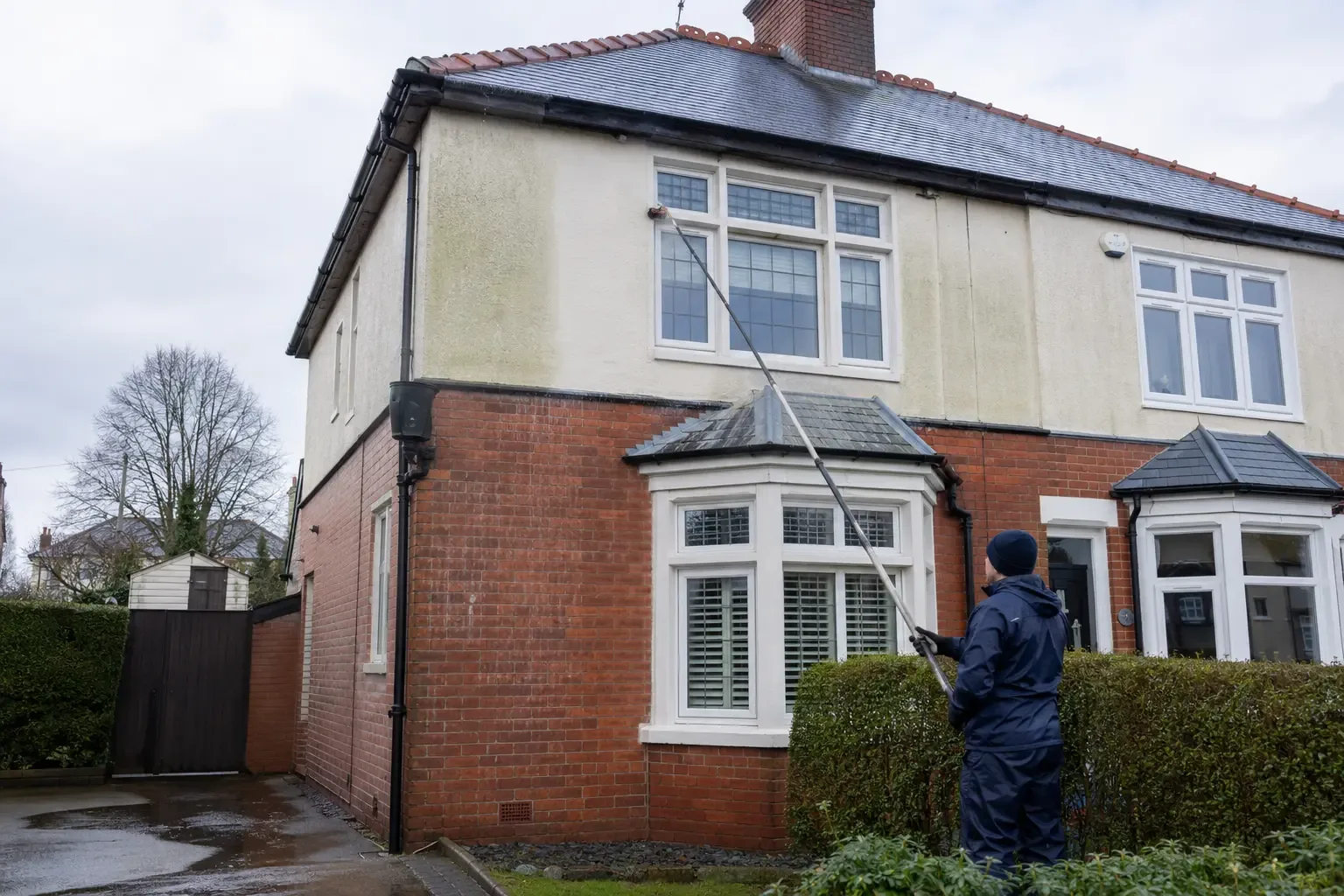
K Rend and the other silicone thin coat systems cover most of the newer Cardiff estates, around Lisvane, Radyr and Llanishen especially. They are water repellent by design, which is exactly why they go green so fast. Rain beads and runs instead of soaking in, and that damp film is all algae needs. They clean up beautifully with a soft wash and they are ruined by a lance.
Monocouche and through-colour renders carry the pigment right through the material, so any abrasion is permanent. Scratched, brushed and float finishes trap more dirt in the texture than smooth silicone does, which calls for longer dwell time, not more pressure. Acrylic and polymer renders are effectively a flexible paint film: hot water and solvents soften them, and hard cleaning burnishes them into shiny patches.
Pebbledash and Tyrolean are the older Cardiff finishes, all over Roath, Canton, Grangetown, Splott and Rumney. Both are keyed rather than laid flat, so they shed material under pressure. Tyrolean especially, thrown on rough and open, holds growth deep in the face and usually needs two applications with a proper wait between them.
Some walls need a renderer before they need us. If a panel sounds hollow when you tap it, if the render is cracked through to the backing coat, or if it has blown around a bead, putting anything wet on it makes the damage worse and the stain comes back through the repair anyway. The same goes for a wall that is dark because a gutter joint has been running down it for two winters. Clean that and you have treated the symptom.
We walk the elevations before we quote and tell you what we can see: cracks, failed mastic, missing or corroded beads, a downpipe that is not doing its job. If the fix has to come first, we say so.
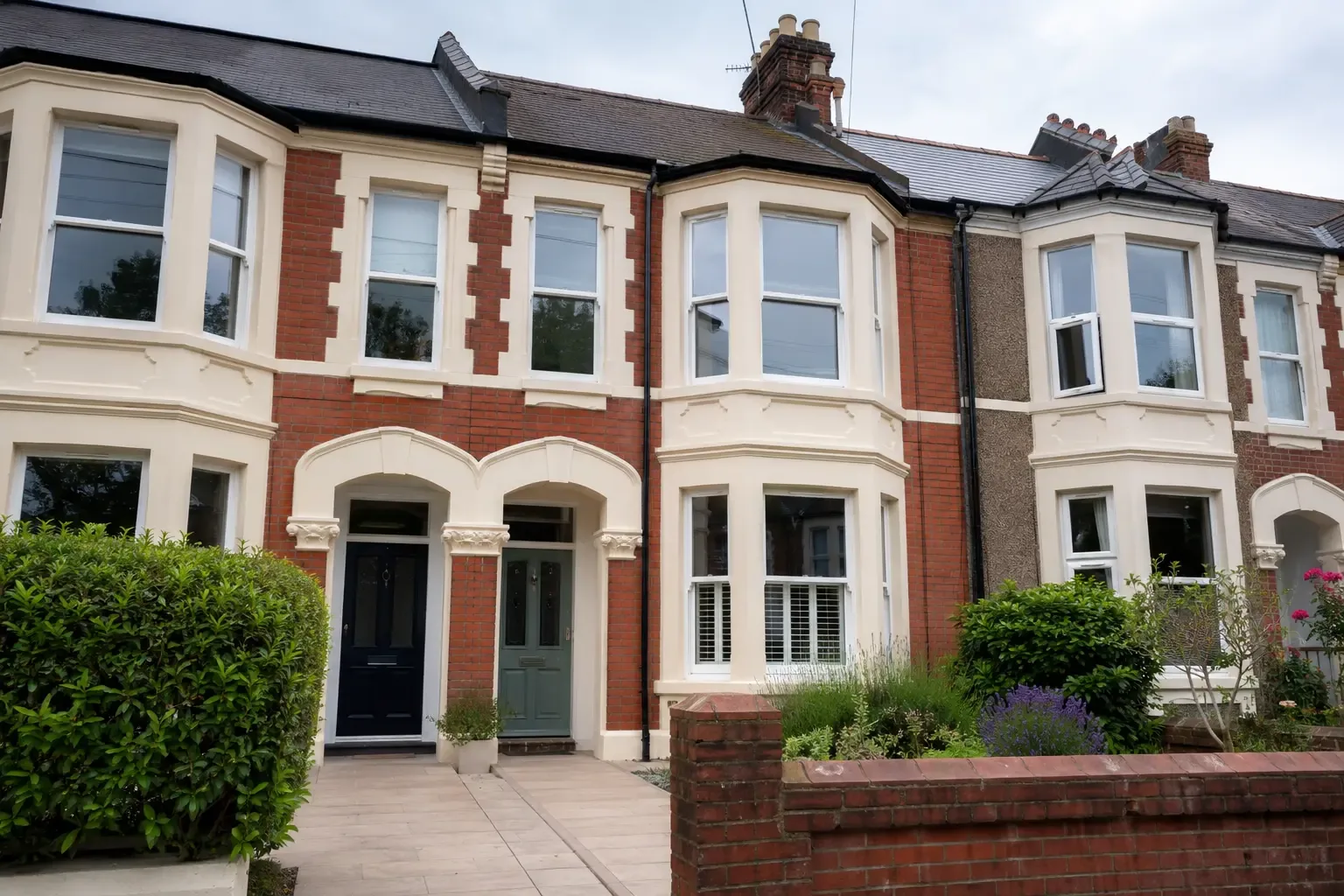
Green sheeting across whole elevations, heaviest on north and east walls and anywhere shaded, is algae. It needs only moisture and daylight to live, with no feeding worth speaking of, which is why a brand new wall in Cardiff can be green after two winters.
Dark grey to black staining, usually in runs rather than sheets and faintly musty when wet, is mould or black algae. It roots into the surface film instead of sitting on it. That is the growth that shrugs off a rinse and is back within weeks. Killing it takes contact time with a biocide, not force.
Lichen is the raised crusty growth in discrete grey, orange or pale yellow circles. It is a fungus and an alga living together, anchored into the surface, and scraping it off takes render with it. Treated properly it dies, loses its grip and weathers away over the following weeks.
More people ring us about the dark streaks under their window sills than about anything else. The sill collects dirt and organic debris all year, and every shower carries that concentrate down the wall in the same two or three channels. It is not random staining, it is drainage.
The usual cause is the drip groove under the sill. No groove, or one filled with paint and mastic, and water tracks back underneath and clings to the render instead of falling clear. You see the identical pattern below a leaking gutter joint, a satellite bracket or a blocked downpipe. We clean the stain off and tell you what we can see, because if the cause is still there the streaks return in the same lines.
Two to four years is the honest range on a Cardiff house. Where you land in it has less to do with the product than with the wall. South and west facing elevations get sun and drying wind and hold on longest. North facing walls, anything under a mature tree or beside a hedge, and narrow side passages between two houses go first, sometimes inside eighteen months.
Our climate is why walls here green up faster than they do inland. Mild, wet, windy winters coming in off the Bristol Channel are near ideal growing conditions. Soft washing lasts because the growth is killed rather than knocked off, and on shaded or exposed elevations we can finish with a residual biocide that stays active in the surface for months and keeps knocking new spores back. A jet washed wall is clean on the day and biologically untouched, so it starts again immediately.
Most Cardiff houses land somewhere between about £250 and £500. A single gable on a terrace can come in under that. A large detached with four elevations, two storeys plus and years of lichen can go over it. Treat any figure on a website, ours included, as a starting point and not a quote.
Quotes are free. We price after walking the property, or from clear photographs of every elevation if that suits you better, and we tell you which of the points above is driving the number.
We work across Cardiff and the wider South Wales area, Barry, Penarth, Newport and the Vale included. The work splits neatly in two: silicone and K Rend systems on the newer estates in Lisvane, Cyncoed, Llanishen, Rhiwbina, Whitchurch, Radyr and Llandaff, and pebbledash and Tyrolean on the older streets through Roath, Penylan, Canton, Pontcanna, Grangetown, Splott, Rumney, Llanrumney and Cathays.
Send a photo of the worst elevation to Liamdunn2406@outlook.com or call 07576 128903 and we will tell you what render you have, what we would do and roughly what it costs. We have been cleaning exteriors around Cardiff since 2019, and our Google rating is 5.0 from five reviews. We answer seven days a week, 7:00 to 21:30.
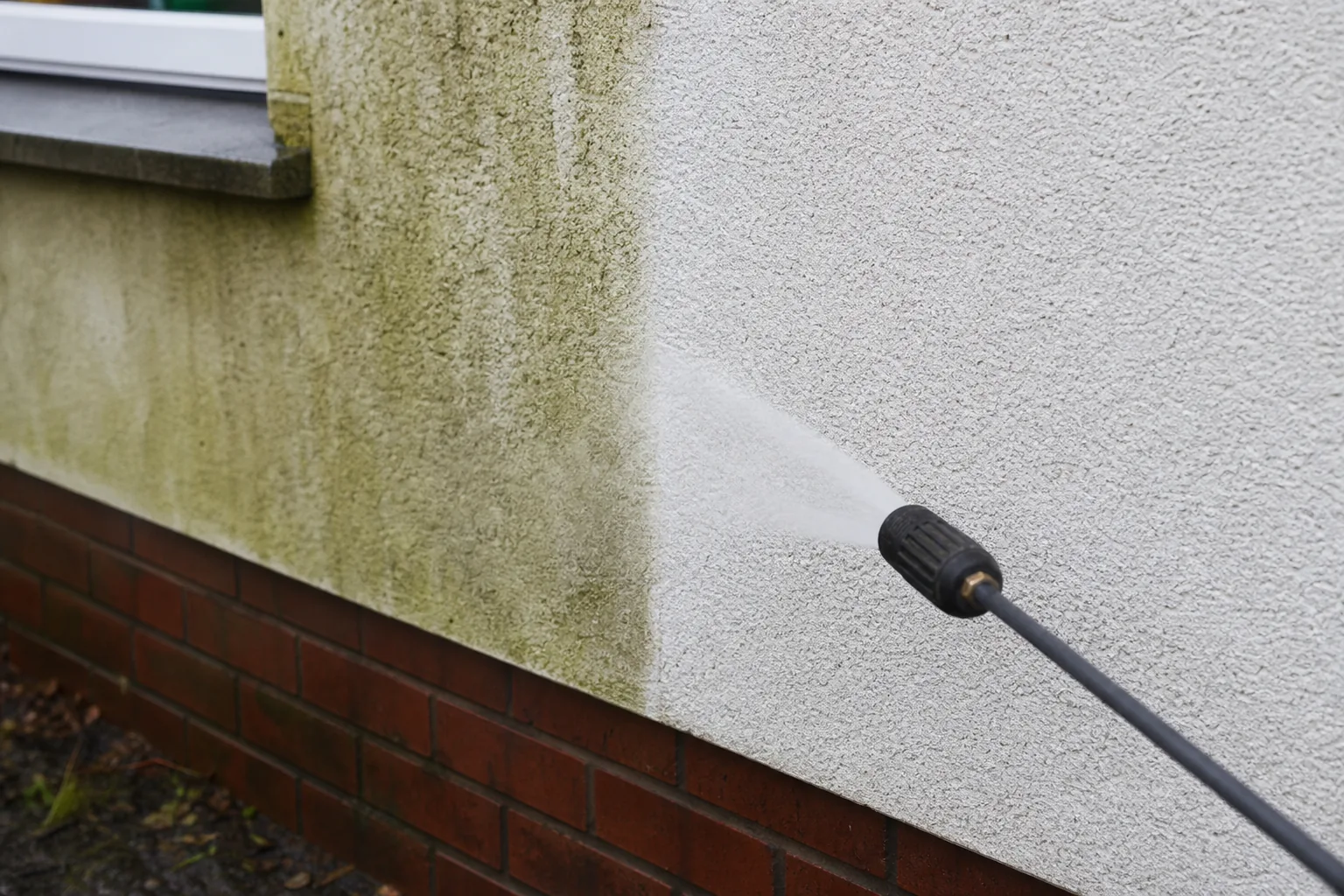
Yes, and often permanently. On thin coat systems like K Rend the colour sits in the outer few millimetres, so a high pressure lance takes the finish off along with the algae and leaves lighter tramlines where it passed. On pebbledash and Tyrolean it knocks the stone and sand off the face. It also forces water behind beads and into cracks, which shows up months later as blown patches and damp inside. Render is cleaned chemically, at low pressure, or it is damaged. There is no safe high pressure setting for it.
Most Cardiff houses fall somewhere around £250 to £500, but that is a range, not a quote. What moves the price is the total area of render, how many elevations you want done, access around the property, height above two storeys, and how established the growth is. A light green film on a modern semi is one application. Twenty years of lichen on a rough Tyrolean gable is two applications plus spot work. Booking the gutters or the driveway on the same visit brings the cost down. We quote free after seeing the property or clear photos of every elevation.
A typical three bedroom semi with all elevations treated is most of a day, usually four to seven hours including setting up and protecting the garden. A single elevation can be two to three hours. A large detached house with heavy lichen, awkward access or a second application needed can run into a second day. The dwell time is the part people underestimate: the biocide has to sit on the wall and work, and we will not shorten that to finish earlier. We give you a realistic time when we quote rather than a best case.
Around two to four years on most Cardiff properties. South and west facing walls that get sun and drying wind hold up longest. North facing elevations, walls shaded by trees or hedges, and narrow side passages between houses can green up inside eighteen months. Our mild wet winters are close to perfect growing conditions for algae, so walls here regrow faster than they do inland. Soft washing lasts longer than jet washing because the growth is killed rather than knocked off, and on bad elevations we can finish with a residual biocide that keeps working in the surface for months.
Not for the whole job, but it helps if you are there at the start. We need access to an outside tap and a power point, we need to know about any cracked render, failed mastic or windows that do not seal properly, and we want all windows and doors shut before anything is applied. After that you are welcome to go out. If you cannot be there at all, tell us where the tap is and how to get through the side gate, and we will work around it and send you photos when we finish.
We water plants and borders thoroughly before we start and sheet anything directly under the work. A wet root zone dilutes whatever reaches it, which does more good than covering alone. Downpipe outlets get covered or diverted where the run-off would reach a pond or a vegetable bed. The biocide is applied dilute and breaks down rather than sitting in your soil. Keep pets and children indoors while we are applying and rinsing, and off the treated area until it dries. Tell us about ponds, fish and any planting you are protective of before the day.
Spring through autumn is easiest, but render can be cleaned in Cardiff for most of the year. What matters is temperature and rain, not the calendar. Biocide needs to stay wet on the wall long enough to work, so a still, dry, mild day beats a hot one, and we avoid frost and heavy rain within a few hours of applying. Many people book in early spring after winter has done its worst, or in late summer before the autumn damp sets in. If you need it done for a house sale or a family event, book several weeks ahead so we can pick the weather.
Yes, and these are the systems that most need doing properly. Silicone thin coat renders like K Rend are water repellent, so rain sits on the face rather than soaking in, which is exactly the film algae needs. That is why almost new estates around Cardiff go green so quickly. They respond very well to a soft wash and a biocide with proper dwell time, and they are permanently damaged by a pressure washer because the colour is in the outer few millimetres. Send us a photo of the wall and we will tell you which system you have.
Great company come out gave a good price and done the job straight away highly reccomend chris great guy

Very reliable, showed up on time to give a quote, and started work straight away! Wanted the back done after the front. Stunning work on my front driveway and porch with the power washer, simply removed all the algae on my walls too that the pressure washer team we had last year couldn't do.

Hard working and reliable pressure washing company! Completely transformed my paving stones and patio

Very happy with the service provided from pressure washing Cardiff, also very friendly and professional many thanks, Simon
What a good quality service have provided done a superb job of pressure washing my driveway + house. Many thanks, Shane
My husband and I are very happy with the work done at our house, to our gutters, our pool area and other concrete areas around our house. You were a pleasure to deal with and I will definitely use your services again!
Pressure Washing Cardiff did a fabulous job: our concrete driveway and retaining walls look like new! What a delight to have a tradesman visit who takes pride in his work and does a thorough job.
These guys are experts and were able to give us a great quote for a complete exterior makeover. Power washing, gutter cleaning, window cleaning as well as pressure washing for our patio and driveway. Thank you so much!!
Send a photo and a rough size and we will come back with a price, usually the same day.
20% off enquiries via WhatsApp