
H
Great company come out gave a good price and done the job straight away highly reccomend chris great guy
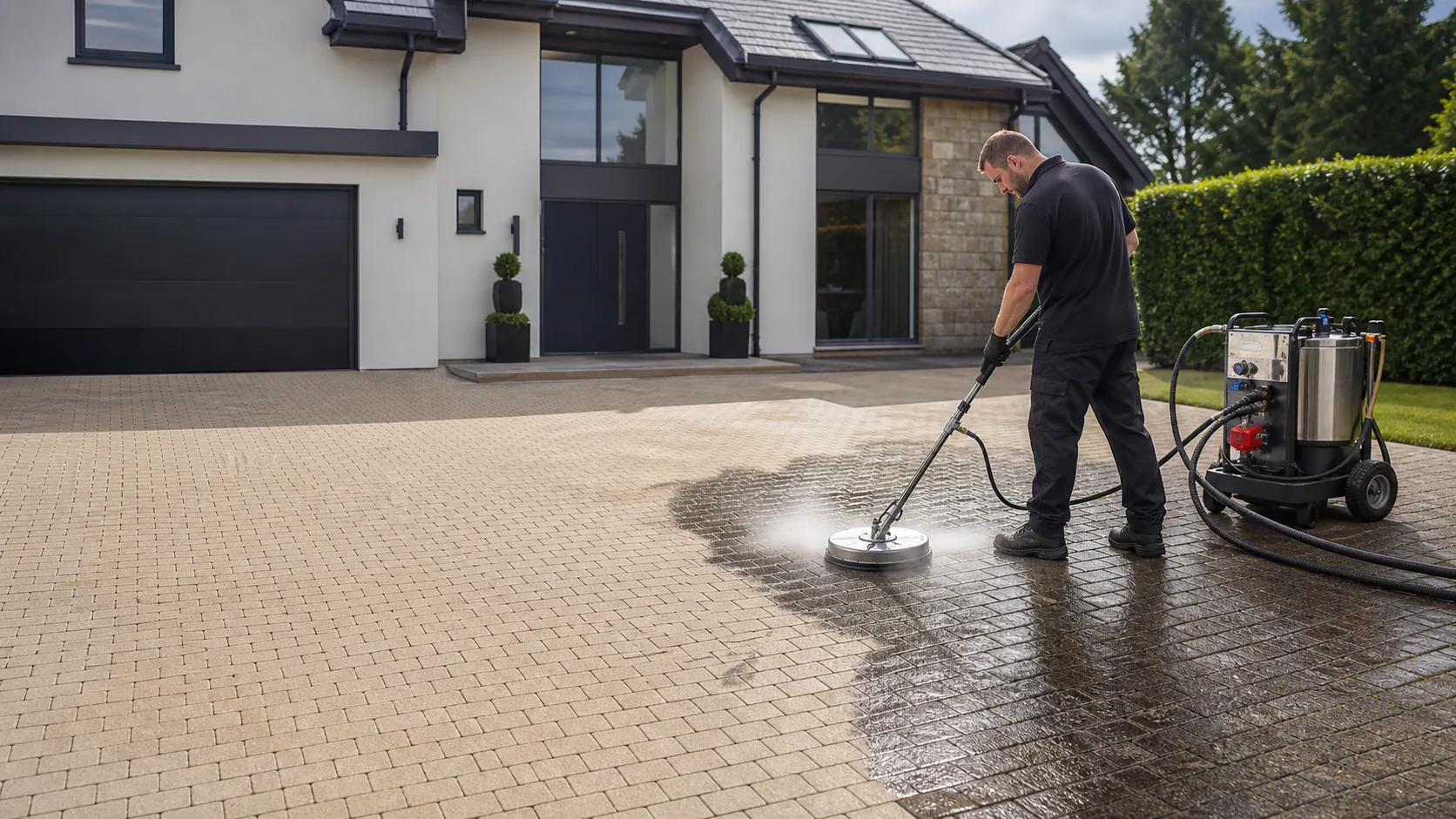
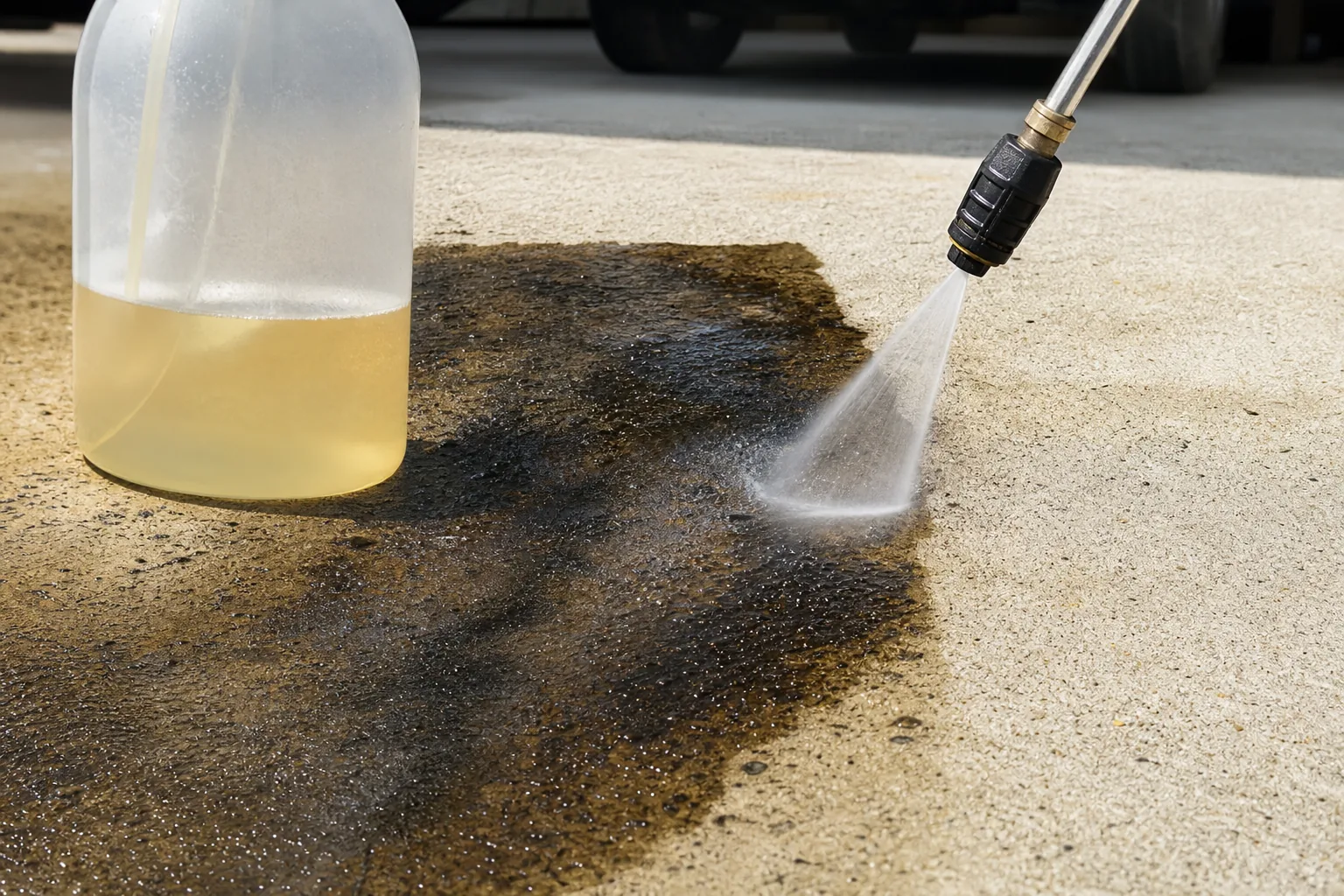
Oil is in the pores of the slab, not on top of it. That is why a pressure washer turns a dark patch into a bigger grey one instead of removing it.
Step 1 of 3 · no obligation, reply the same day
Concrete and concrete block are porous. Oil wicks in and sits below the surface, held in the pore structure. Water at pressure hits the top of that, mobilises some of it and pushes it sideways and deeper. The stain gets paler in the middle, wider at the edges, and harder to remove than it was before.
The surface around it also gets cleaned at the same time, so the contrast often looks worse afterwards even where the oil itself has not moved much.
The method that works is the opposite of washing. A degreaser is applied neat and worked in to break the oil down, then a poultice, an absorbent paste, is spread over the area and left to dry. As it dries it pulls the dissolved oil up out of the pores and holds it. Then the poultice is removed with the oil in it and the area is rinsed.
Deep or old stains take more than one cycle. We say that up front, because a single application on a stain that has been there five years will lighten it rather than clear it.
Fresh oil, days or weeks old, usually comes out completely. Months old on concrete usually comes out to the point where you have to know it was there to see it. Years old, especially where the vehicle has dripped in the same spot repeatedly, often leaves a shadow. Hydraulic fluid and gearbox oil are worse than engine oil, and diesel spreads further before it sets.
We will tell you which of those your stain is at the quote, from a photograph if you send one. Nobody benefits from us promising a clear slab and delivering a faint one.
On block paving, individual blocks can be lifted and turned over, or swapped for spares from an inconspicuous area such as under a car or behind a bin. Where a stain is heavy and localised this is often the better answer than chemistry, and it is permanent. If there are no spares, blocks can sometimes be lifted, cleaned face down and relaid.
Once the surface is clean, a breathable sealer makes the next drip a surface problem rather than a pore problem, which means it wipes up. It is worth doing on a driveway where a vehicle parks in the same place, and we can seal at the same visit once the area is fully dry.
Sometimes. Fresh stains usually come out fully. Stains that are months old normally come out to the point where you would have to know where to look. Years of repeated drips in one spot often leave a shadow, and we will tell you that before we start rather than after.
Because the oil is inside the pores rather than on the surface. Water at pressure pushes it sideways and deeper, so the middle lightens, the edges spread, and the clean surface around it increases the contrast.
An absorbent paste spread over the treated stain and left to dry. As it dries it draws the dissolved oil out of the slab and holds it, and then it is removed with the oil in it. It is the opposite of washing, and it is why the method works.
One for anything fresh. Two or three for older or deeper stains. We price the first and tell you honestly whether we think it will need another.
Yes, and often it is the better answer. Blocks can be turned over or swapped with spares from under a car or behind a bin, which is permanent and avoids chemistry on a heavy stain.
It can if we only treat the patch, because the rest of the driveway has years of weathering on it. Where that would look odd we clean the whole area so it tones in.
Yes. Diesel spreads further before it sets, and hydraulic and gearbox oils are more stubborn than engine oil, so both usually need a longer dwell and more than one cycle.
If a vehicle parks in the same spot, yes. A breathable sealer keeps the next drip on the surface where it can be wiped up instead of soaking into the pores.
Great company come out gave a good price and done the job straight away highly reccomend chris great guy

Very reliable, showed up on time to give a quote, and started work straight away! Wanted the back done after the front. Stunning work on my front driveway and porch with the power washer, simply removed all the algae on my walls too that the pressure washer team we had last year couldn't do.

Hard working and reliable pressure washing company! Completely transformed my paving stones and patio

Very happy with the service provided from pressure washing Cardiff, also very friendly and professional many thanks, Simon
What a good quality service have provided done a superb job of pressure washing my driveway + house. Many thanks, Shane
My husband and I are very happy with the work done at our house, to our gutters, our pool area and other concrete areas around our house. You were a pleasure to deal with and I will definitely use your services again!
Pressure Washing Cardiff did a fabulous job: our concrete driveway and retaining walls look like new! What a delight to have a tradesman visit who takes pride in his work and does a thorough job.
These guys are experts and were able to give us a great quote for a complete exterior makeover. Power washing, gutter cleaning, window cleaning as well as pressure washing for our patio and driveway. Thank you so much!!
Send a photo and a rough size and we will come back with a price, usually the same day.
20% off enquiries via WhatsApp