
H
Great company come out gave a good price and done the job straight away highly reccomend chris great guy
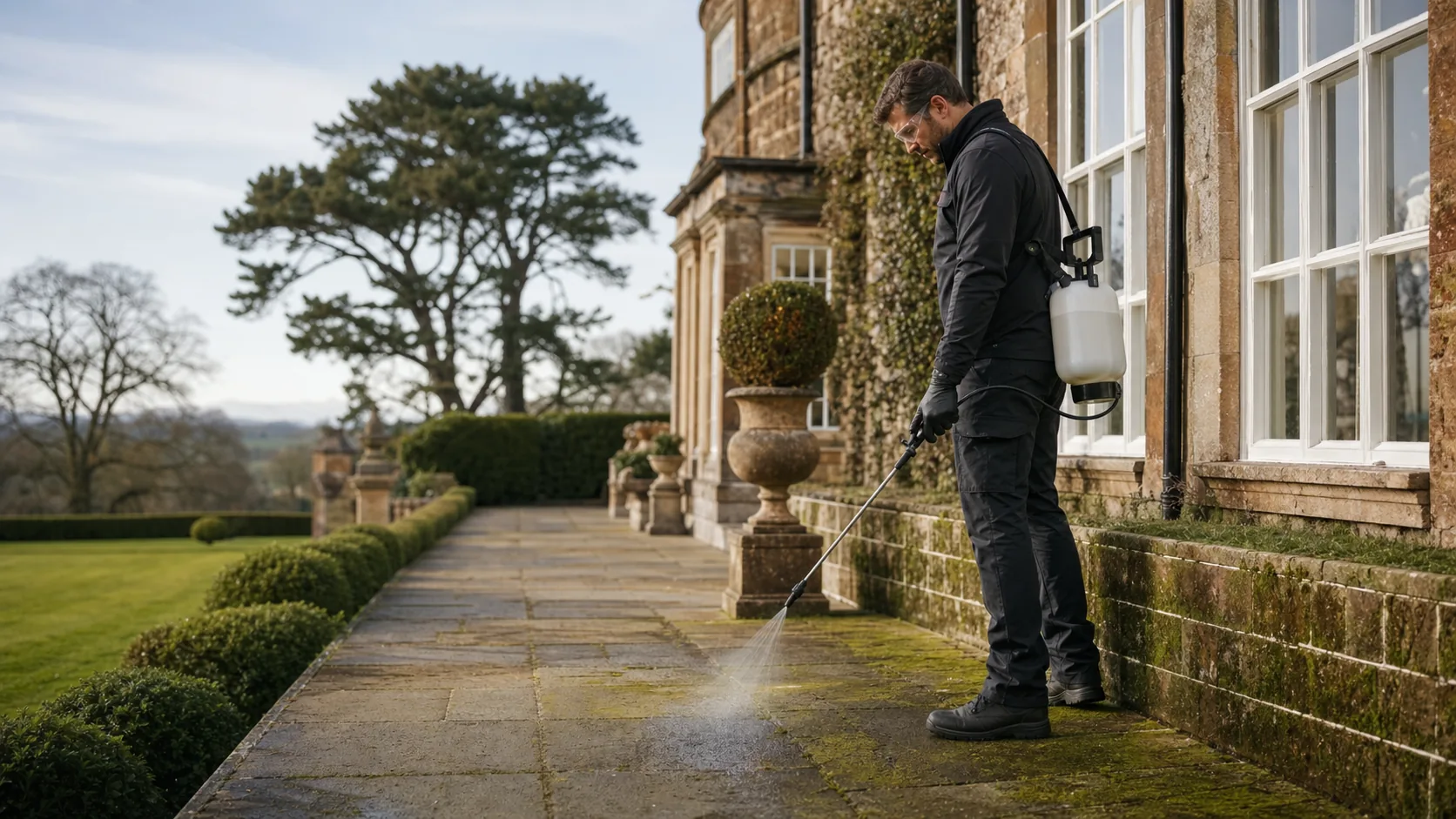
Moss removal in Cardiff is rarely a one-visit job. Moss lifts off a roof or a driveway easily enough. Keeping it off is the part you are actually paying for. Spores are in the air all year, they settle on damp shaded surfaces, and on a South Wales property they will be back within a season unless the surface is treated.

Step 1 of 3 · no obligation, reply the same day
The same care and clear communication, whether it is a single path or a whole house.
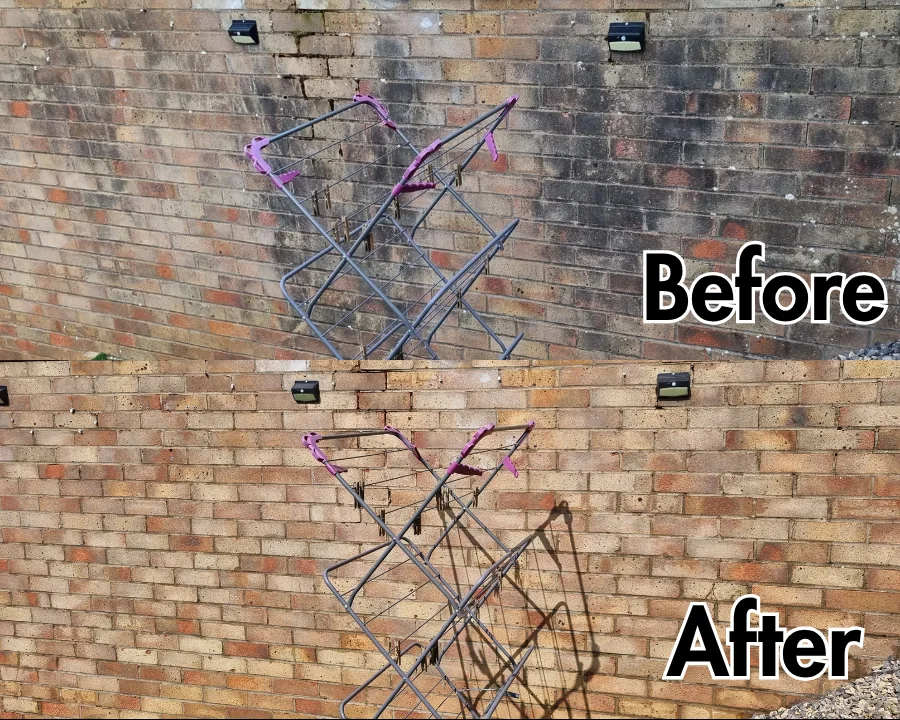
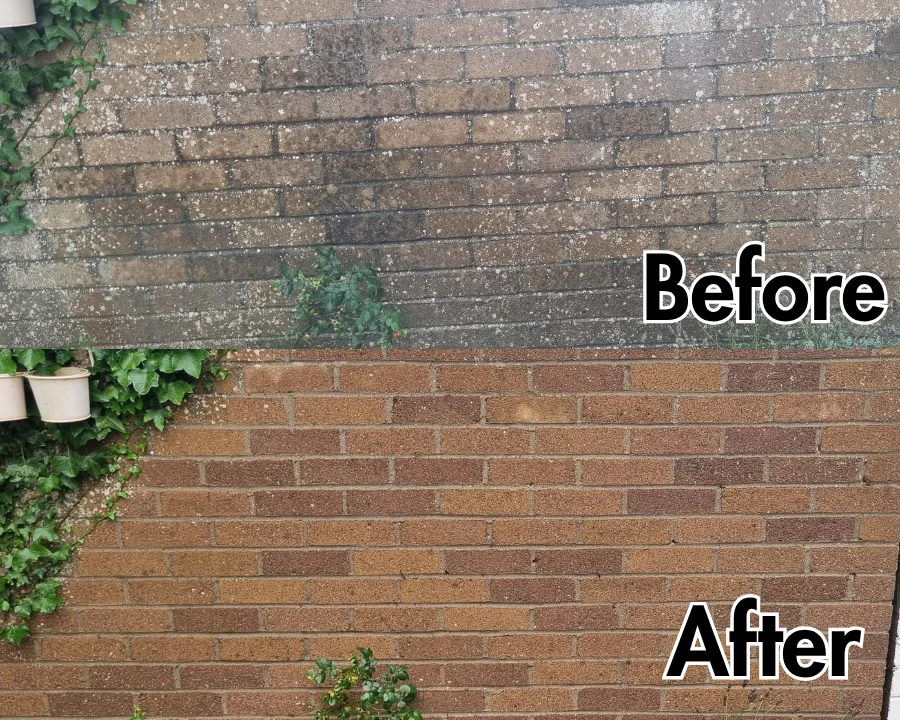
Moss needs three things: moisture, shade and a surface rough enough to grip. South Wales supplies the first two for most of the year. Rain here is spread across the whole calendar rather than dumped in a couple of wet months, and the prevailing south-westerly comes in off the Bristol Channel carrying damp air with it. Surfaces never get a long enough dry spell to recover. Add the mature tree cover in Roath, Penylan and Rhiwbina and the conditions are as good as moss could ask for.
It is not rooted like a weed. Moss anchors with rhizoids, hair-like threads that grip a rough face without needing any soil, which is why it does so well on a concrete roof tile, in a paving joint and on textured render. Lichen is a different problem: a fungus and an alga living as one organism, gripping the surface so tightly that no pressure washer will take it off. Algae is the green film that arrives first and softens the ground for both.
It always begins in the same places. Find the wettest, darkest, roughest part of a surface and that is where the first patch appears, then it works outwards from there.
A pressure washer removes what you can see and nothing else. The living material stays in the pores of the surface, and the wash spreads it. Water hitting a mossy joint at pressure throws fragments metres across the paving and up the wall, and moss will regrow happily from a fragment. Three weeks later it looks clean. By the following spring it is green again.
Pressure also roughens what it cleans. On block paving it blows the jointing sand out, leaving a deeper channel that holds water. On a concrete roof tile it strips the factory applied surface layer and exposes the aggregate underneath. Each pass gives the next colony a better foothold than the last one had.
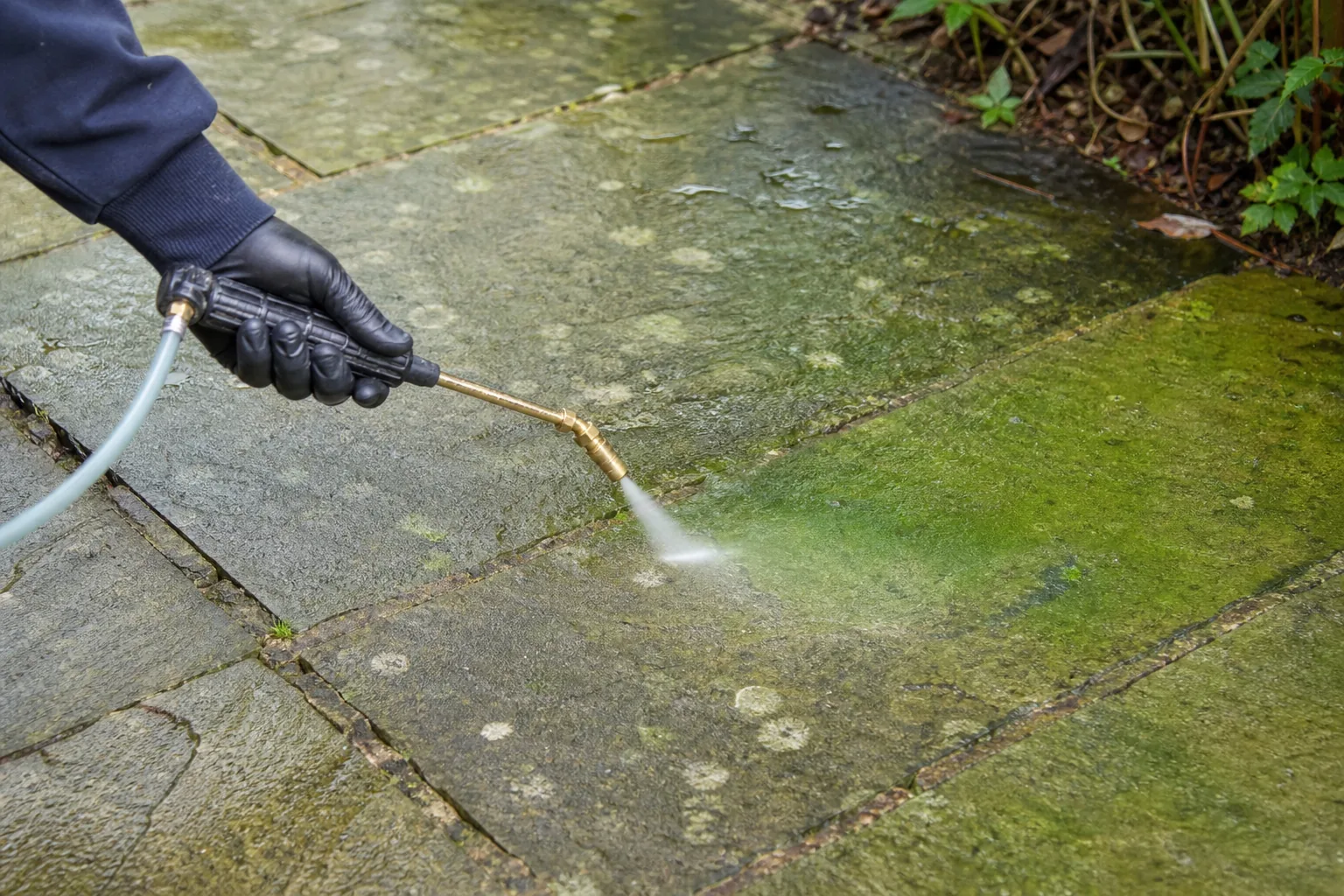
The treatment is a dilute biocide applied at low pressure through a soft washing setup. It does not blast anything off. It is taken up by the moss, algae and lichen and kills the organism outright instead of snapping it off at the surface. Weather does the removal over the following weeks.
Dwell time is the part cheap jobs skip. The biocide has to sit on a dry surface for several hours to be absorbed properly. Spray it and rinse it straight back off and you have paid for coloured water, so we watch the forecast and move a booking rather than waste a treatment. On a roof the look dips before it improves. Dead moss browns off first, then drops over six to twelve weeks.
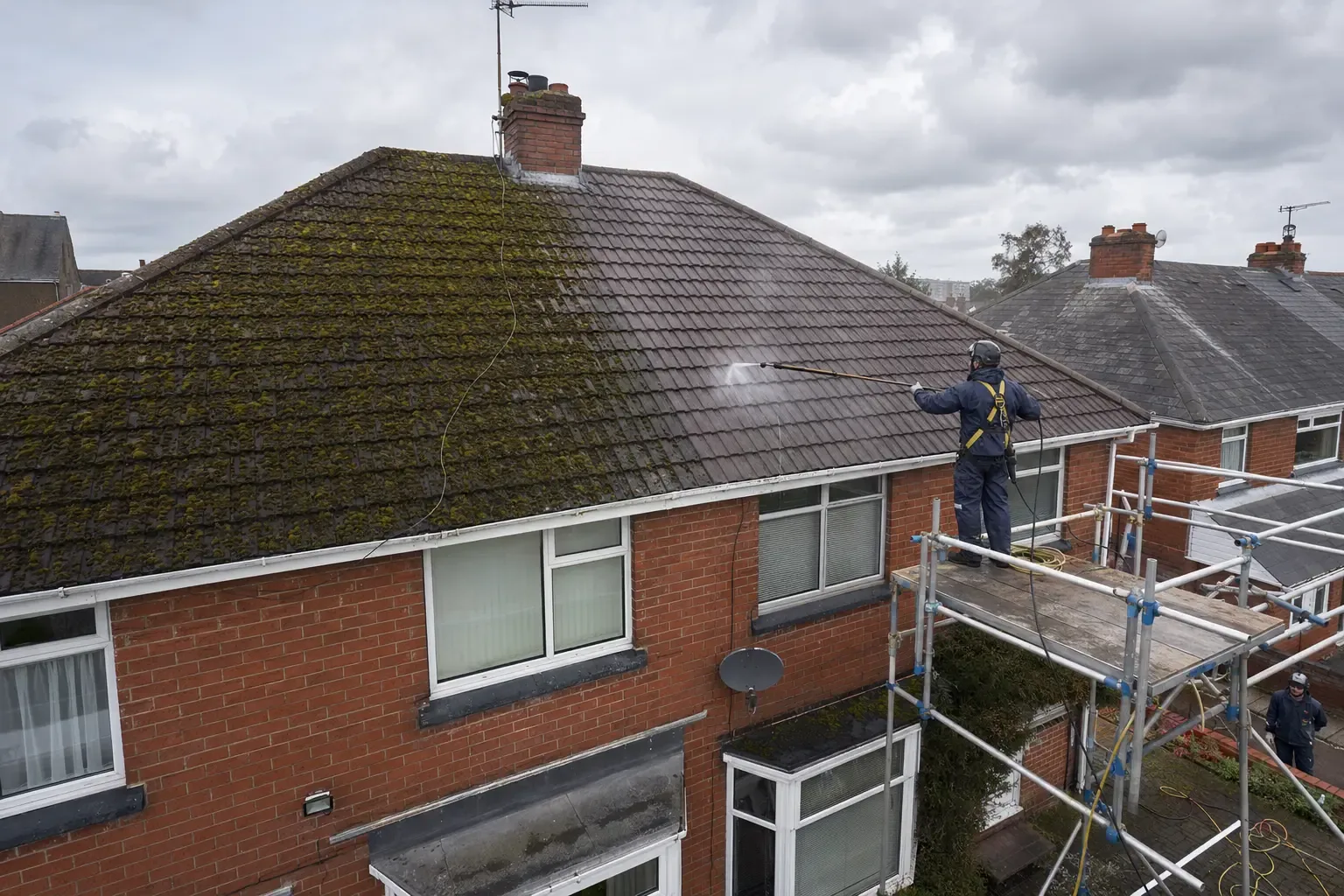
The roof is where moss does real damage rather than just looking bad. A mat of moss holds water against the tile right through winter, and every freeze and thaw cycle breaks the surface down a little further. Clumps then let go, wash into the gutter, block the downpipe, and the overflow runs down the wall. That is how a roof problem turns into a damp problem on the inside.
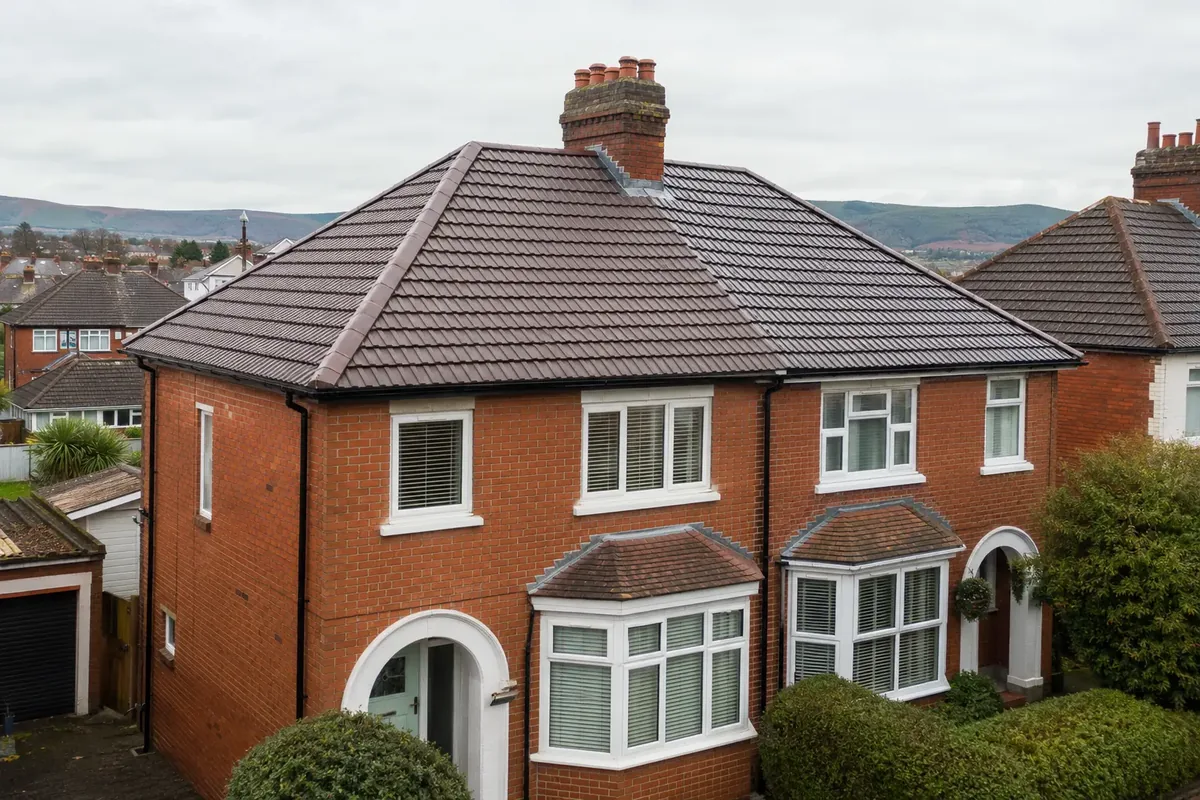
Cardiff roofs vary by area and age. Victorian slate in Roath, Cathays and Canton grows moss along the laps and packs it into the valleys and behind the chimney stack. Concrete tile on the interwar semis in Whitchurch, Llanishen and Rhiwbina carries it right across the slope, because the face is porous and textured. Both are treatable, but the hand work is different and so is the time on the ladder.
At ground level the real issue is grip. Wet moss on a sloping driveway, a set of steps or a shaded side path is genuinely slippery, and it is worst in the months you look at it least. Block paving, imprinted concrete, riven sandstone, tarmac and plain concrete all hold it, just at different speeds.
Block paving needs one step that gets skipped constantly. Cleaning pulls the joint sand out along with the moss, and if kiln dried sand is not brushed back in afterwards the joints sit lower, hold more water and grow moss faster than they did before. Indian sandstone brings its own problem in black spot lichen, which is bonded to the stone and will not shift under a pressure washer at any setting. That one needs a treatment and time.
Do not let anyone put a pressure washer on your render. Silicone render, through-coloured systems and K Rend mark, streak and blow under pressure, and the repair costs far more than the clean was ever worth. Older pebbledash and roughcast lose their stone. Render gets soft washing instead: biocide at low pressure, left to dwell, then a gentle rinse.
Then deal with the cause. Green on a wall almost always traces back to water that should not be there. A leaking gutter joint, a blocked downpipe, a missing drip bead over a window, or a border banked up against the wall. Clean it without fixing that and the same stripe returns in the same place.
Honest timelines, because the alternative is an argument in a year. A properly treated roof normally stays visibly clear for two to four years before the first green haze shows. Driveways, patios and paths run twelve to twenty four months. Render sits around two to three years. Those are typical outcomes rather than promises. What shortens them:
We price per property, so treat any figure you read online as a guide and nothing more. As a rough indication, a treatment and hand strip on the roof of a typical Cardiff semi usually falls somewhere in the £400 to £900 range, and a driveway, patio or path is normally a good deal less because it is quoted on area and condition. Those are ballpark numbers to help you budget, not a quote.
What moves the figure: total area, roof pitch, whether we can work off ladders or need a tower, tile or paving type, how deep the growth has got, and whether the gutters need clearing at the same time. Nobody can price a mossy roof accurately from a photograph, which is why we come out and look at it.
We are based in Cardiff, so most of the city is a short run for us. We cover Roath, Penylan, Cyncoed, Lisvane, Llanishen, Whitchurch, Rhiwbina, Radyr, Llandaff, Canton, Pontcanna, Grangetown, Splott, Rumney, Llanrumney and Cathays, along with Barry, Newport and the wider South Wales area. We have been cleaning exteriors here since 2019, and our Google rating is 5.0 from five reviews.
If the moss came back a year after someone jet washed your driveway, or your roof drops clumps into the gutter every time it blows, call 07576 128903 or email Liamdunn2406@outlook.com. We are open seven days, 7:00 to 21:30, and quotes are free.
There is no single figure, because the variables are real. Roof work is priced on area, pitch, access, tile type and how much growth is sitting up there. As a ballpark, a treatment and hand strip on a typical Cardiff semi tends to fall in the £400 to £900 range. Driveways, patios and paths are quoted on area and condition and usually come in well below that. Awkward access, tower work, a heavily loaded north-facing slope or a second treatment visit all push the number up. We quote after seeing the property, not over the phone from a postcode.
Most domestic jobs are a single day. A Cardiff semi with a moderately mossy roof is typically four to six hours, including the hand scraping, clearing the gutters and downpipes and applying the treatment. A driveway or patio is often two to four hours depending on size and how thick the growth is. Larger detached houses, steep roofs and anything needing tower access can run into a second day. The treatment carries on working after we leave, so the visible result keeps improving for several weeks.
Not when it is done properly, which is exactly why we do not point a high pressure lance at a roof or at render. Concrete roof tiles have a factory applied surface layer, and blasting it off leaves exposed aggregate that holds water and grows moss faster than before. Render marks and blows under pressure. Both get soft washing and biocide instead. Block paving, concrete and flags can take controlled pressure, but the machine is set to suit the surface rather than turned up to maximum and dragged across it.
On a roof, expect a properly treated surface to stay visibly clear for roughly two to four years before the first green haze returns. Driveways, patios and paths are closer to twelve to twenty four months, because they sit at ground level next to soil, lawns and borders. Render usually holds two to three years. A north-facing surface under trees will always be at the short end of those ranges. Nobody can honestly promise moss will never return in a climate like ours. What treatment does is reset the clock and slow the whole cycle right down.
Not usually. We need access to the outside of the property, an outside tap in some cases and somewhere sensible to park the van. If you are out, leave a side gate open and tell us about anything we should avoid, such as a pond, a newly planted border or a window that does not shut properly. We message before we arrive and again when the work is finished, with photos if you want them. If access is genuinely tight, a shared rear lane or a garden you can only reach through the house, it helps if someone is in.
Biocide is applied dilute and is standard across the trade for this work, but we still take precautions. Borders and lawns next to the treated surface are wetted down first so anything landing on them is diluted further. Sensitive planting, ponds and vegetable beds are sheeted. Keep pets and children off the treated area until it has dried. On hard surfaces we control where the rinse water goes so it reaches the drain gradually rather than in one flush. Tell us in advance about a pond or a rainwater harvesting system and we will plan around it.
Moss removal works all year in South Wales, but the dry gap matters far more than the month. Biocide needs several hours on the surface without rain washing it off, so we watch the forecast and will move a booking rather than waste the treatment. Late spring through to early autumn gives the most reliable windows. Autumn suits roofs, because you clear the moss and the gutters before the winter rain and the leaf fall. Winter work is fine in a settled dry spell, and it is the quietest time to get booked in.
Both, in the right order, and it depends on how much moss there is. A roof carrying thick clumps is scraped by hand first, because spraying a deep mat only treats the top of it. Light growth and staining can go straight to treatment and be left to weather off. On driveways and patios we usually pre-treat, clean, then treat again once the surface is dry, which kills what the wash has exposed. Spraying alone is quicker and cheaper, and on a heavy roof it is not enough on its own.
Great company come out gave a good price and done the job straight away highly reccomend chris great guy

Very reliable, showed up on time to give a quote, and started work straight away! Wanted the back done after the front. Stunning work on my front driveway and porch with the power washer, simply removed all the algae on my walls too that the pressure washer team we had last year couldn't do.

Hard working and reliable pressure washing company! Completely transformed my paving stones and patio

Very happy with the service provided from pressure washing Cardiff, also very friendly and professional many thanks, Simon
What a good quality service have provided done a superb job of pressure washing my driveway + house. Many thanks, Shane
My husband and I are very happy with the work done at our house, to our gutters, our pool area and other concrete areas around our house. You were a pleasure to deal with and I will definitely use your services again!
Pressure Washing Cardiff did a fabulous job: our concrete driveway and retaining walls look like new! What a delight to have a tradesman visit who takes pride in his work and does a thorough job.
These guys are experts and were able to give us a great quote for a complete exterior makeover. Power washing, gutter cleaning, window cleaning as well as pressure washing for our patio and driveway. Thank you so much!!
Send a photo and a rough size and we will come back with a price, usually the same day.
20% off enquiries via WhatsApp