
H
Great company come out gave a good price and done the job straight away highly reccomend chris great guy
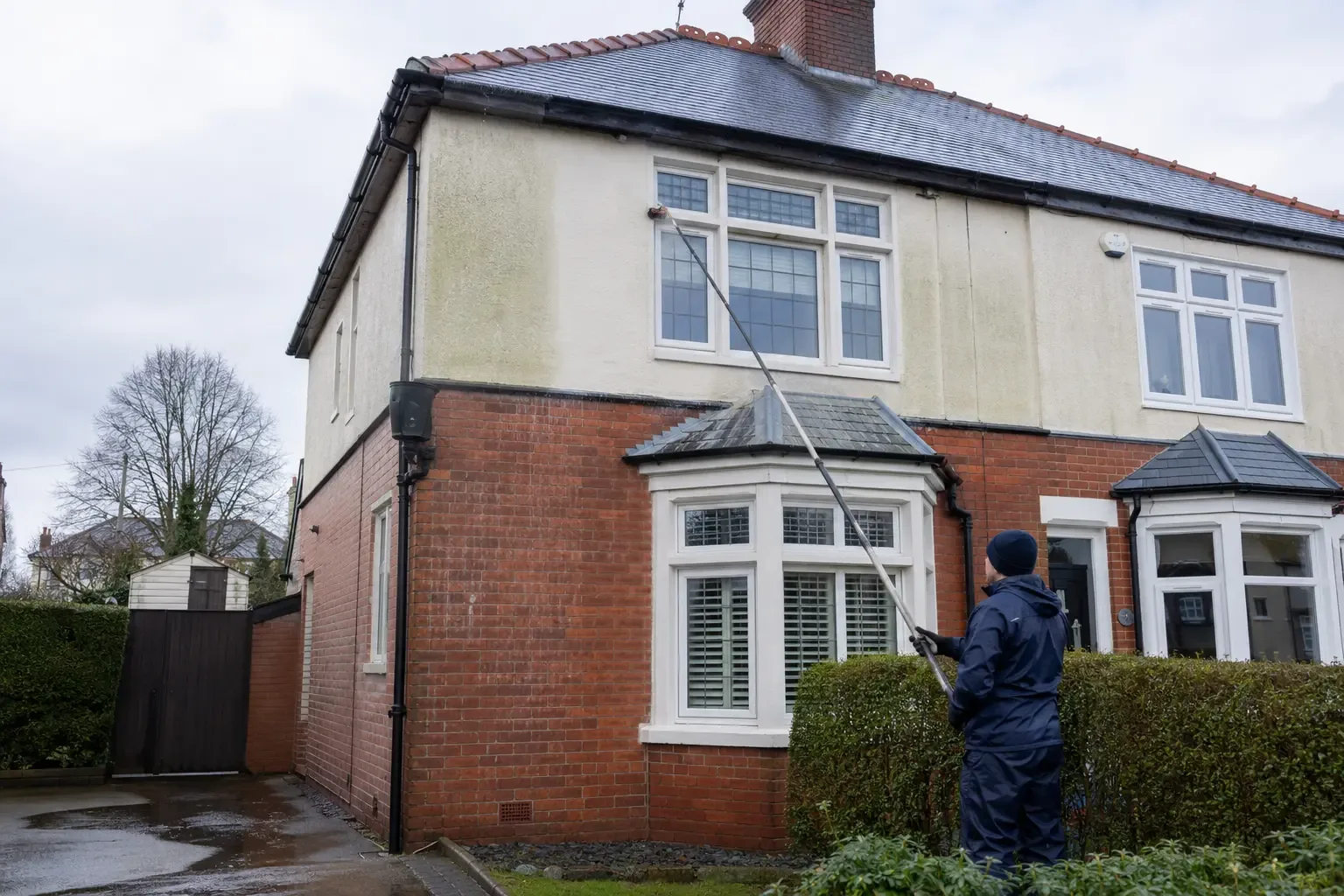
House washing is the job that changes how a property looks more than any other exterior clean, and it is the one most likely to be done badly. Walls across Cardiff pick up algae, lichen and mildew because of the weather, not because anyone has neglected them. We clean them with low pressure and the right chemistry, not a lance held close to the render.
Step 1 of 3 · no obligation, reply the same day
The same care and clear communication, whether it is a single path or a whole house.
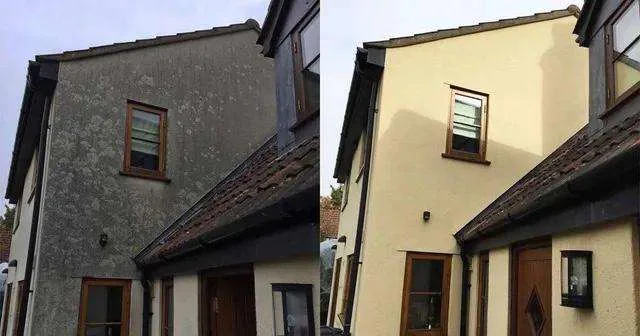
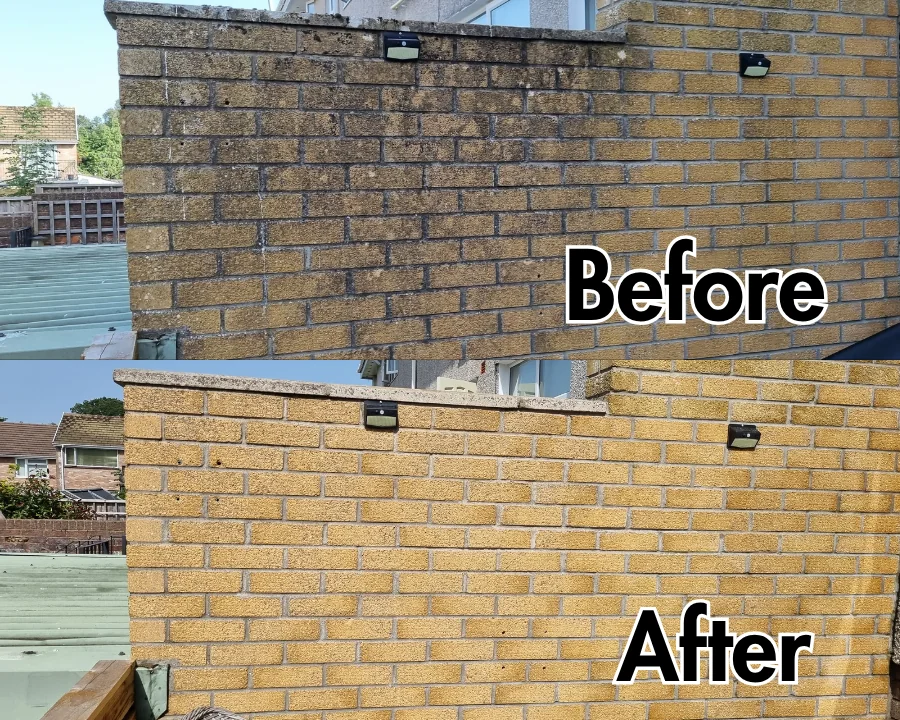
Stand close to a dirty wall and the problem is obviously alive. The green film on a shaded gable is algae. The grey and orange discs are lichen, and lichen grips hard enough to etch soft mortar and the top coat of render. The black speckling on white render is mould. None of it is dirt in the ordinary sense, which is why a brush and a hose put it straight back within a few weeks.
Cardiff speeds all of it up. We sit on the wet side of the country, the winters rarely get cold enough to kill anything off, and the prevailing south-westerly weather drives moisture onto one face of every building. That is why a house in Rhiwbina is clean across the front and green down the side. Washing a house here is a biology problem before it is a cleaning problem.
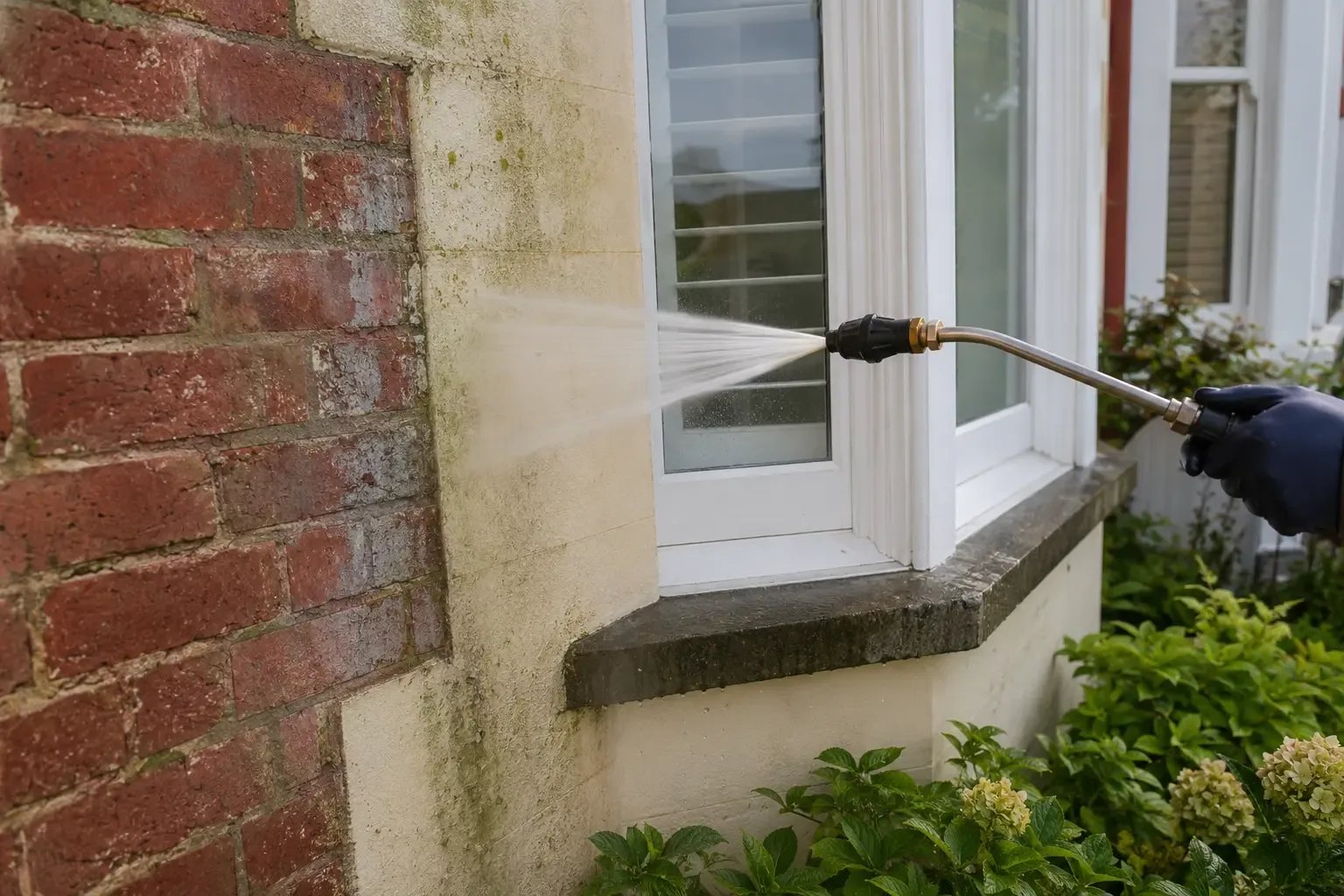
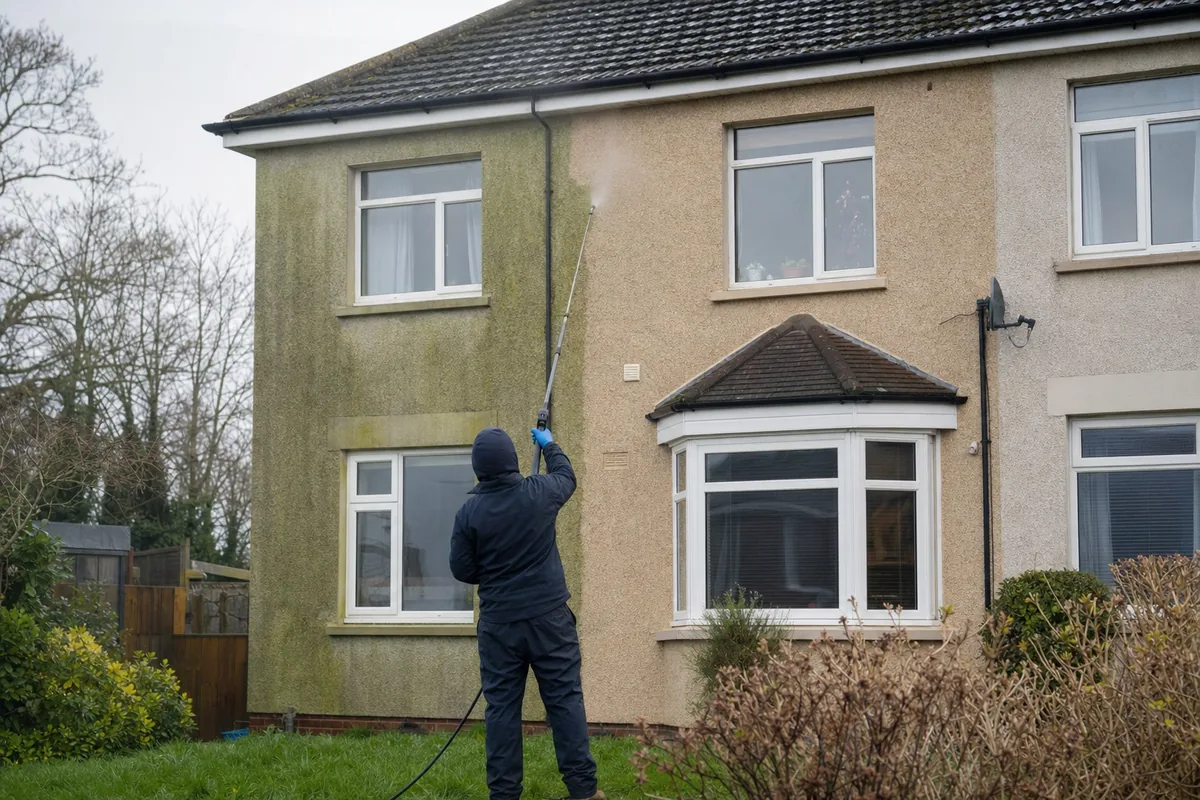
Soft washing means cleaning with chemistry and dwell time instead of force. We apply a biocide solution at roughly the pressure of a garden hose, leave it to work into the surface, then rinse at that same gentle pressure. Heavy growth gets a second application rather than more pressure.
The difference shows months later. A lance knocks the visible green off and leaves the roots in the render, so it is back within a season. A soft wash kills the organism, and the residual biocide carries on working after we have packed up. Soft washed render keeps lightening for two to three weeks, so do not judge the result on the day we finish.
Runoff is the part that gets skipped. Beds and planting against the wall are soaked with clean water first so they take up less of anything that drifts, then sheeted where they sit tight to the brickwork, then rinsed again at the end. We keep the wash away from ponds and dilute anything that reaches a gully. The mix is set for the substrate as well, so painted masonry never gets the same strength as a hard silicone render.
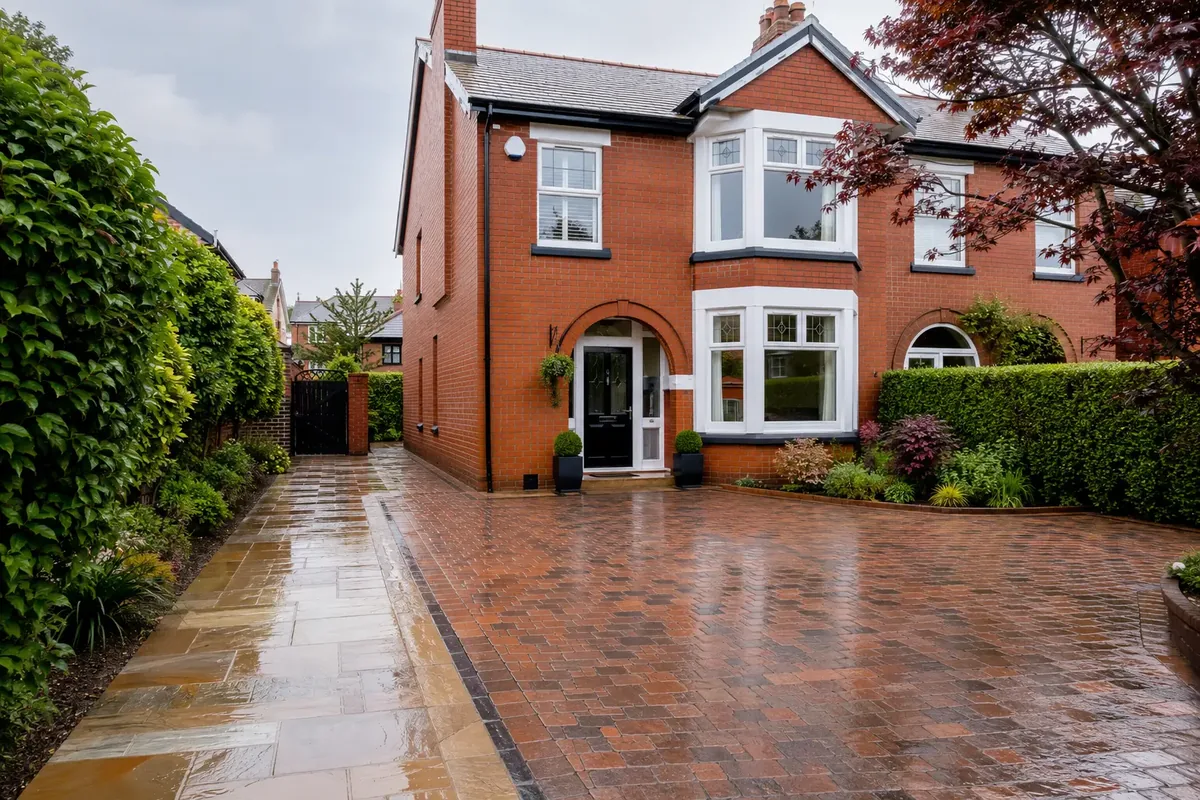
A driveway is a solid slab. A wall is layers, joints, seals and cavities, and water under pressure finds all of them. These are the failures we get called out to fix.
Walls are only part of the job. Render, pebbledash, brick, stone, painted masonry, cladding, timber boarding, uPVC fascias, soffits, downpipes, window frames and a conservatory roof all come off the same setup on the same visit. Each one takes a different mix and a different dwell time, which is the whole reason one machine setting does not go over all of them.
Brick and stone are soft washed too, because the mortar is the weakest part and the growth sits in the joints. Painted masonry gets a weaker mix, a shorter dwell and a test patch out of sight first. Cladding, uPVC fascias, soffits and frames are hand washed rather than sprayed, so the corners and the mastic lines actually come clean.
Precision does far more of the work here than power. The machine that runs at full pressure on your driveway is dialled right down for the wall above it, and on most house washes the lance never comes off the van. A low pressure applicator puts the solution on, and the pump is there to move water, nothing else.
Hot water earns its keep at ground level, on oil marks, on a rendered plinth or on a greasy path, but heat is not what shifts algae off a wall. Dwell time is. We would rather leave a solution on for another twenty minutes than turn anything up.
We have been washing houses across Cardiff and South Wales since 2019, working out of a unit in Cardiff, so most of the city is a short run for us. If an elevation is heavy enough to need a second visit to finish properly, you hear that at the quote rather than on the day.
A mid terrace in Canton is normally a half day. A three bed semi in Whitchurch is most of a day. A large detached in Cyncoed with a conservatory and tight side access takes a full day, and heavy growth on one elevation can need a short return visit.
Price moves on the number and size of the elevations, the height, how heavy the growth is, how tight the side access is, and whether the uPVC, gutters and roof go in at the same time. As a rough guide most Cardiff house washes fall between £200 and £600, with small terraces below that and large detached properties above. Treat those figures as indicative. You get a real price once we have seen the house.
Expect two to four years before green shows again, and expect the shaded north-facing elevation to go first. Houses under trees or backing onto fields pick it up quicker, while an exposed south-facing frontage can hold for five years. The second wash is always the easier one, because there is no built up layer to get through.
We wash houses in Roath, Penylan, Cyncoed, Lisvane, Llanishen, Whitchurch, Rhiwbina, Radyr, Llandaff, Canton, Pontcanna, Grangetown, Splott, Rumney, Llanrumney and Cathays, and we cover Barry, Newport and the rest of South Wales from the same base. The work changes with the street. Painted Victorian frontages in Pontcanna need a gentle mix and a test patch. Pebbledash semis in Rumney need pressure kept off them completely. Rendered newer builds in Lisvane and Radyr go on the north gable first, so that elevation gets the longer dwell.
Call or text 07576 128903, or email Liamdunn2406@outlook.com. Send a photo of the worst elevation with it and we can usually give you a sensible range before we visit. We answer seven days a week from 7:00 to 21:30 and work out of our base in Cardiff. Our Google rating is 5.0 from five reviews, all five stars.
If the walls are being done, price the roof, gutters, driveway and patio at the same time. Same access, same setup, one booking, and it comes out cheaper than having each of them back separately.
It depends on the size of the property, the number of elevations, the height, how heavy the growth is and how easy the side access is. As a rough guide most Cardiff house washes fall between £200 and £600, with a small terraced frontage below that and a large detached above it. Adding the uPVC, gutters, conservatory roof or the roof itself changes the figure. Those numbers are indicative, not a quote. We look at the house, or at photos of the worst wall, before giving you a price.
A mid terrace is usually a half day. A three bed semi is most of a day. A large detached with a conservatory, plenty of detail and tight side access can take a full day, and heavy growth sometimes needs a short second visit to treat one elevation again. We would rather come back and do it properly than turn the pressure up to finish on schedule. You get a realistic time at the quote, including whether a return visit is likely.
No, and that is why we work this way. The solution is applied and rinsed at roughly garden hose pressure, so no real force acts on the surface. On painted masonry we use a weaker mix, a shorter dwell time and a test patch somewhere out of sight first, because older masonry paint can be chalky. On render, pebbledash, brick, cladding and uPVC the damage risk comes from a pressure lance, not from a soft wash. If a wall is already damaged we tell you before we start.
For most Cardiff properties, every two to four years. The shaded north-facing elevation always goes first, and houses under trees, near water or backing onto open ground go quicker than a sunny exposed frontage, which can hold for five years. There is no benefit in doing it annually. A soft wash kills the growth at the root rather than removing the visible layer, so the surface stays clean far longer than it would after a lance, and the next wash is easier.
It helps if you are there at the start so we can agree the scope, point out anything fragile and get access to an outside tap. After that you do not need to stay. If you are out we need the side gate unlocked, windows and trickle vents closed and cars off the drive. We walk the property with you at the end if you are back, or send photos if you are not, and anything that needs another pass gets it before we load up.
Beds and planting against the wall are soaked with clean water before we start, so they are already saturated and take up less of anything that drifts, and they are sheeted where they sit tight to the wall. Everything gets rinsed again at the end. Pets and children stay indoors while the solution is on the wall and until the rinse is finished. We keep runoff away from ponds and dilute anything heading for a gully. If a plant matters to you, say so at the quote and we work around it.
Spring through to autumn is easiest, but we wash houses all year. Temperature and rain matter more than the month. Biocide works slowly below about 5 degrees, so a hard frosty week is worth waiting out, and heavy rain during the dwell time takes the solution off the wall before it has done anything. Light overcast weather is close to perfect, because the surface stays wet for longer. Late spring is popular because the winter growth is at its heaviest and the change is at its most obvious.
Neither, in almost every case. Treatment and rinse go on from ground level with extending poles, which reaches the gutter line on a standard two storey house without anything leaning on your fascias, gutters or conservatory. It is safer for us and it avoids the dents and scrapes ladders leave along a gutter run. Where a property is taller, or a section genuinely cannot be reached from the ground, we tell you at the quote stage rather than discovering it on the day.
Great company come out gave a good price and done the job straight away highly reccomend chris great guy

Very reliable, showed up on time to give a quote, and started work straight away! Wanted the back done after the front. Stunning work on my front driveway and porch with the power washer, simply removed all the algae on my walls too that the pressure washer team we had last year couldn't do.

Hard working and reliable pressure washing company! Completely transformed my paving stones and patio

Very happy with the service provided from pressure washing Cardiff, also very friendly and professional many thanks, Simon
What a good quality service have provided done a superb job of pressure washing my driveway + house. Many thanks, Shane
My husband and I are very happy with the work done at our house, to our gutters, our pool area and other concrete areas around our house. You were a pleasure to deal with and I will definitely use your services again!
Pressure Washing Cardiff did a fabulous job: our concrete driveway and retaining walls look like new! What a delight to have a tradesman visit who takes pride in his work and does a thorough job.
These guys are experts and were able to give us a great quote for a complete exterior makeover. Power washing, gutter cleaning, window cleaning as well as pressure washing for our patio and driveway. Thank you so much!!
Send a photo and a rough size and we will come back with a price, usually the same day.
20% off enquiries via WhatsApp