What roof cleaning actually costs in Cardiff
There is no single number, and anyone who gives you one over the phone without seeing the roof is guessing. Most Cardiff houses land somewhere between £400 and £1,200 for a full clean. A rear pitch on a Splott terrace and a four-sided clean on a Lisvane detached house are both called roof cleaning, and there is close to a thousand pounds between them.
The useful measure is cost per square metre of tile, then an adjustment for access. A scrape and biocide treatment on a roof that can be reached safely runs roughly £9 to £16 per square metre. That is tile area, not floor area. A pitched roof measures about 1.15 to 1.4 times the footprint underneath it depending on the angle, so a 60 square metre footprint is nearer 75 square metres of tile once the overhangs are counted.
Price bands by property type
Indicative Cardiff bands for a full clean: moss scraped off, the debris cleared out of the gutters, and a biocide application. All of them assume the roof can be worked safely from ladders, with no scaffold or cherry picker.
- Mid-terrace, one pitch, Victorian two-bed in Cathays, Roath or Canton: £280 to £450
- Mid-terrace, front and rear pitches: £450 to £700
- End terrace or small semi, three-bed: £550 to £850
- Three-bed semi with garage roof, the standard Llanishen, Rhiwbina and Llanrumney house: £600 to £950
- Detached four-bed, two storeys, four elevations: £850 to £1,400
- Bungalow: £400 to £750
- Single garage or extension roof on its own: £120 to £220
- Biocide treatment only, no scraping, semi-detached: £250 to £450
Bungalows surprise people. Everything sits on one floor, so the tile area is not far off a semi. What makes them cheaper is height. The roof is reachable from a short ladder and nobody is working two storeys up for a full day.
Pitch and height change the method, not just the hours
A shallow 20 to 25 degree roof on a 1970s bungalow can be worked with roof ladders and a harness. A steep Victorian slate pitch at 45 degrees cannot. Once the pitch passes roughly 35 degrees, or the eaves sit above about five and a half metres, we are either tied off at the ridge or pricing access equipment. That is the biggest single step change in cost on any roof.
Ground-based systems are the third route. A telescopic lance fed at low pressure treats the tiles from the driveway with nobody leaving the ground, and a gutter vacuum on poles clears the debris the same way. It is quicker, it is cheaper, and nothing is being climbed. It will not shift a 40 millimetre mat of moss with lichen crusted into the tile, so it suits light growth and maintenance visits rather than a roof that has been left twenty years.
Access, and why scaffold can double the job
Cardiff terraces are the awkward ones. A mid-terrace in Cathays or Grangetown often has no side access, so equipment reaches the back garden through the house, over a neighbour's fence, or not at all. Detached houses in Cyncoed, Lisvane and Radyr are the opposite: wide access, room for the van, clear ground on all four sides. They cost more because there is more roof, not because they are difficult.
Scaffold is what cheap quotes leave out. One elevation of domestic scaffold in Cardiff typically runs £450 to £900 for a standard hire period. Full perimeter scaffold on a two-storey house is usually £900 to £1,800, more if the erector needs a pavement licence from the council or has to bridge a conservatory. On a £700 roof clean, that is not a surcharge, it is a second job sitting alongside the first.
A tracked or towable cherry picker is often the better answer. Hire runs roughly £180 to £320 a day plus delivery, and most domestic roofs finish inside one day. It needs firm level ground and a route in wider than a garden gate, which suits detached houses and rules out terraces. If a price looks low and the roof clearly cannot be reached from a ladder, ask how they plan to get to the ridge.
How deep the moss is
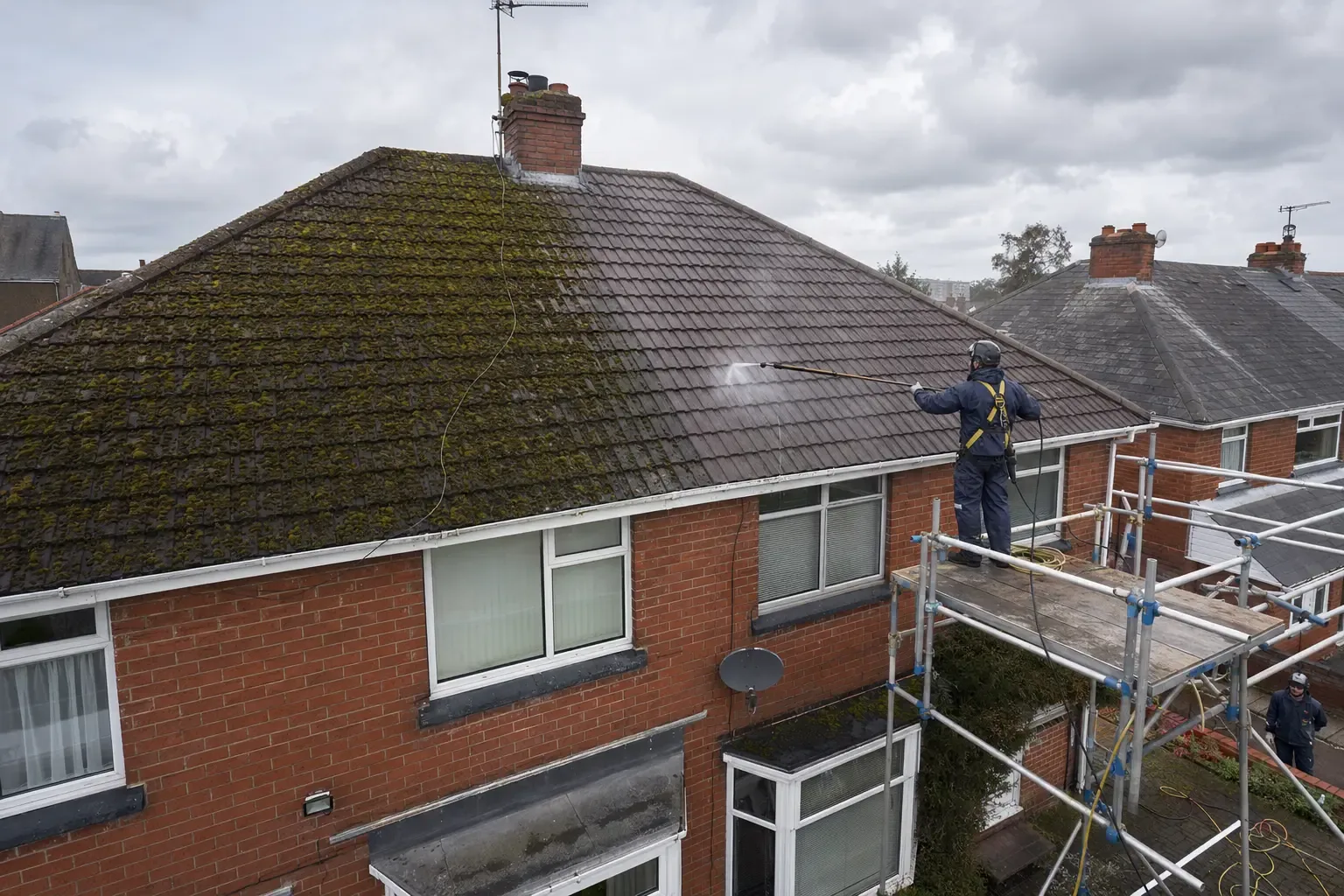
On a dirty roof, moss depth matters more than area, because scraping is the slow part. A light green film comes away in a treatment pass. A mat 30 to 50 millimetres thick on a north-facing concrete tile roof comes off as sacks of wet moss, and a three-bed semi can produce ten to twenty of them. Then the gutters it has fallen into need clearing before anyone leaves.
Lichen is a different problem. The pale grey and orange crust on older Welsh slate is rooted into the surface and will not scrape off cleanly. It is treated chemically and weathers away over the following months. Anyone promising to make lichen vanish on the day is planning to blast it, and that takes the face of the slate with it.
Whether biocide treatment is included
Ask this before you compare two quotes, because it is usually where they differ. Scraping on its own is a cosmetic reset. It removes what you can see and leaves the spores in the surface. With no biocide, a Cardiff roof starts greening again within 18 months to three years, sooner on a shaded north-facing pitch or under trees. A proper application adds roughly £120 to £300. It goes on at low pressure, it is not rinsed off, and it keeps working for months after we have gone. A quote without it is not cheaper, it is shorter lived.
How we work out a roof cleaning cost
- Look at the roof properly. From the ground on every side, from an upstairs window, and on a pole camera where a pitch cannot be seen from anywhere else. Photographs of the ridge and the valleys settle what the job actually is.
- Measure it rather than guess. Area comes from the footprint and the pitch angle, not from how big the house feels. Two semis that look identical from the street can differ by 20 square metres once the extension and the garage are counted.
- Settle the access. Ladder, roof ladder, pole system, cherry picker or scaffold. This moves the price more than everything else put together, so it gets settled before a number is written down.
- Grade the growth and the roof. Depth of moss, lichen coverage, cracked or slipped tiles, nail-sick slate, and whether the ridge mortar is sound enough to work alongside. Poor condition changes both the method and the advice.
- Price the extras out loud. Gutter clearance, moss disposal, tiles that need swapping, and whether a follow-up biocide visit is worth planning for. Extras found halfway through a job sting, so they get named at the start.
- Put it in writing. One figure, the method stated, what is included, and what would change it. Anything we find once we are up there, you hear about before we carry on.
When roof cleaning is not worth paying for
There are jobs we talk people out of, and it is cheaper for you to hear the reasons now than after a survey.
- The roof is near replacement. Nail-sick slate, tiles slipping every winter, a re-roof two years away: £900 of cleaning goes on something you are about to remove.
- You cannot see the pitch that is dirty. A green rear roof, invisible from the street and from the garden, is a problem you do not really have.
- The real fault is the gutters. Overflow, a damp internal wall, water running down the brickwork: that is a gutter clearance at £80 to £160, not a roof clean.
- The growth is light and the roof is under ten years old. Newer tiles shed water fine, and a biocide treatment on its own buys years for far less money.
- Someone has offered to seal or coat the roof instead. Coatings sold door to door at £2,000 to £4,000 are a different product with a different argument behind them. Do not let a cleaning quote quietly turn into one.
Time of year, and what a Cardiff winter does
Biocide needs a dry few hours and temperatures above about 5 degrees to work properly, which writes off much of a wet Cardiff January but leaves plenty of usable days from March to November. Early autumn is the best single window, clearing tiles and gutters before leaf fall and the winter rain. North-facing pitches and roofs under trees, which covers a lot of Penylan and Cyncoed, regrow the fastest. Treating those every three to five years costs far less than paying for a full scrape again.
Getting a real number for your own roof
Every figure on this page is guidance, not a quote. The only honest way to price a roof is to look at it, measure it, and work out how it gets reached. We have been cleaning roofs across Cardiff, Barry and Newport since 2019, and looking at yours costs you nothing.
Call 07576 128903 or email Liamdunn2406@outlook.com. We answer seven days a week, from 7am to 9:30pm. You will get told what the job is, what it should cost, and when the honest answer is that you do not need one yet.