What pressure washing actually does
Pressure washing removes dirt by hitting it hard enough to shear it off the surface. Nothing else happens. No chemistry, no biology, no lasting effect. A domestic machine from a DIY shed runs about 100 to 130 bar, roughly 1,500 to 1,900 psi, at 6 to 8 litres a minute. The petrol machines we run put out 150 to 250 bar at 15 to 21 litres a minute. Pressure does the cutting and flow does the clearing, and most people underestimate how much of the finished result is flow.
Nozzle choice matters more than the badge on the machine. A 0 degree red pencil jet carves a visible line into concrete and should never go near a house. A 25 to 40 degree fan is what most surfaces should ever see. On flat ground we work with a rotary surface cleaner, a covered disc with two spinning jets held at a fixed height, which avoids the zebra striping a hand lance leaves down a driveway. Distance is the other control. A lance held two inches off a block paver and the same lance held at arm's length are doing two different jobs.
What soft washing actually does
Soft washing kills the growth instead of blasting it off. Pressure at the nozzle stays under about 35 bar, roughly 500 psi, against the 150 to 250 bar a petrol machine puts out. On roof work it is little more than a garden hose on a long pole. Nothing is being cut off the surface. The water is only a carrier for the chemical.
The solution does the work. A soft wash mix is sodium hypochlorite diluted to somewhere around 1 to 4 per cent depending on the surface, a surfactant so it clings to vertical work instead of running straight to the ground, and usually a residual biocide afterwards. It dwells for 10 to 20 minutes and kills algae, moss and lichen at the root, including the spores sitting in pores no lance will ever reach. Lichen is the slow one, and a heavy north-facing wall sometimes needs a second visit. That is why a soft washed wall stays clean for years while a pressure washed one greens up in a season or two.
There is a limitation nobody selling soft washing likes to mention. It only handles organic soiling: algae, lichen, moss, mould and atmospheric grime. It does nothing to engine oil, tyre marks, chewing gum, cement splashes, rust runs or old paint. Those need pressure, heat, a specific chemical, or all three. Hot water is the reason an old oil patch on a driveway lifts at all.
Pressure washing vs soft washing, surface by surface
The working rule is short. Hard, flat, horizontal and load bearing usually takes pressure. Anything vertical, coated, brittle or above head height takes a soft wash. Here is how that plays out on the surfaces we meet most across Cardiff.
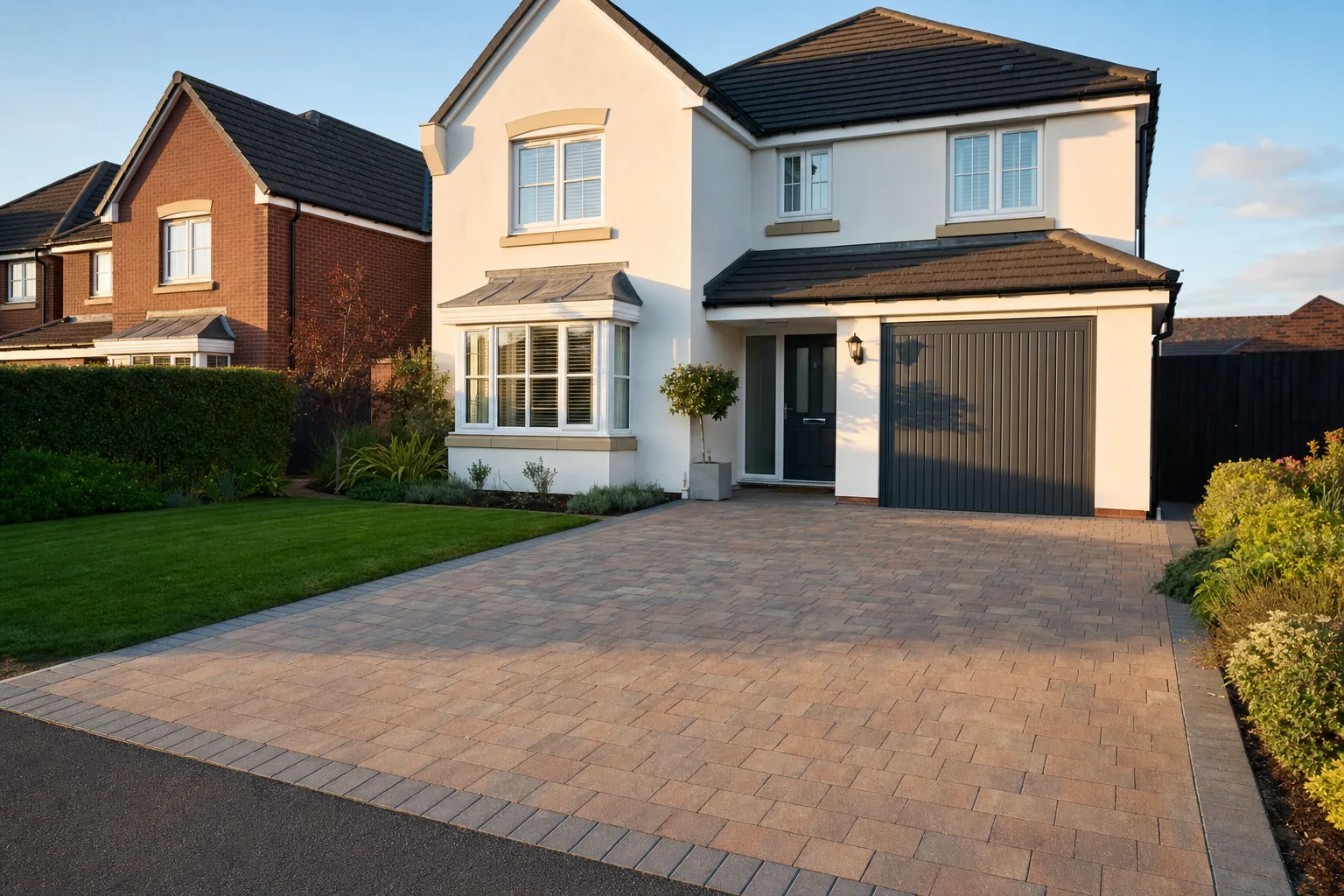
- Block paving: pressure, with a rotary surface cleaner. Re-sand the joints afterwards with kiln dried sand or the blocks rock underfoot and the weeds are back within weeks.
- Concrete and imprinted concrete: pressure, and gently on imprinted. The colour sits under a sealer, so reseal it afterwards or the surface fades and dusts.
- Indian sandstone and other natural stone: low pressure plus a chemical soak and time. A close 200 bar lance scours the face open, and an open face regreens faster than it did before you cleaned it.
- Tarmac: low pressure, wide fan, keep the lance moving. A rotary at full pressure lifts the bitumen binder and pulls the chippings out.
- Resin bound: low pressure, wide fan, no rotary. Push past roughly 100 bar and you knock stone out of the resin and leave pits that cannot be filled.
- Render, whether K Rend, silicone, monocouche, acrylic or painted pebbledash: soft wash, no exceptions.
- Roof tiles, whether concrete, clay or slate: soft wash. Nothing else should touch them.
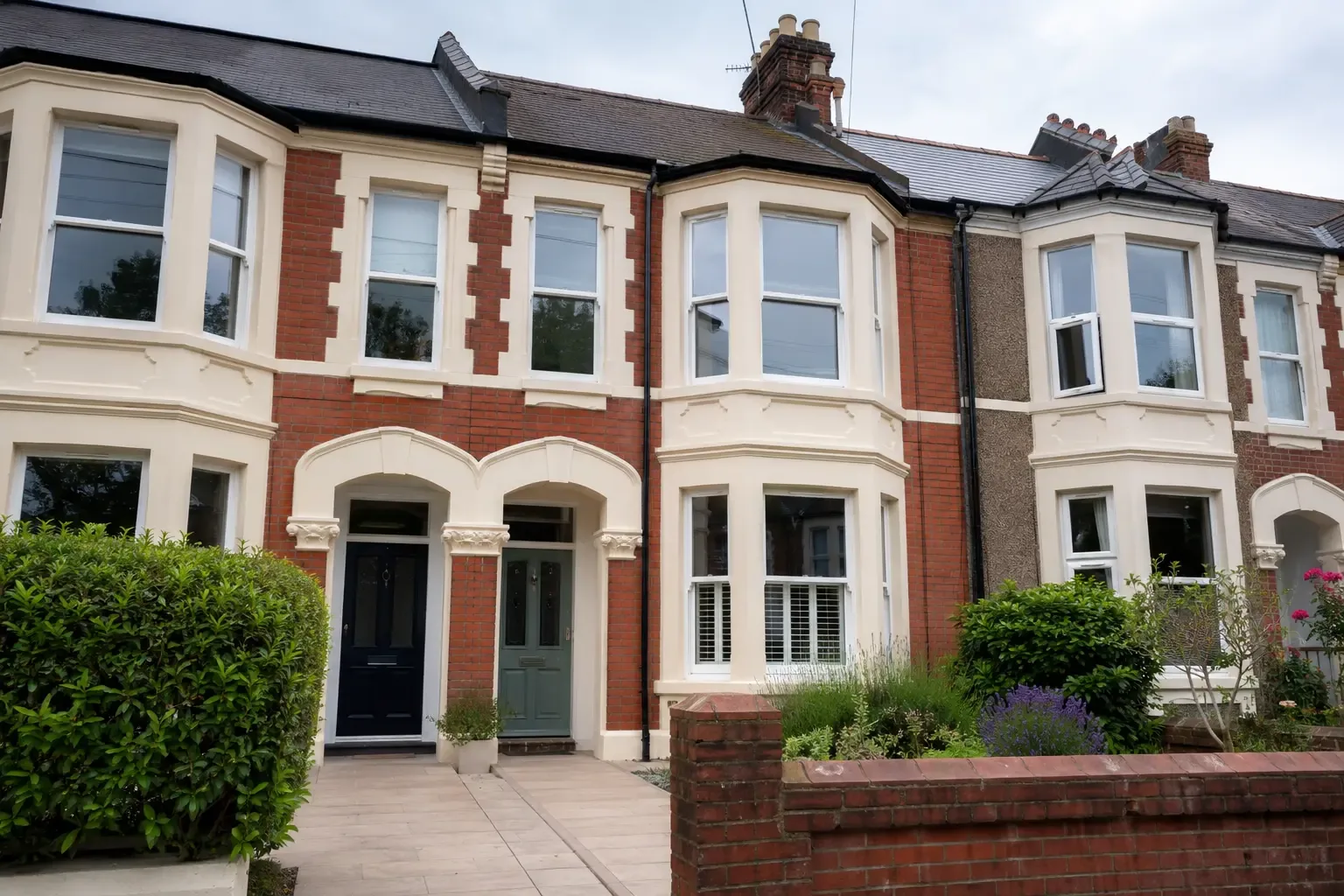
- Brickwork: low pressure, or soft wash on older property. The lime mortar in the Roath, Canton and Grangetown terraces blows out of the joints in seconds.
- uPVC fascias, soffits and gutters: soft wash and hand detailing. Pressure at a soffit joint drives water straight into the roof void.
- Softwood decking and fencing: 60 to 80 bar, fan tip, worked along the grain. More than that raises the fibres and leaves the timber furry.
- Composite decking: soft wash. The boards carry a thin cap layer, a close lance scars it permanently, and board makers set their own pressure limits, so check them before anyone starts.
- Conservatory panels and polycarbonate: soft wash. Pressure crazes plastic and forces water under the glazing bars.
- Solar panels: neither. Deionised water and a soft brush on a pole, no chemical and no pressure.
What goes wrong when the wrong method is used
Render is the worst of them. The coloured layer on a modern silicone or acrylic thin coat system is only a couple of millimetres deep, and it is the part that makes the wall shed water. A lance takes it off. You get a pale patch where the lance sat, striping where it moved, and a wall that soaks up rain instead of throwing it off. The repair is not a touch up. It is re-rendering the whole elevation so the colour matches.
Roofs fail differently. Concrete tiles carry a granular surface that a pressure washer strips in a single pass, taking years off the tile and leaving a rough face that moss recolonises faster than before. Slates crack, ridge mortar comes away, and water driven up under the laps ends up in the loft, where you will not see it for months. If somebody quotes to pressure wash your roof, end the conversation there.
The rest costs money quietly. Blown pointing on old brick. Sand stripped out of block paving joints, so the weeds are through by August. Furry timber that now needs sanding before it will take oil. And dilute hypochlorite left to dry on foliage scorches it, which is why covering the borders is half of a soft wash day.
How a soft wash day runs on site
Most of a soft wash is not spent spraying. This is the order we work in on a house, a render elevation or a roof.
- Survey and protect. We check what the surface actually is, how old it is, and whether the growth is a symptom of something else. Plants, timber, furniture and cars are covered or soaked with clean water before anything is mixed.
- Clear the mechanical work. Gutters emptied, loose moss scraped off ridge and tile, debris bagged and taken away. Chemical will not shift a thick mat of moss, and moss that comes away later blocks the downpipes.
- Apply low, then wait. The solution goes on at low pressure from the bottom upwards, so it never runs down dry surface and streaks. It dwells 10 to 20 minutes. A bad wall gets two passes, not one at double strength.
- Rinse, or leave it to weather. Walls, uPVC and conservatory roofs get rinsed. Roofs usually do not. The dead growth washes off over the following weeks of rain, so a roof will not look finished the same afternoon, and we say so before we start rather than after.
- Leave a residual. A biocide left on the surface keeps working after the van has gone. That is where the extra years come from, not from the wash itself.
Cost, and how long each result lasts
The two price differently because they cost differently to deliver. Pressure washing is time, fuel and water. Soft washing is chemical, dwell time and often access equipment. As indicative shapes only, a Cardiff driveway clean tends to sit around £200 to £400, a house or render soft wash around £280 to £550, and a roof soft wash from about £550 upwards. Size, access and condition move every one of those figures, which is why we look at the property before we give you a number.
Longevity is where the real gap sits. A pressure washed patio in a shaded Cardiff garden can show green again inside 12 months, because nothing was killed, only removed. A soft washed and treated surface is commonly still clean at three to four years. So two quotes on the same wall, one pressure and one soft wash, are not quotes for the same job even when the numbers look close.
When the honest answer is do not bother
Not every dirty surface is worth paying somebody to clean. These are the jobs we talk people out of.
- The staining is a symptom. A dark stripe under a gutter joint or below a sill is a leak or a missing drip detail. Fix the cause or you will be paying for the same clean again next year.
- The roof has slipped slates, cracked tiles or failed ridge mortar. Get a roofer up there first, or you pay for the clean twice.
- It is late October. A patio cleaned now faces a wet Cardiff winter with no drying weather and will be green again by March.
- It is small, flat and yours. Fifteen square metres of concrete with a domestic machine is a Saturday morning, not a quote.
- You are replacing or painting it anyway. Wash it enough to key the paint, then stop.
The Cardiff part of the answer
Cardiff is mild, wet and sits next to open water, which is close to ideal for algae. Over a metre of rain a year and very few hard frosts means growth barely pauses over winter. North-facing elevations, anything under a tree, and any wall taking the wet south-westerly go green first. We have been cleaning these surfaces here since 2019 and the pattern repeats. The render heavy estates around Lisvane, Llanishen, Radyr and Rhiwbina are mostly a wall and roof problem. The older terraces in Roath, Canton, Splott and Grangetown are lime mortar, shaded back yards and gutters packed with moss.
So for most houses the answer is both, on different parts of the same property and often on the same day. Ground down, pressure. Roof, walls and anything plastic, soft wash. If you want a second opinion before you book anybody, send photos to Liamdunn2406@outlook.com or ring 07576 128903 and we will tell you which method the surface needs, including the times the answer is to leave it alone. We work across Cardiff, Barry, Newport and the wider South Wales area, seven days a week from 7:00 to 21:30.