The short answer, surface by surface
A sealer is a surface treatment, not a repair. It changes how water, dirt and joint sand behave in the top few millimetres and does nothing at all below that. Whether that is worth a few hundred pounds comes down to what your driveway is actually made of, and a fair number of the drives we are asked to seal in Cardiff are made of something that should be left alone.
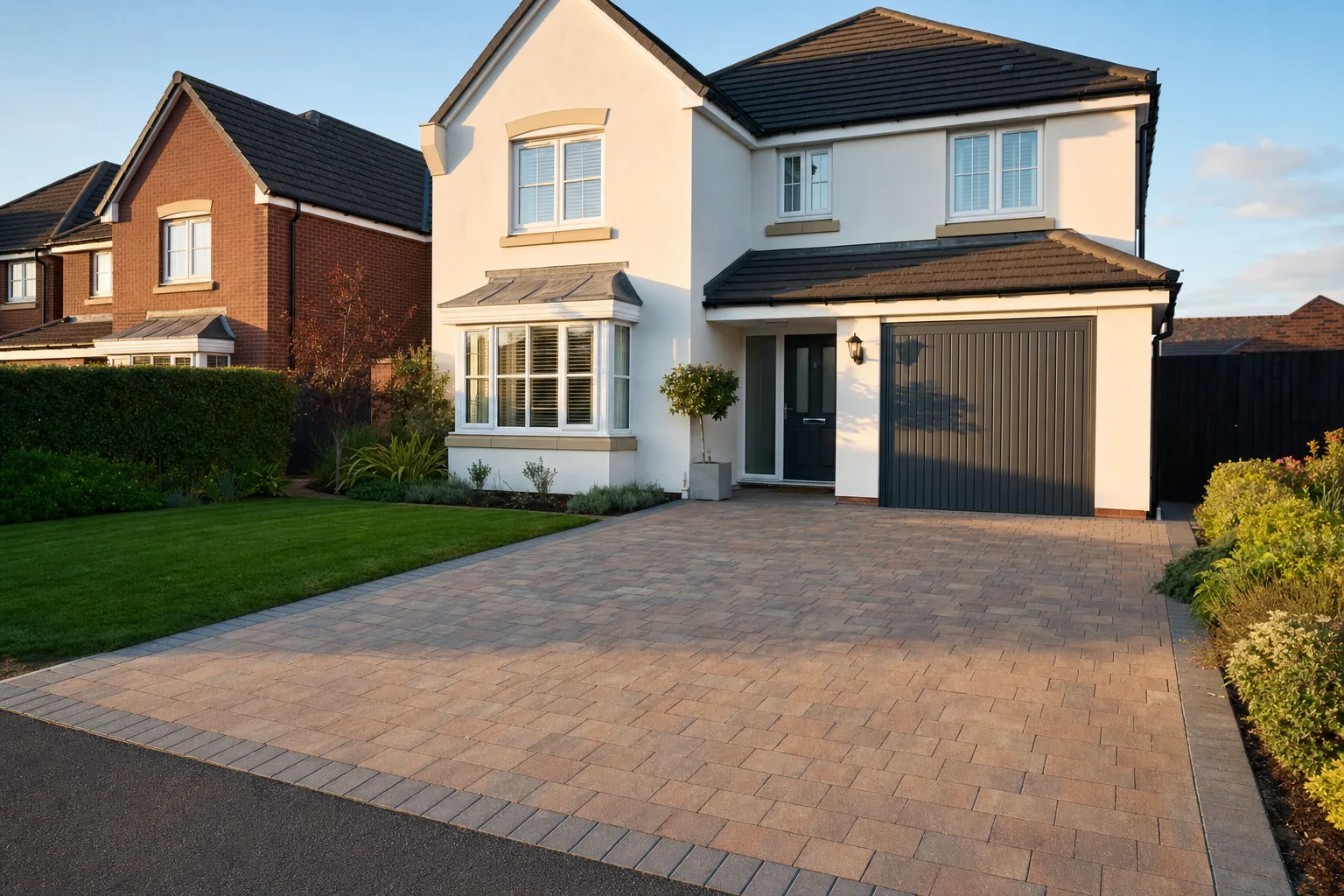
- Block paving: usually yes. Sealing binds the joint sand, slows moss and holds the colour. This is the surface the products were designed around.
- Imprinted concrete: yes, and close to compulsory. The colour sits in a thin layer at the very surface under a sealer, so once that coating wears through, every clean takes colour with it.
- Poured or brushed concrete: optional. It keeps oil and tyre marks sitting on top rather than soaking in, but plenty of concrete drives go their whole life unsealed with no harm done.
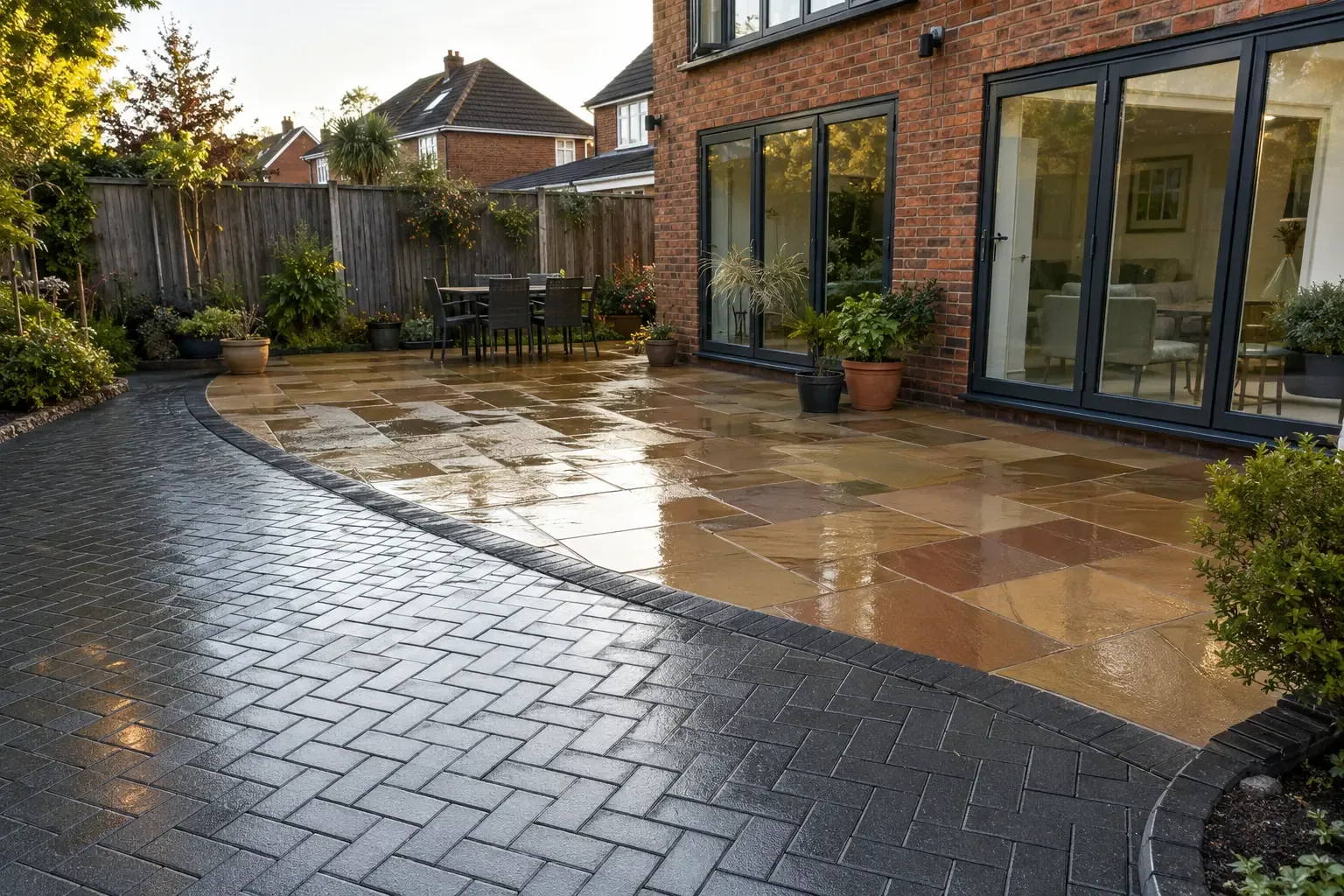
- Indian sandstone and other natural stone: a breathable impregnator only. A film forming acrylic can darken stone permanently.
- Porcelain: no. It is close to non-porous, so a sealer has nothing to key into and peels off in sheets.
- Tarmac: no. Read the next section before anyone sells you a restorer.
- Resin bound: normally no. It is already bound in UV stable resin, and the wrong product blocks the drainage it was laid for.
- Permeable paving and gravel: no. One drains through its joints by design, the other has nothing to hold a coating.
What sealing genuinely does
Four things, and all four are real. It binds the top of the joint sand, so heavy rain stops washing sand down into the gully. It slows staining, because oil, barbecue fat and the tannin out of leaf litter sit on the film instead of soaking into a porous block. It slows moss and algae coming back, which turns next year's wash into a hose and a stiff brush rather than a machine. And it holds colour, slowing the fade that turns red blocks pink and charcoal blocks a chalky grey.
What it gets sold as doing, and does not
The overselling is always about permanence. Sealing will not keep a drive weed free. Bound joint sand is harder to root into, but seed lands on top and germinates in the grit and leaf litter that collects on any outdoor surface, so a stiff brush in October still does more for weeds than any coating. Oil is delayed rather than stopped: leave a fresh spill sitting on sealed blocks for a fortnight and it will still mark them. A wet look finish also makes a sloping drive slippery in the rain unless an anti-slip additive goes into the top coat. Above all, no sealer holds a failing driveway together. Rocking blocks, wheel ruts and a dropped corner are sub-base faults, and a film over the top only gives you a smart looking dip.
The surfaces where sealing is a waste of money
Tarmac is the clearest case. It is stone held in bitumen, and the bitumen is already the binder, so there is no open pore structure asking to be filled. The black products sold as tarmac sealer or tarmac restorer are really a coating that re-blackens a surface gone grey with age. They look excellent for a season, then wear off the wheel tracks first and leave a patchy drive that has to be coated again. That is a recurring cost dressed up as protection.
Resin bound comes next. It is bound in UV stable resin already, and most of it was laid permeable so rain soaks straight through instead of running out to the road. A film sealer closes those pores and the water sheets off, which is the opposite of what the drive was built to do. The same argument covers permeable block paving, and it matters on Cardiff front gardens in particular, where a permeable build up is often the reason a new front drive needed no planning permission. Two more to leave alone. Paving under a year old is still pushing efflorescence, the white bloom that migrates out of the concrete itself, and sealing over it traps the salts and leaves the drive looking milky. Blocks that are already flaking will shed the flake and take the sealer with it.
Is it worth sealing a driveway on the numbers?
Here is the arithmetic, as guidance rather than a quote. Cleaning and re-sanding a standard double of about 30 square metres runs roughly £150 to £280 in Cardiff. Sealing on top of that works out at around £7 to £14 per square metre applied, so another £210 to £420 on the same drive, depending on the product and whether the blocks drink two coats or three.
Now the half everyone forgets, which is the interval between jobs. An unsealed drive in South Wales is visibly green again inside twelve to twenty four months, sooner on a north-facing frontage under a lime or a sycamore. Sealed, you tend to get three to five years before it needs a proper machine clean, then a re-seal every two to four years, which is a wash, a sand top-up and a single coat. Run that across six years and the two routes land in much the same place financially. Wheel tracks and the turning area always go first, so test yours with a bucket of water thrown over the worn part. Beading means the sealer is still doing its job. Soaking straight in means it has gone.
So the honest answer is that sealing rarely saves money. What you are buying is a driveway that looks close to its best most of the year, instead of for a few months after each clean. If that is worth the outlay, seal it. If you are relaxed about it greening over by the second winter, clean it, re-sand it and put the money somewhere else.
Three situations settle the question on their own.
- North-facing, shaded or under trees. Regrowth is fast on those frontages, so a sealer does more work for its money.
- Faded blocks. A colour enhancing sealer is the only thing short of lifting and relaying that puts the depth back.
- Selling soon, or relaying inside a couple of years. Skip it. A clean and a re-sand do the visual work for a third of the money.
The mistakes that ruin sealing jobs
Nearly every failed sealer we are called out to look at failed for one of these reasons.
- Sealing damp paving. Trapped moisture turns the film milky white, sometimes hours after it looked perfect, and the only real fix is stripping it back off. Blocks need 24 to 48 hours of dry weather after a wash.
- Sealing over dirt. A sealer locks in whatever is under it, so every missed lichen spot and every tyre rub mark becomes permanent.
- Skipping the re-sand. Joint sand comes out with the dirt on every clean, and sealing empty joints binds nothing at all.
- The wrong product on the wrong stone. Solvent based acrylics can darken natural sandstone permanently. Test a patch in a corner and look at it in daylight.
- Sealing over an unknown old coating. Incompatible products wrinkle or lift, so if nobody knows what went on last time, test before the whole drive is committed.
- Too much product, or cold weather. Sealer that puddles dries as glossy patches, and below roughly 8 degrees the film never forms properly.
What a proper clean and seal looks like
- Survey and test patch. Identify the surface, then look for rocking blocks, failed edging, oil patches and any coating already on there. A test patch in a hidden corner settles the finish before the whole drive is committed to it.
- Clean, then put right. Rotary surface cleaner at a pressure matched to the blocks, lance for the edges, kerbs and gullies, then reset anything that moves. There is no sense sealing over a block that is about to shift.
- Let it dry through. 24 to 48 hours of dry weather, longer on a shaded frontage. Tape a square of clear plastic to the paving for an hour. Condensation underneath means the blocks are still wet inside.
- Re-sand the joints. Kiln dried sand brushed and vibrated in to full joint depth, then topped up again until the joints stop taking it.
- Two coats, then cure. Sprayed and back-rolled, or brushed out in even overlapping bands so nothing puddles, with the second coat once the first has taken. Driveable again after 24 to 48 hours.
If you decide not to seal
Plenty of Cardiff driveways never see a sealer and still look respectable, because their owners do the cheap things properly. A benzalkonium chloride based hard surface biocide, watered on in early autumn and left to work, costs very little per application and knocks the algae back before the wet months. Keep a bag of kiln dried sand in the garage and top the joints up once a year. Sweep the leaves off before winter, because rotting leaf litter is exactly what weeds root into. And fix the blocked gutter or split downpipe that keeps one corner of the drive permanently wet, because that corner is where the green always starts.
Getting a straight answer on your own driveway
Whether it is worth sealing a driveway is not a question anyone can answer from a photograph. Somebody has to stand on the blocks in daylight, see how thirsty they are, check the joints and the edging course, and say so. We have cleaned driveways across Cardiff and South Wales since 2019, from Roath and Penylan out to Radyr, Llandaff and Whitchurch and on to Barry, and we talk people out of sealing more often than we sell it. Call 07576 128903 or email Liamdunn2406@outlook.com. We answer the phone seven days a week, 7:00 to 21:30.