The price bands, by property type
These are guide figures for a single clear of the whole gutter run, downpipes included, on a house with normal pole access from the ground. They are not a quote. Every one of them can move once we have seen the back of the property.
- Bungalow, or a single storey extension on its own: roughly £45 to £75. Short run, low reach, one visit and out.
- Two storey mid terrace, front and rear only: roughly £60 to £90. Common through Cathays, Splott and Grangetown, where there are no side elevations to reach.
- Two storey semi detached, full perimeter: roughly £80 to £130. Three elevations plus a garage run.
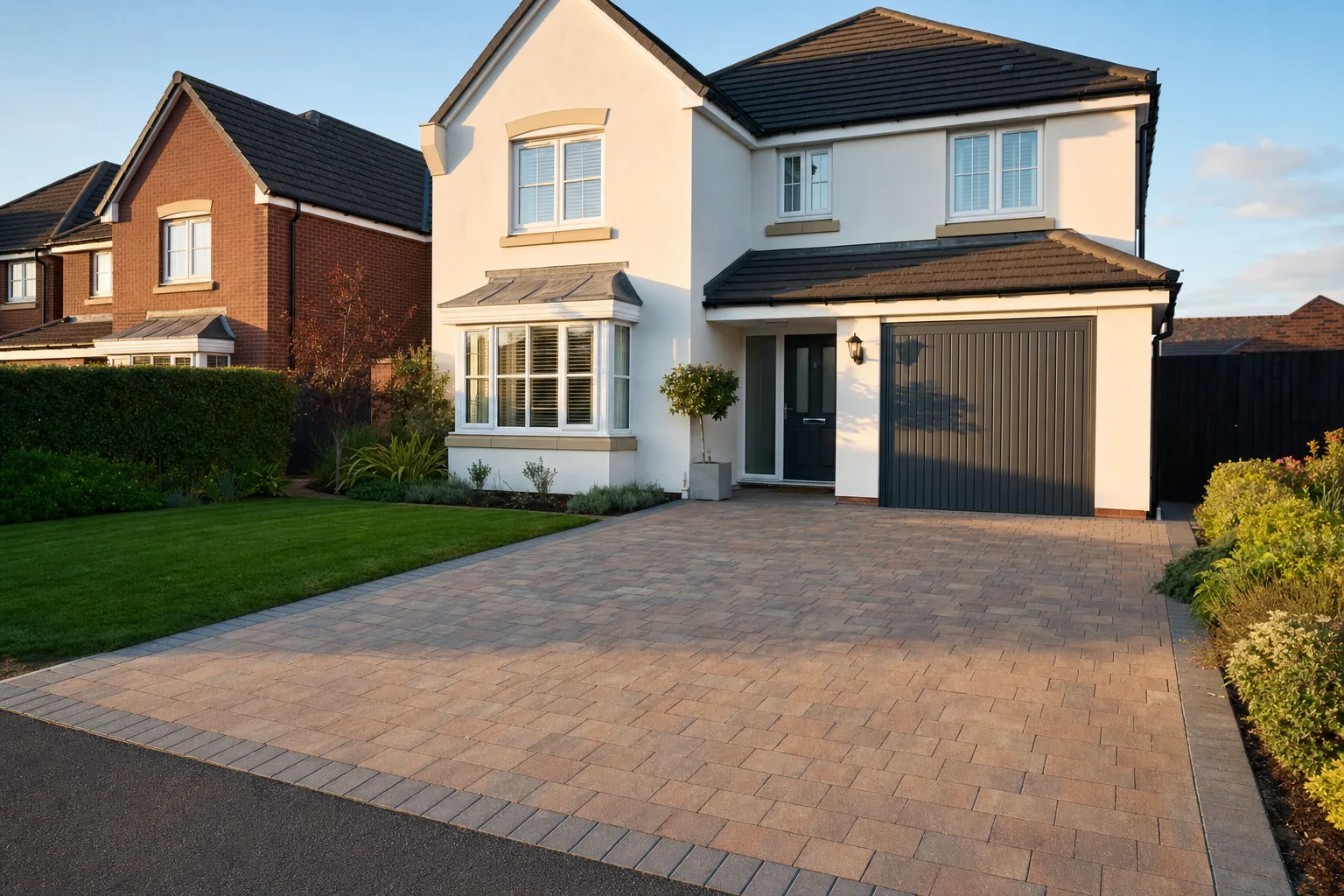
- Two storey detached: roughly £110 to £180. More downpipes, and usually a conservatory or a lean-to sitting under part of the run.
- Three storey Victorian or Edwardian townhouse: roughly £150 to £250. Roath, Penylan and Pontcanna are full of them. The reach is what costs, not the mess.
- Large detached with several roof levels, dormers or a wraparound extension: £200 upwards, priced on site only.
National calculators hand you one gutter cleaning cost for a postcode and assume a modern estate house with a clear run the whole way round. Cardiff housing rarely obliges. A Roath terrace with a rear lane behind it prices differently from the same terrace where the only route to the back is through the hallway. Two near identical semis in Llanishen can sit £30 apart because one has a conservatory under the rear run and the other does not. Any figure quoted before somebody has looked at the back of your house is a starting point, not a price.
What actually moves the price
- Storeys. A gutter vacuum on poles clears most three storey properties from the ground. Above that, or where the garden drops away in steps behind the house as it does on plenty of plots in Penylan and Cyncoed, the job needs a tower or powered access and the price changes shape.
- Access to the rear. A locked side gate with no key, no rear lane, a neighbour's extension tight against the wall, or a greenhouse parked under the run, all add time.
- Conservatory and lean-to roofs. Polycarbonate and glass will not carry a ladder, so anything above them has to be worked on poles from wherever there is solid ground.
- How long it has been left. Two years of compacted silt under a sycamore is not the same work as last autumn's leaves. Wet silt has to be broken up before the vacuum will lift it.
- Extras on the same visit. Cleaning the fascia and soffit faces while the poles are already up usually adds £50 to £120, and costs far less than booking it as a second trip.
Why the cheapest quote is usually a smaller job
A gutter can be emptied in fifteen minutes if nobody looks in the downpipe. You cannot see into your own gutter from the ground, so careful work and careless work look identical from the pavement. You find out which one you paid for during the next wet week. The cheap quote is rarely a scam. It is usually a narrower job than you assumed you were buying.
- The downpipe. Most real blockages are not in the gutter at all. They sit in the outlet, the swan neck behind the fascia or the shoe at the bottom. Skim the leaves off the top and the water still backs up.
- The camera check. A pole camera feeding a monitor at ground level, or before and after stills sent to your phone, is the only evidence you will ever have that the run is clear.
- Water testing. Running water down a cleared gutter is what finds the ponding low spot, the split union and the joint that drips onto a window sill.
- Debris removal. Vacuumed silt has to go somewhere. Tipped into a border, it washes straight back onto the drive at the next downpour.
- Hopper heads and roof valleys. On the older terraces the valley outlet between two roof slopes blocks before the gutter does, and that is the one that puts water into a loft.
- Safe working. Anyone leaning a heavy ladder against brittle uPVC guttering to save on pole kit is bending your brackets while they work.
What a proper visit looks like
- Walk the perimeter. The run gets looked at from the ground first. Sagging brackets, plant growth out of the gutter and a dark stain down the brickwork under a joint show where the water has already been going.
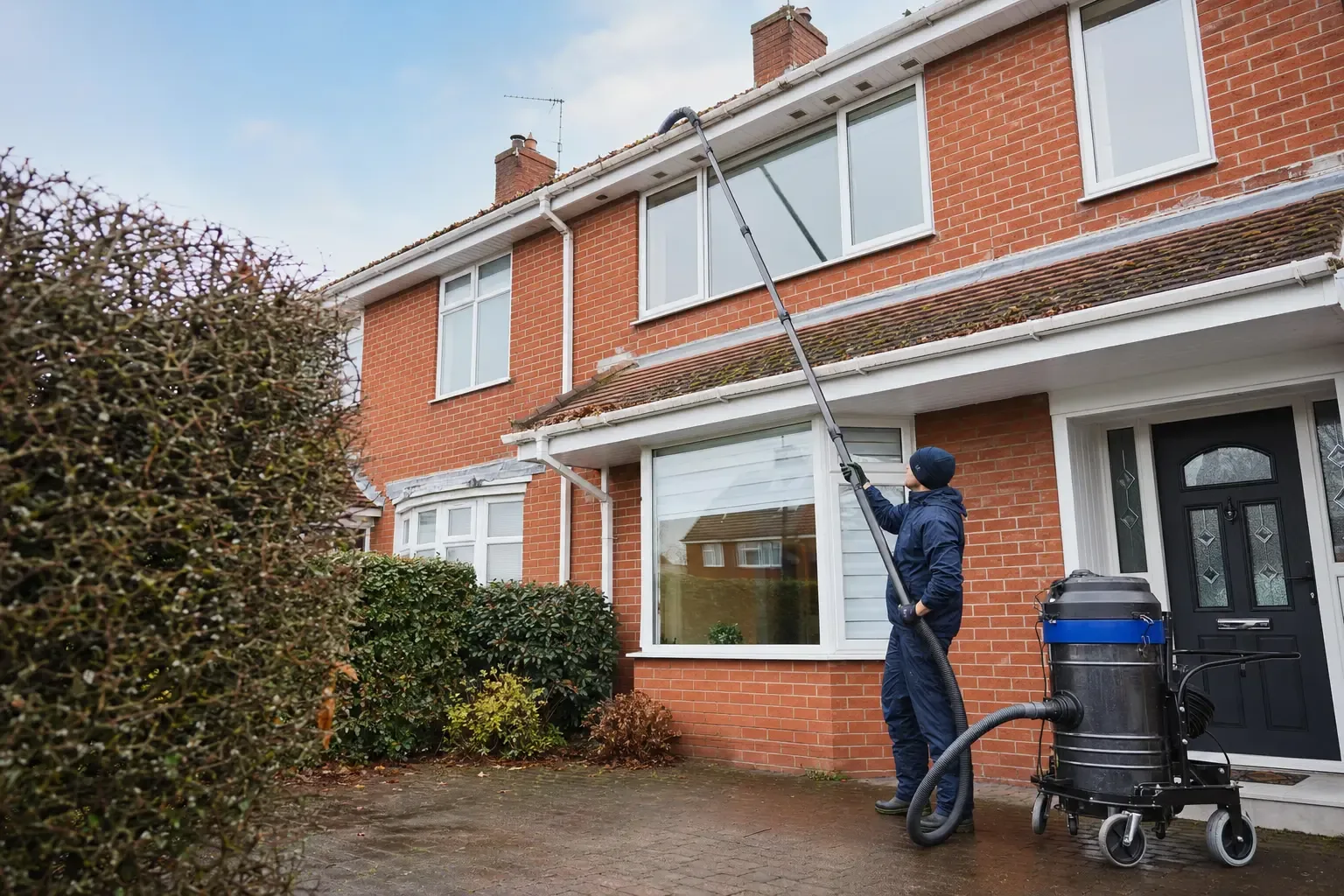
- Vacuum the run. A wet and dry gutter vacuum on carbon fibre poles lifts leaves, silt, moss and the grit that washes off concrete roof tiles, all from ground level, with no weight on the gutter or the fascia.
- Camera on the pole. A camera on the top section feeds a monitor below, so the gutter is checked as it is cleared rather than guessed at.
- Clear the downpipes. Every downpipe gets flushed or rodded from the top and checked at the bottom. If the gully underneath is silted up the water still has nowhere to go, so that gets cleared too.
- Flush and watch. Water goes down the cleared run and somebody stands and watches where it comes out. A gutter that still holds water after that has a fall problem, not a debris problem.
- Photos and a straight account. Before and after images, plus anything found that needs a repair rather than a clean.
How often gutters need doing in Cardiff
Once a year suits most houses here. Cardiff takes well over 1,000 mm of rain in an average year and it arrives across a lot of separate wet days, so gutters in this city shift far more water than national advice assumes.
Twice a year makes sense where mature deciduous trees stand within falling distance. Lime, sycamore and horse chestnut are the worst of them and they line a great many streets in Roath, Penylan, Cyncoed, Lisvane and Llandaff. Every second year is defensible on an open modern estate with nothing overhanging the roof, as long as you look at the walls each winter for the dark vertical stain under a joint that says it has been overflowing.
Timing matters more than frequency. The visit that earns its money is the one after leaf fall, roughly mid November to January. A clean in early October only means doing it again. And if the roof is being cleaned or the moss stripped, book the gutters afterwards and never before, because moss removal fills them completely.
The nesting season caveat
Between roughly March and August you may be told a section has to be left where it is. Jackdaws build in gutter ends and hopper heads, and starlings and house sparrows get in behind fascia boards and under the eaves. Damaging an active nest is an offence under the Wildlife and Countryside Act 1981. A contractor who works around one and comes back later is doing the job properly, not stalling.
What the alternative costs
An overflowing gutter does not drip politely onto the path. It sheets water down the wall, hour after hour, in the same spot. A lot of Cardiff is solid wall Victorian and Edwardian brick with no cavity to stop the damp crossing, particularly through Roath, Cathays, Canton and Splott. Keep the outer face saturated through a winter and the inner face goes damp, wallpaper lifts and plaster blows. Render is no safer. Water tracking behind a silicone render finish lifts it off in patches, and a patch repair never colour matches the rest of the wall.
Repair costs vary by trade and by house, but replastering and redecorating one damp bedroom wall commonly runs into several hundred pounds, and the wall has to dry out first, which can take months. Replacing a rotten timber fascia, soffit and gutter run along one elevation of a two storey house is usually a four figure job. Set that against a yearly clean at £80 to £150 and the arithmetic is not close.
When not to bother
Not every gutter needs a contractor. These are the jobs where you should keep your money in your pocket.
- A bungalow on level ground, no overhanging trees, and a ladder you trust. Twenty minutes with a scoop and a bucket.
- You had them cleared last autumn and nothing overhangs the roof. Skip a year, then check the walls in February.
- The gutter is sagging, split or dripping at a joint. Cleaning will not stop a leak. Price the repair first or you pay twice.
- You live in a flat with a managing agent. Guttering is nearly always inside the service charge already, so ask before you pay for it twice.
- Water runs off a roof edge with no gutter at all, or a downpipe has lost its shoe. That is a fitting job, not a cleaning one.
The one thing worth arguing about is doing it yourself at two storeys or higher. Ladder falls put people in hospital every year and clearing gutters is a classic reason for being up one, usually stretching sideways off the top third of the ladder. Eighty pounds is not worth that.
How to compare quotes properly
Three questions sort the quotes out. Does the price cover the downpipes and the gully at the bottom, or only the gutter itself. Will you get before and after images. And what happens if a split union or a dropped bracket turns up halfway through. Then ask what is not included: rear access charges, conservatory runs, fascia faces, and whether a second visit for a blocked downpipe costs extra.
If you want a real gutter cleaning cost for your own house rather than a band, tell us the property type, the number of storeys and whether the back is easy to get to, and we will price it before anyone turns up. We have been cleaning gutters, roofs and render across Cardiff, Barry and Newport since 2019, seven days a week from 7:00 to 21:30. Pressure Washing Cardiff, 07576 128903.