
H
Great company come out gave a good price and done the job straight away highly reccomend chris great guy
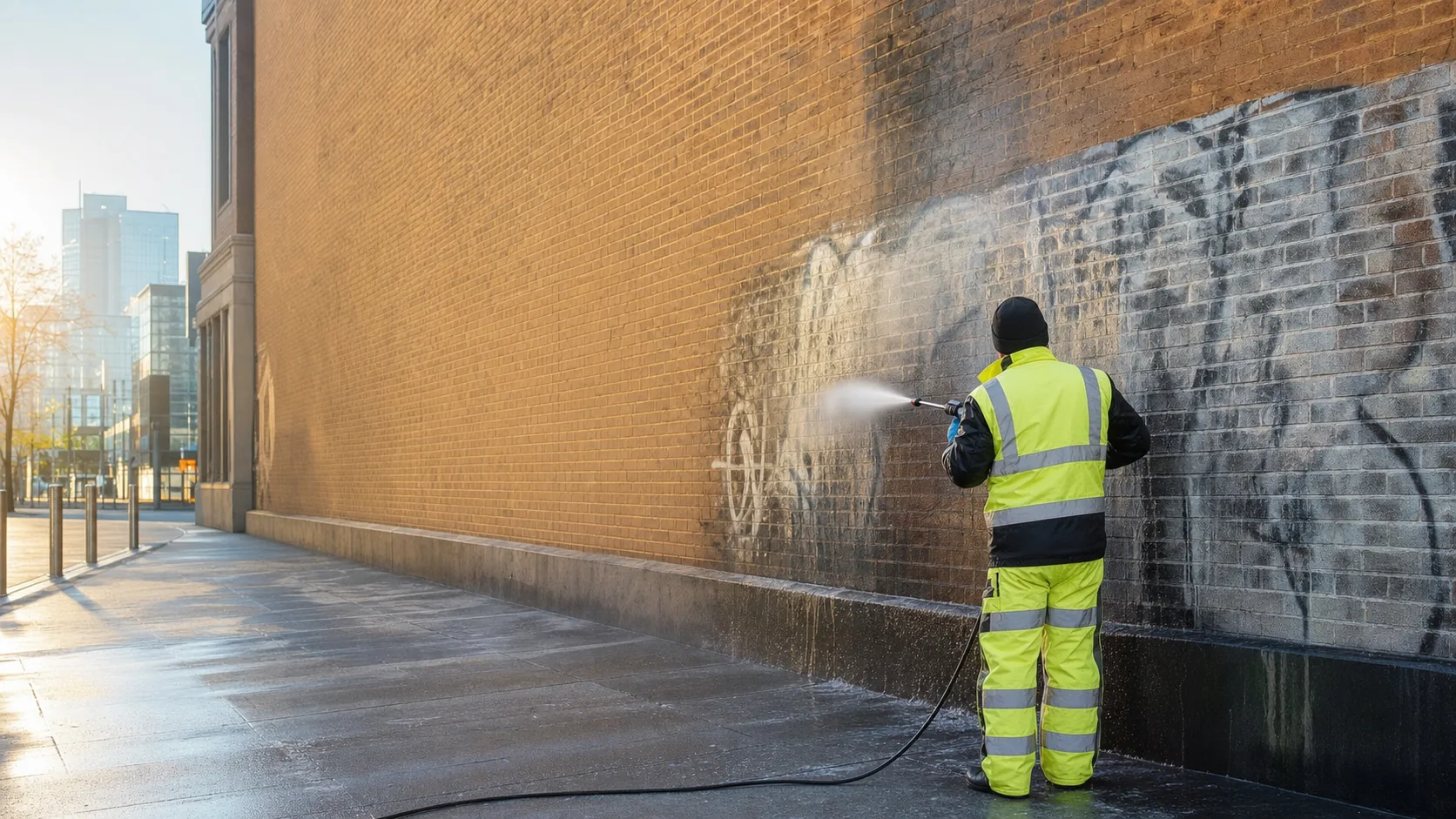
Graffiti removal in Cardiff is a chemistry job before it is a pressure job. A tag is worth more to whoever put it there every day it stays up, so we get to brick, render, stone, concrete, metal shutters, signage and glass quickly, with removers matched to the surface underneath rather than a lance turned up until something gives.
Step 1 of 3 · no obligation, reply the same day
The same care and clear communication, whether it is a single path or a whole house.
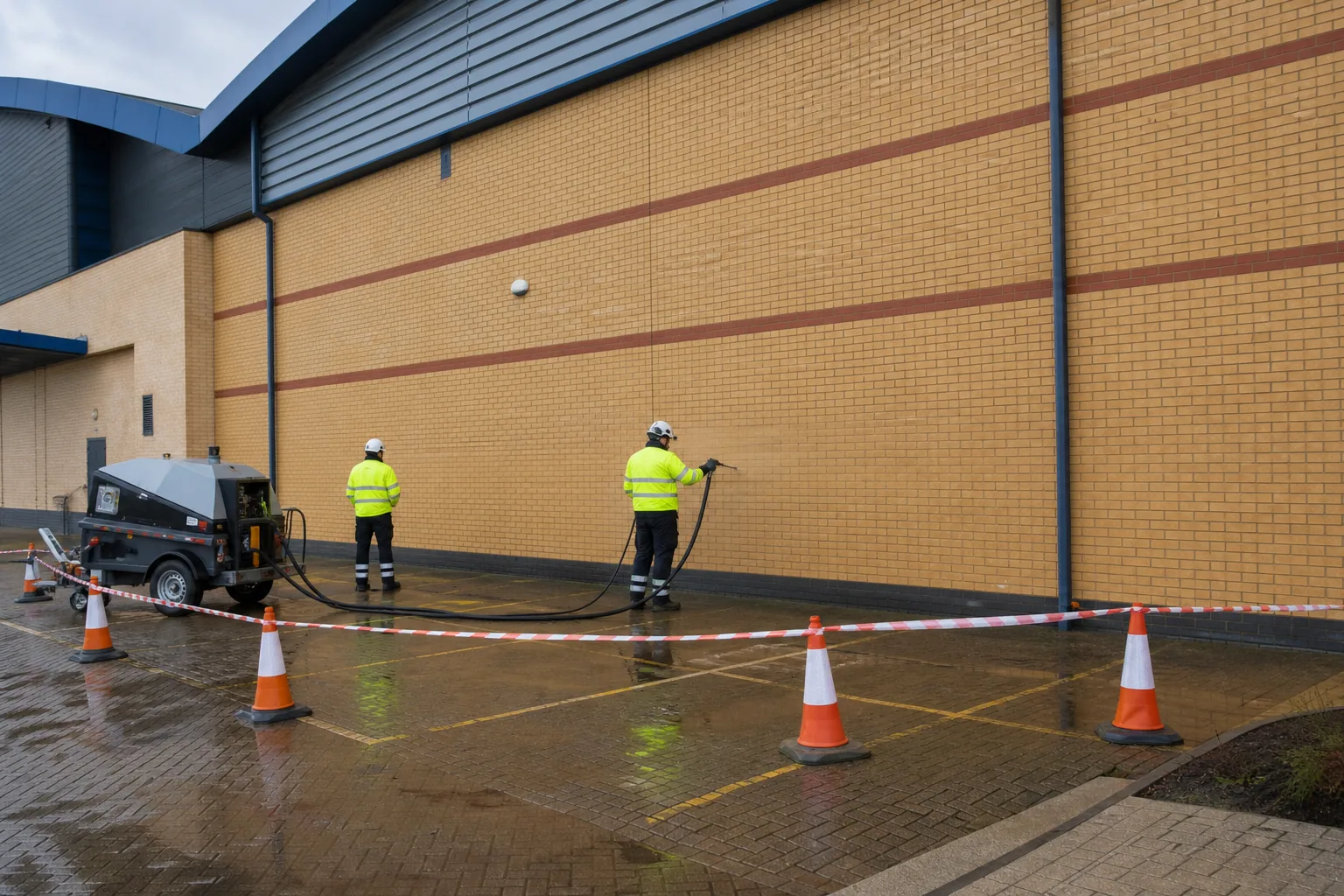
Aerosol paint keeps changing after it lands. For a day or two the binder is soft and the pigment still sits in the top of the surface, so a gel remover with a short dwell lifts it in one pass. A month of Cardiff sun and rain later, the binder has hardened and the carrier has dragged pigment down into the pores. The same tag then needs longer dwell, repeat applications and far more rinsing.
There is a second reason to move quickly. A wall that stays tagged gets tagged again. The repeat sites we attend are the same few surfaces: a rear service door, a gable end onto one of the back lanes behind the terraces in Roath or Canton, a shutter on a quiet street. Clearing it inside a few days breaks the pattern, and we are out 7:00 to 21:30 seven days a week so shop fronts get done before opening.
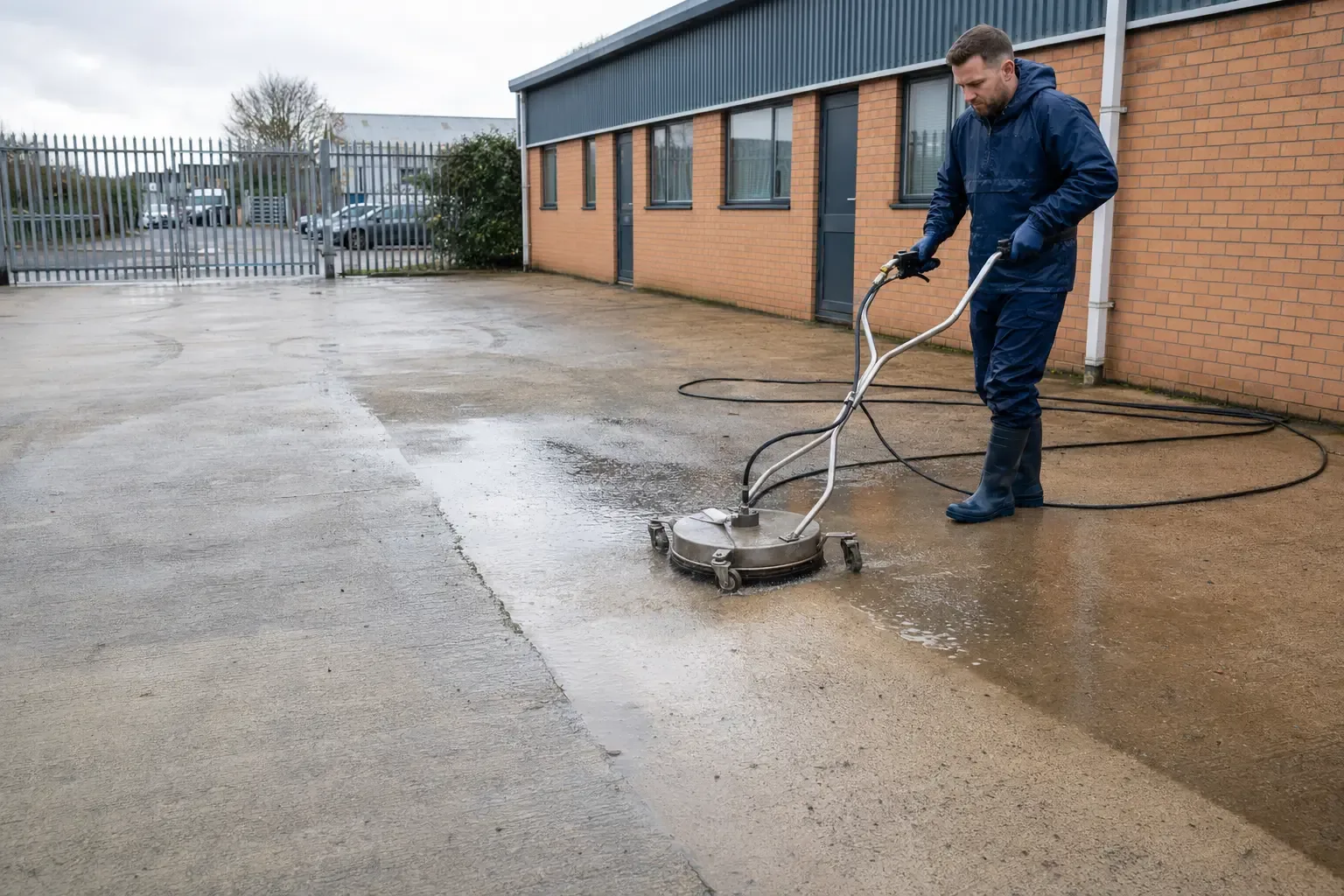
The substrate decides the method. Before anything is applied we work out what is under the paint and test a small area, usually low down or behind a downpipe.
A pressure washer on its own removes graffiti the way sandpaper does. It takes the paint off by taking the surface with it: the fired face of a brick, the top skin of render, the crust that has protected a stone wall for a century. The tag goes, a rough lighter patch replaces it, and that open patch holds dirt and takes the next tag deeper.
The remover does the work. We carry gels and poultices at several strengths, from a water-based non-caustic gel for delicate coloured surfaces up to solvent gels for cured and two-pack paint. Gel clings to a vertical wall and stays wet long enough to act, which a liquid will not. Dwell runs from a few minutes to half an hour. Pressure rinses, it does not cut.
On dense surfaces, glass, metal, glazed tile, sound signage, sealed concrete, graffiti comes off completely. On porous masonry it usually does, but not always. Where pigment has soaked into old sandstone, soft brick or a lime mortar joint, a faint shadow can remain once everything liftable has been lifted. Often it fades as the wall weathers. Sometimes it stays as a slight discolouration.
You hear that from us at the quote, not after the invoice. If the test patch says ghosting is coming, you choose: accept the shadow, push further with repeat poultice treatments at extra cost, or clean and paint in a matched masonry colour.
A wall hit twice will be hit again. A coating does not stop that, it changes what happens next.
A clear wax or polymer layer sits on the surface, so paint sprayed over it never reaches the masonry. Removal is hot water at around 90 degrees and low pressure: the wax lifts away carrying the tag with it, in minutes and with no chemicals. The coating leaves with the paint, so the area is re-coated after each clean. They cost less per square metre, let the wall breathe, and suit stone and older brickwork.
A cured polyurethane or fluoropolymer film that stays put through repeated cleans. Graffiti sits on the film and washes off with a mild solvent, and the coating survives. They cost more and can leave a faint sheen, so they belong on smooth non-porous substrates: shutters, doors, cladding, painted concrete, bin stores. We put down a sample area first so you see the finish before committing a whole elevation.
The typical graffiti call is not a homeowner. It is a letting agent with a tagged rear elevation and a tenant on the phone, a shop with a shutter hit every few weeks, a block manager with a bin store. Councils can serve a notice requiring an owner to clear defacement from their own property, so on commercial premises the cost lands with you whoever held the can.
That client needs more than cleaning. It is offensive content gone the same day, work done outside trading hours, and before and after photographs for the file or the insurer. On repeat sites we will price a coating so the next incident is a hot water rinse instead of a full removal.
Every quote is per job. These are the things that move it, and why we would rather see a photo than take a description over the phone.
We cover Cardiff and South Wales from our unit in Cardiff: the city centre and the Bay, Roath, Penylan, Cathays, Canton, Grangetown, Splott, Rumney, Llanrumney, Whitchurch, Rhiwbina, Llanishen, Lisvane, Cyncoed, Radyr and Llandaff, and out to Barry and Newport. We have been cleaning exteriors here since 2019 and are rated 5.0 on Google across five reviews.
Send a photo to Liamdunn2406@outlook.com or call 07576 128903 and describe the wall. You get our read on the surface, the method, whether ghosting is a risk and a price range before anyone commits to anything. Seven days a week, 7:00 to 21:30.
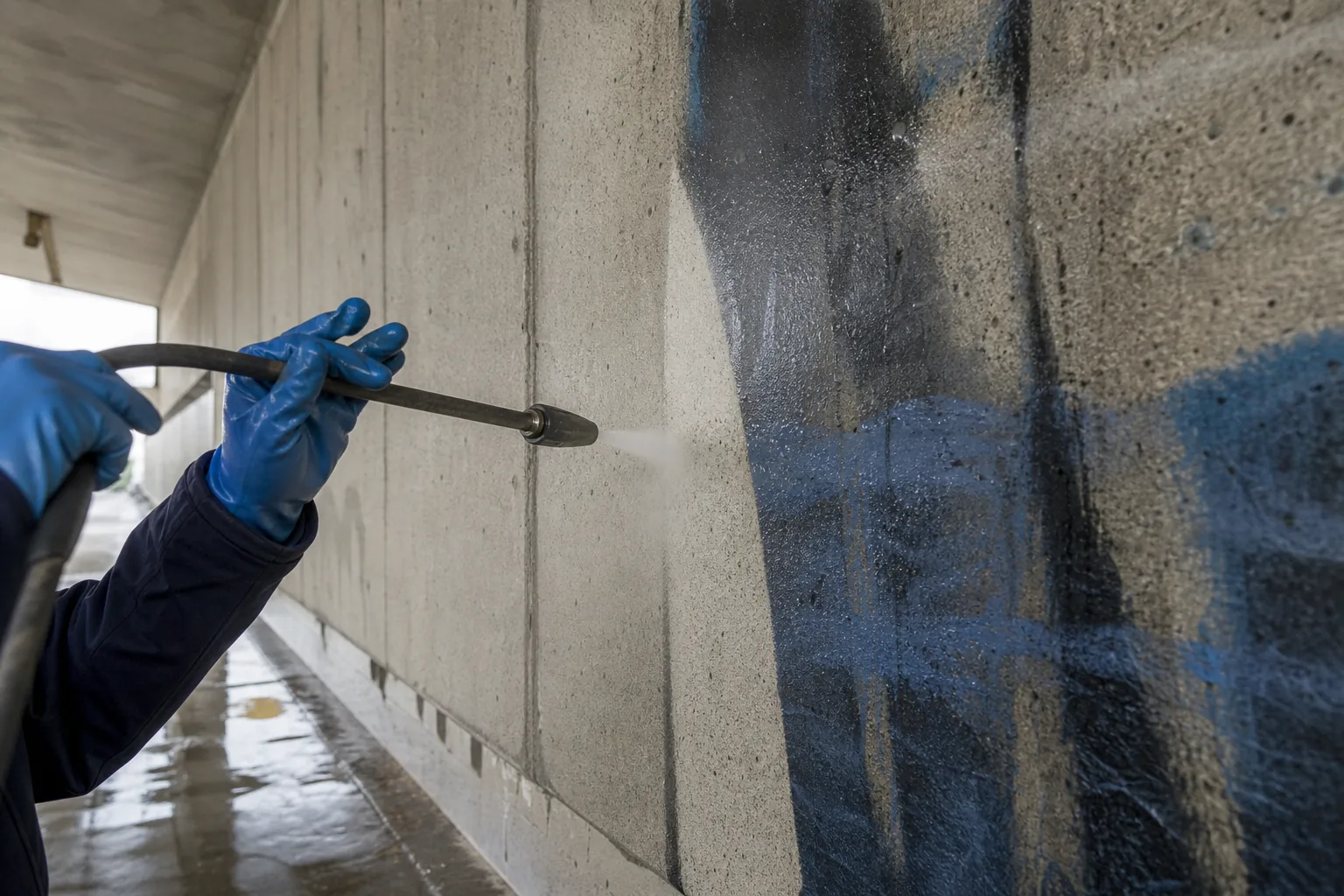
There is no flat rate, because the surface sets the workload. A single tag on a metal shutter or sealed concrete is a short visit. The same tag on weathered Pennant sandstone can take three times as long and need repeat poultice treatments. What moves the price is porosity, how long the paint has been up, the area covered, access height, and whether the run-off has to be contained rather than rinsed away. Send a photo with something in shot for scale and we will give you a realistic range the same day, then a firm price once we have seen it.
Most single tags on a straightforward surface are a 60 to 90 minute visit, including setting up and protecting what is around them. A shop front or a shutter is usually under two hours. A full elevation, a car park wall, or anything needing repeat applications on porous stone can run to half a day or more. Chemical dwell time sets the pace and it cannot be hurried. Pushing on early with pressure instead of letting the remover work is exactly how surfaces get damaged. We will tell you the expected time when we quote.
Not if the method matches the surface. Damage in this trade nearly always comes from one thing: someone blasting paint off masonry with a turbo nozzle at high pressure. That strips the fired face from brick, the top skin from render and the protective crust from stone, and leaves a rough, lighter patch that then gets dirty faster than the wall around it. We work with gel removers and dwell time, agitate by hand, and use hot water at a pressure the surface can take purely to rinse. Every job starts with a test patch somewhere discreet.
On glass, metal, glazed tile, signage and sealed concrete, it comes off completely. On porous masonry it usually does, but not always. Aerosol paint carries its pigment in a solvent that soaks in, so on old sandstone, soft brick or lime mortar a faint shadow can be left once everything liftable has been lifted. It often fades over the following few weeks of weather. We test before quoting and tell you honestly if ghosting is likely. If it matters to you, the options are repeat poultice treatments or cleaning and re-coating in a matched colour.
Quickly, and quicker if the content is offensive. We are out seven days a week from 7:00 to 21:30, and for commercial premises in Cardiff we can normally get to a tag within a day or two, often before you open or after you close so trading is not disrupted. Speed is in your interest anyway, because fresh paint has not fully cured and lifts far more easily than paint that has had a month of sun on it. If it is racist or otherwise offensive, say so when you call and we will prioritise it.
We protect first. Beds, shrubs, planters and turf next to the wall are sheeted and, where there is any doubt, pre-wetted so nothing concentrates around the roots. Gullies and drains under the work area get covered. Where the run-off cannot be allowed into a surface water drain, near a watercourse, on a forecourt, at a food premises, we contain and recover it instead of rinsing it away, then dispose of it properly. Tell us about anything sensitive when you book, a pond, a new lawn, outdoor seating, and we will plan the job around it.
For commercial premises, no, as long as we can reach the wall and there is a water supply, or you are happy for us to bring our own. Most shutter and shop front jobs are done before opening with a key holder simply opening the gate. At a home it helps if someone is there at the start so we can agree the test patch and what result you are expecting, but you do not need to stay. We photograph before and after on every graffiti job and send them over, which is what most agents and landlords want for the file.
It is a year round job, and winter keeps us busier with it because the dark comes early and that is when walls get tagged. Cold slows chemical removers down, so dwell times get longer and we work in slightly smaller sections, but the result is the same. The one thing we avoid is putting an anti-graffiti coating on in a hard frost or onto a soaking wall, because it needs a dry surface and temperatures above about five degrees to cure properly. If the forecast is against a coating we move it a few days rather than risk the finish.
Great company come out gave a good price and done the job straight away highly reccomend chris great guy

Very reliable, showed up on time to give a quote, and started work straight away! Wanted the back done after the front. Stunning work on my front driveway and porch with the power washer, simply removed all the algae on my walls too that the pressure washer team we had last year couldn't do.

Hard working and reliable pressure washing company! Completely transformed my paving stones and patio

Very happy with the service provided from pressure washing Cardiff, also very friendly and professional many thanks, Simon
What a good quality service have provided done a superb job of pressure washing my driveway + house. Many thanks, Shane
My husband and I are very happy with the work done at our house, to our gutters, our pool area and other concrete areas around our house. You were a pleasure to deal with and I will definitely use your services again!
Pressure Washing Cardiff did a fabulous job: our concrete driveway and retaining walls look like new! What a delight to have a tradesman visit who takes pride in his work and does a thorough job.
These guys are experts and were able to give us a great quote for a complete exterior makeover. Power washing, gutter cleaning, window cleaning as well as pressure washing for our patio and driveway. Thank you so much!!
Send a photo and a rough size and we will come back with a price, usually the same day.
20% off enquiries via WhatsApp