
H
Great company come out gave a good price and done the job straight away highly reccomend chris great guy
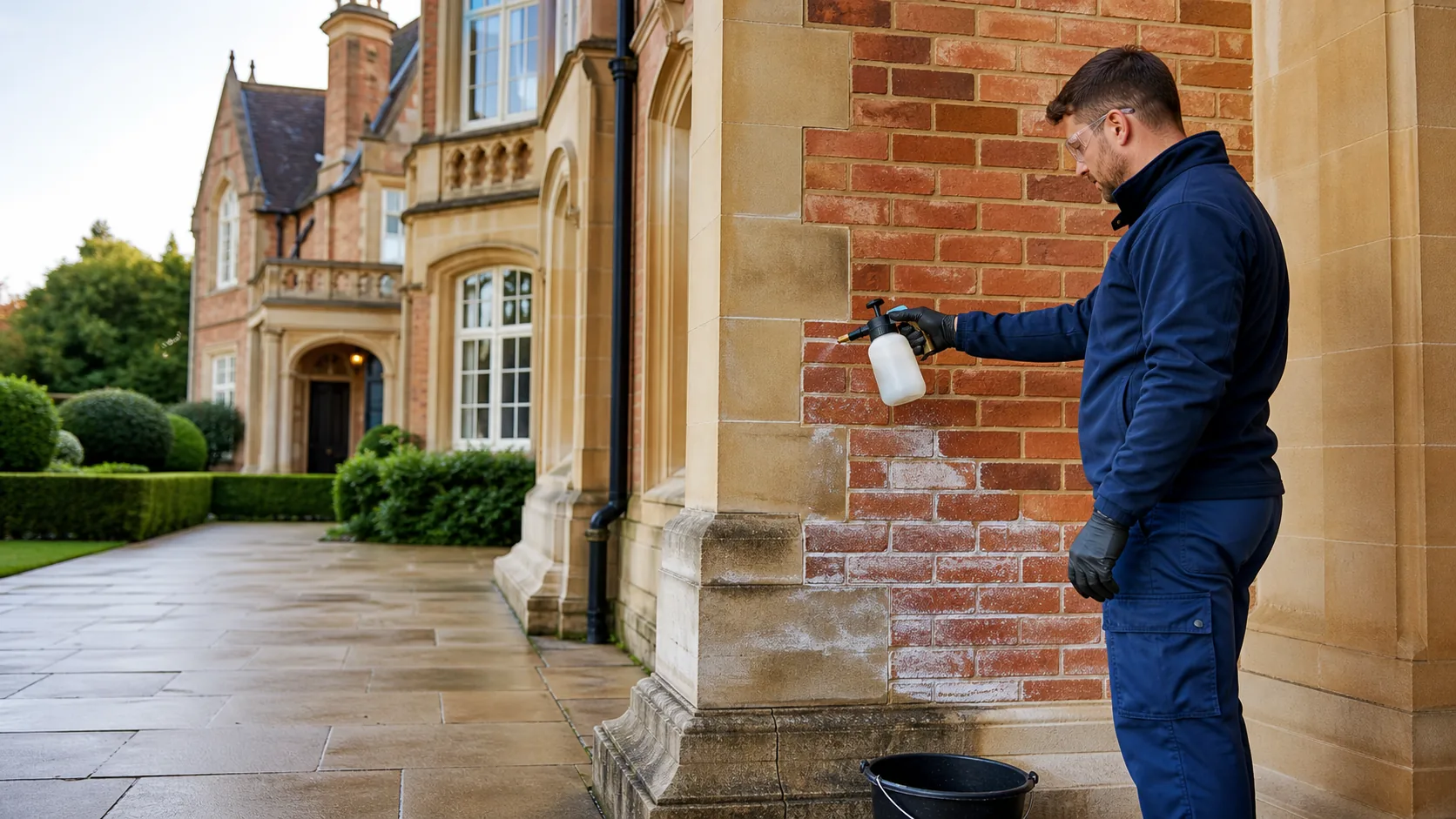
The white bloom on new brick and block paving is not dirt sitting on the surface. It is salt coming out of the material, and washing it with water is what makes it spread.
Step 1 of 3 · no obligation, reply the same day
Brick, block, mortar and concrete all contain soluble salts. Water moving through the material dissolves those salts, carries them to the surface, and evaporates. The salt is left behind as a white powdery or crystalline bloom. It is not mould, it is not limescale, and it is not a cleaning failure by whoever built it.
That mechanism is the whole reason it needs a different approach. The mark is a symptom of water movement, so anything that adds water without addressing the movement makes the next bloom bigger.
Hosing efflorescence dissolves the surface salt and pushes most of it back into the material rather than removing it. As the wall or the paving dries out again, that salt comes back to the surface, usually over a wider area than before. It is the single most common reason people tell us the white marks keep returning.
Primary efflorescence is the construction water leaving a new build. It appears in the first months, it is usually heaviest after the first wet winter, and it genuinely does reduce on its own over a year or two as the salts run out.
Secondary efflorescence is ongoing water getting in from somewhere: a failed damp course, a leaking gutter, a bridged cavity, paving laid without a fall, a planter against a wall. This one does not stop, because the supply of water has not stopped. Treating the surface without finding the water is money spent on a mark that will be back.
Dry removal first. A stiff brush and a vacuum take off far more of the loose salt than water does, and nothing is dissolved back in. What is left bonded to the surface is then treated with a proprietary efflorescence remover, which is acidic, applied to a pre-wetted surface so it cannot be drawn deep, worked, and neutralised and rinsed thoroughly. On block paving the joints get re-sanded afterwards.
We test a small area first every time. Efflorescence removers are strong enough to etch some concrete blocks and to lighten some brick colours, and the only way to know is on the actual material.
If we can see the cause, we say so, even when the honest answer is that this is a job for a builder or a roofer rather than for us. Cleaning a wall that is being fed water from a cracked gutter is a temporary result at your expense, and we would rather quote the clean once the leak is fixed.
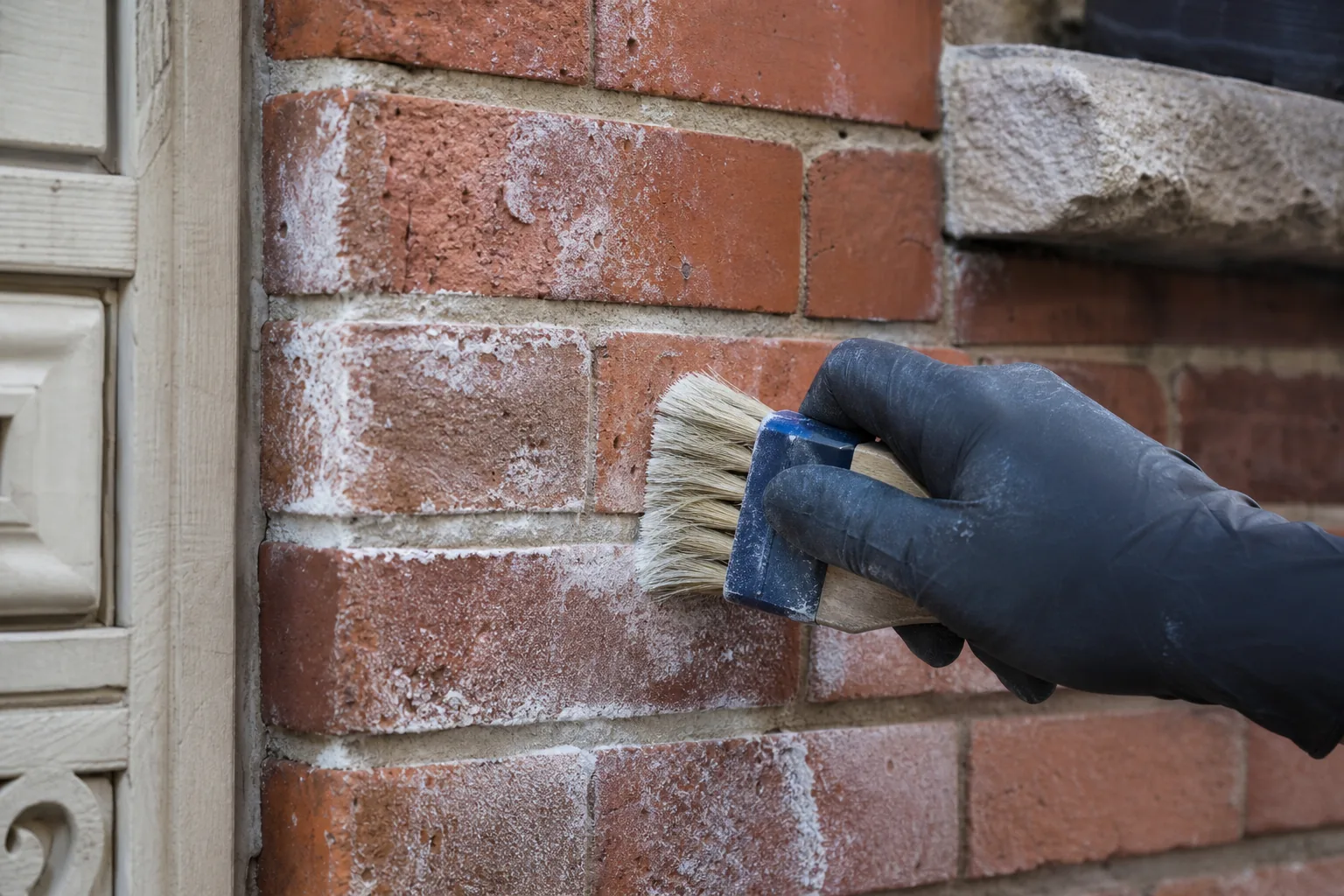
Primary efflorescence on a new build usually reduces over a year or two as the construction salts run out. Secondary efflorescence, driven by an ongoing leak or rising damp, does not, because the water carrying the salt has not stopped.
That is the thing to avoid. Water dissolves the surface salt and carries most of it back into the material, so it reappears, usually over a bigger area. Dry removal first is what actually takes it away.
No. Mould is biological and usually green, grey or black. Efflorescence is a white or off-white mineral salt and it often looks crystalline or powdery. They need completely different treatments.
The bloom itself is cosmetic. What can damage the material is crypto-efflorescence, where the salt crystallises just below the surface instead of on it and pushes the face off. That shows as flaking rather than white powder and is a sign the water problem needs solving.
If it is primary efflorescence on a new build, possibly once or twice more as the material dries out, each time lighter. If it comes back heavily, there is water getting in and that is what needs fixing.
Yes, and it is very common on new driveways. The treatment is the same in principle, and we re-sand the joints afterwards because the rinse takes sand with it.
The products are acidic, so we cover and pre-wet planting, control where the rinse goes, and neutralise the surface before we finish. We will not treat an elevation where the run-off has nowhere safe to go.
We would normally leave a new wall through its first winter. Treating early removes the bloom you can see and does nothing about the salt still to come.
Great company come out gave a good price and done the job straight away highly reccomend chris great guy

Very reliable, showed up on time to give a quote, and started work straight away! Wanted the back done after the front. Stunning work on my front driveway and porch with the power washer, simply removed all the algae on my walls too that the pressure washer team we had last year couldn't do.

Hard working and reliable pressure washing company! Completely transformed my paving stones and patio

Very happy with the service provided from pressure washing Cardiff, also very friendly and professional many thanks, Simon
What a good quality service have provided done a superb job of pressure washing my driveway + house. Many thanks, Shane
My husband and I are very happy with the work done at our house, to our gutters, our pool area and other concrete areas around our house. You were a pleasure to deal with and I will definitely use your services again!
Pressure Washing Cardiff did a fabulous job: our concrete driveway and retaining walls look like new! What a delight to have a tradesman visit who takes pride in his work and does a thorough job.
These guys are experts and were able to give us a great quote for a complete exterior makeover. Power washing, gutter cleaning, window cleaning as well as pressure washing for our patio and driveway. Thank you so much!!
Send a photo and a rough size and we will come back with a price, usually the same day.
20% off enquiries via WhatsApp