
H
Great company come out gave a good price and done the job straight away highly reccomend chris great guy
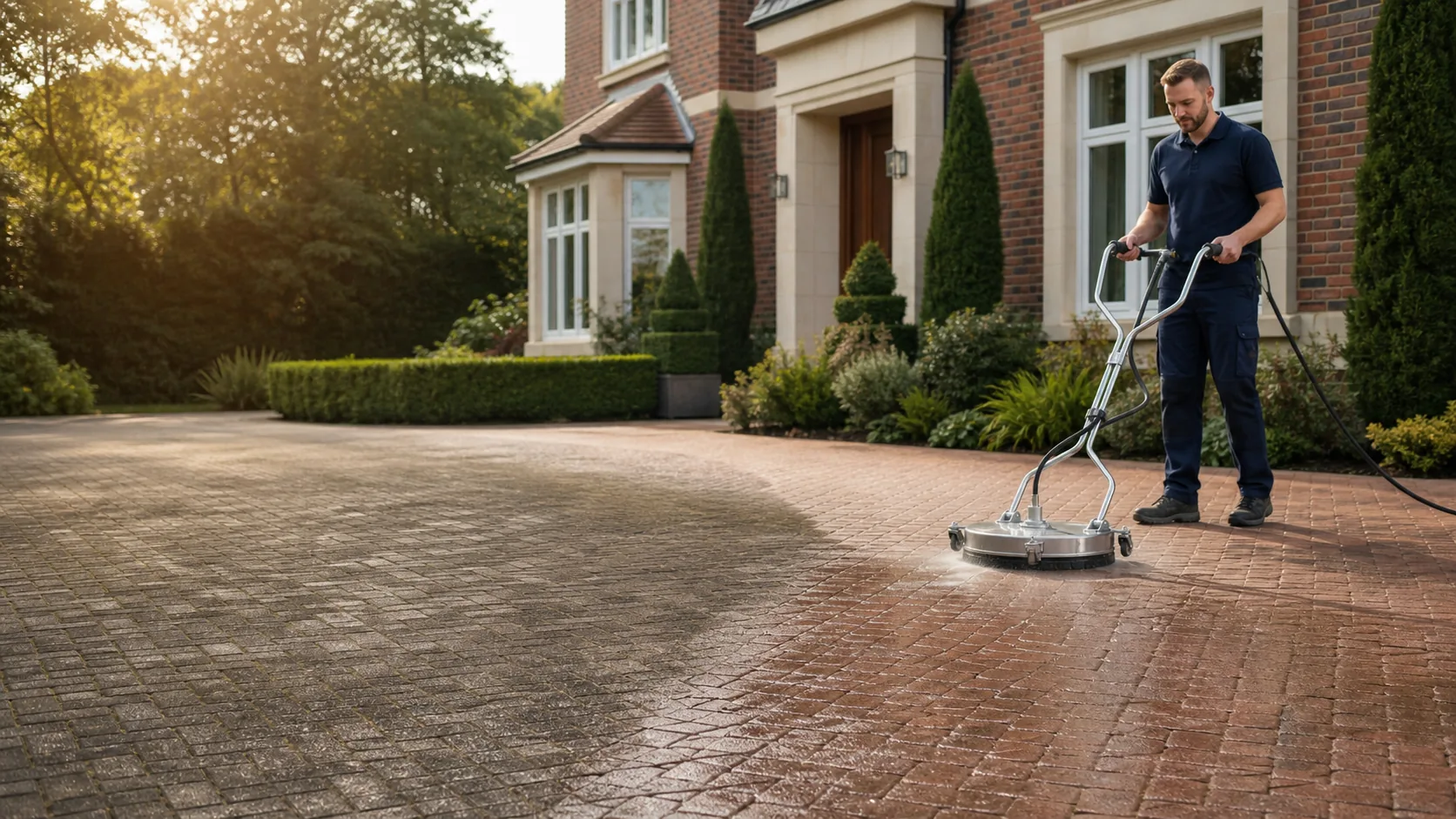
Driveway cleaning in Cardiff is mostly a fight with damp. Block paving gone green at the edges, a concrete slab with tyre scuffs and a spreading oil patch, imprinted concrete whose colour you had almost forgotten. The right method depends entirely on what your drive is made of. We have cleaned drives across Cardiff and South Wales since 2019.

Step 1 of 3 · no obligation, reply the same day
The same care and clear communication, whether it is a single path or a whole house.
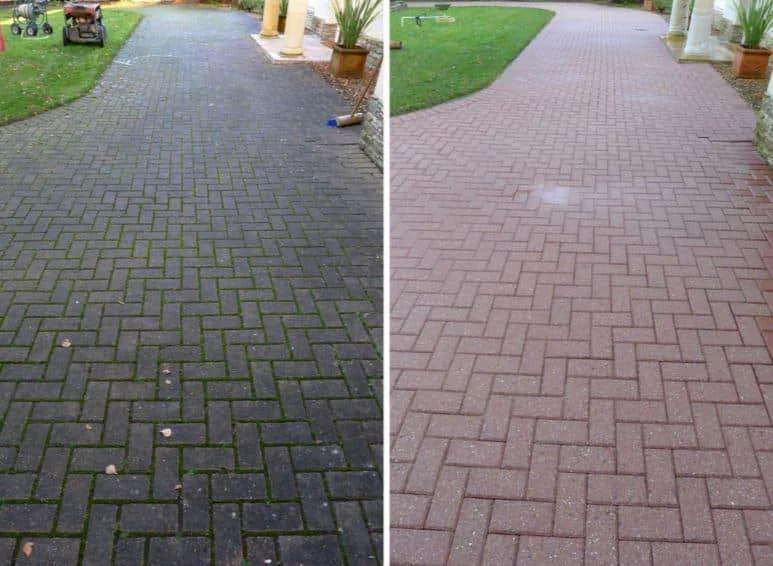
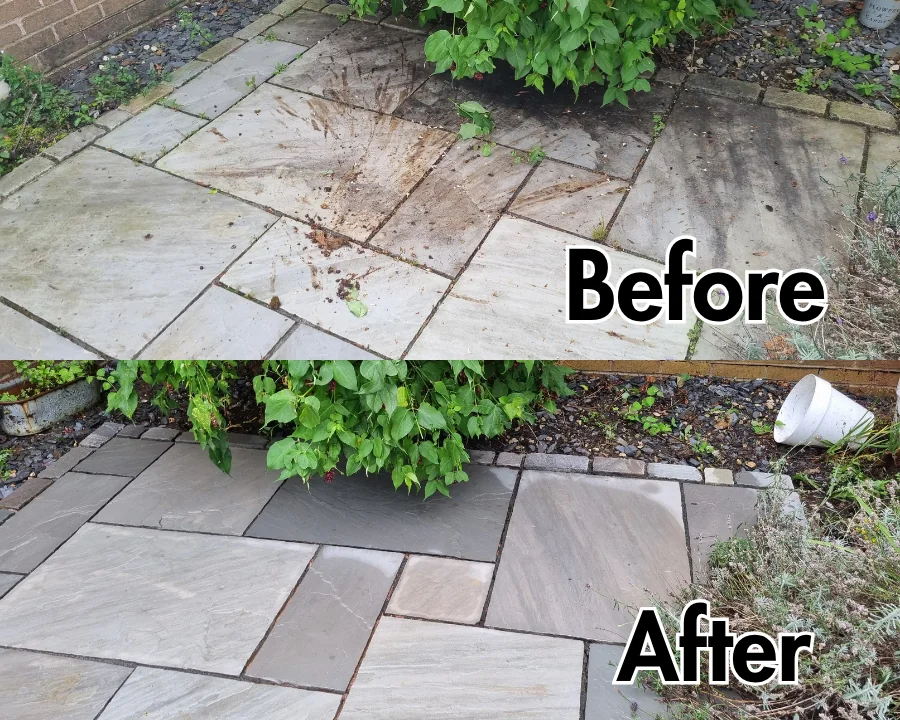
The first question on any quote is what the drive is actually made of. Machine setting, nozzle choice and chemistry all change with it, and getting that wrong is how drives end up striped, pitted or stripped of colour. When a surface is not obvious, we test a small patch out of sight first, behind the gate post or under where the car normally sits.
Plenty of Cardiff drives are two surfaces at once. Block paving on the parking area with a concrete apron out to the dropped kerb, or tarmac edged with a brick soldier course. Each part gets its own settings, and the join between them is where rushed work shows first.
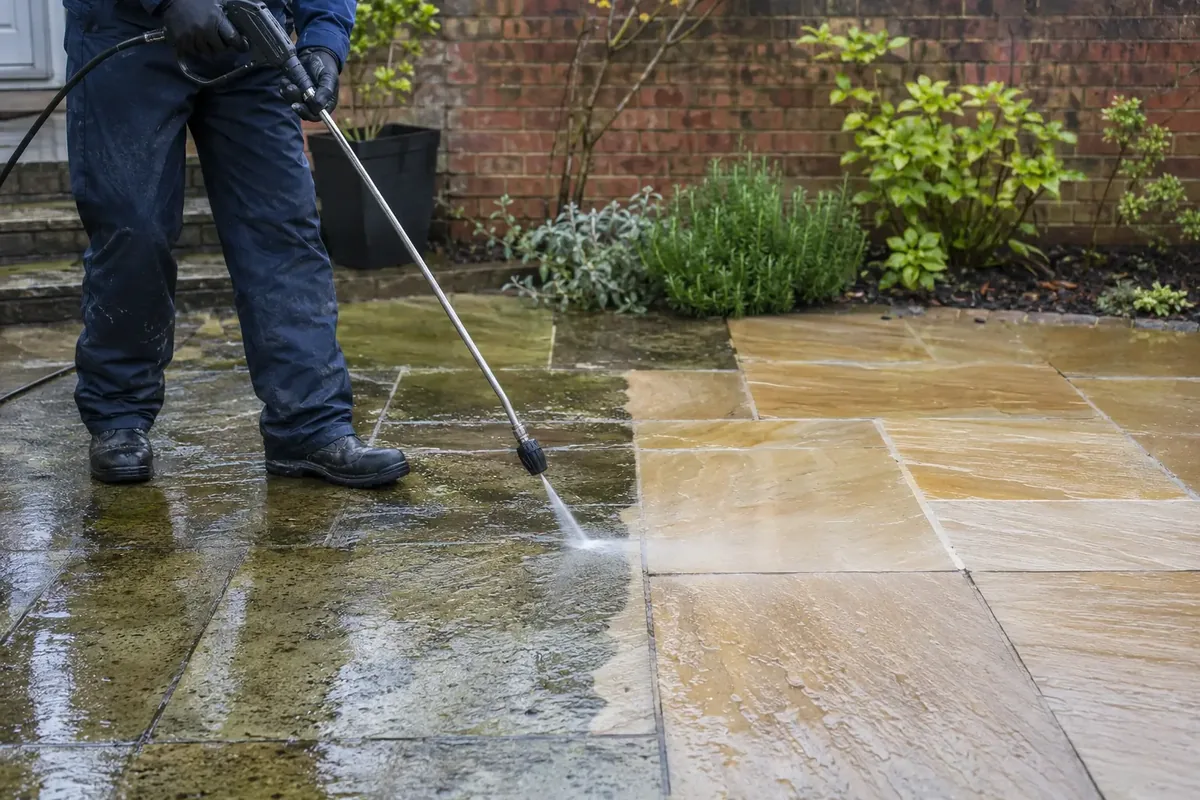
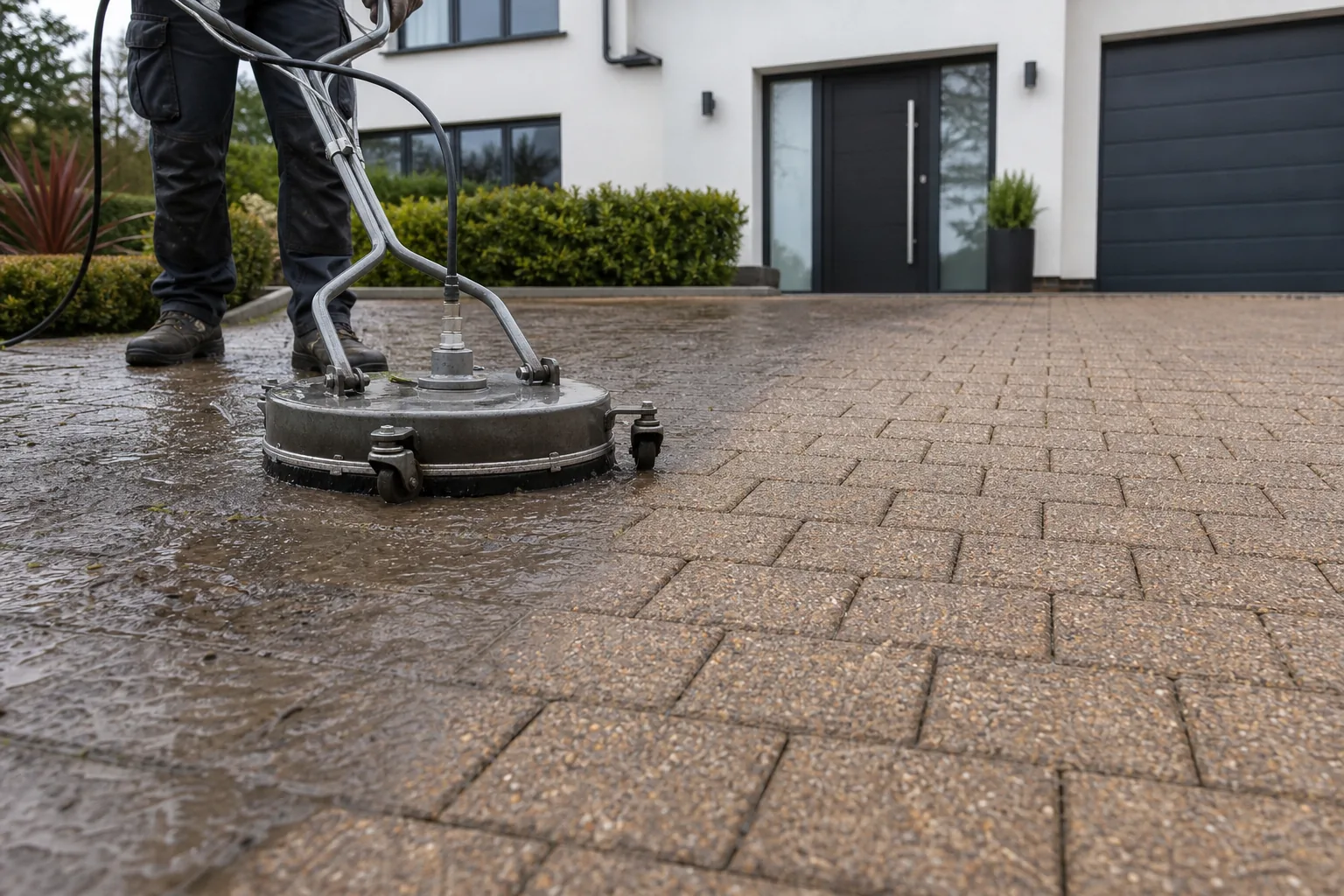
A rotary flat surface cleaner is a shrouded head with jets spinning on a bar underneath. Because the head rides on the surface, every jet meets the drive at the same height and the same angle, so every square metre takes the same energy. That is what gives an even finish with no tiger striping, and the shroud keeps the slurry off your render and off the car next door.
The lance still has work to do. Edges, kerb lines, steps, gully surrounds and the strip against the garage door all need it, and so do isolated stains. What we will not do is clean a whole drive with a lance at close range. That is the job we are called in to put right most often: a striped surface where a turbo nozzle was held 50mm off the blocks and cut a line into every face. Pressure is set to the surface, never to whatever the machine can produce.
Jetting lifts weeds out of the joints, roots and all on a good day, but the machine alone does not stop them returning. Anything left in the joint regrows from the crown, and fresh seed lands within weeks. So growth is treated before the machine goes near it, which softens it and lets us work at lower pressure, then shaded drives get a moss and algae treatment afterwards so regrowth has to start from nothing.
Roots do more than look untidy. They sit in the joint, hold water against the block edges and lever the paving apart as they thicken, and once a joint is open the sand washes out faster with every downpour. Moss works more quietly. On a shaded drive in Llanishen or Rhiwbina it binds the surface into a wet green mat that keeps damp against the blocks all winter and goes greasy underfoot the moment it rains.
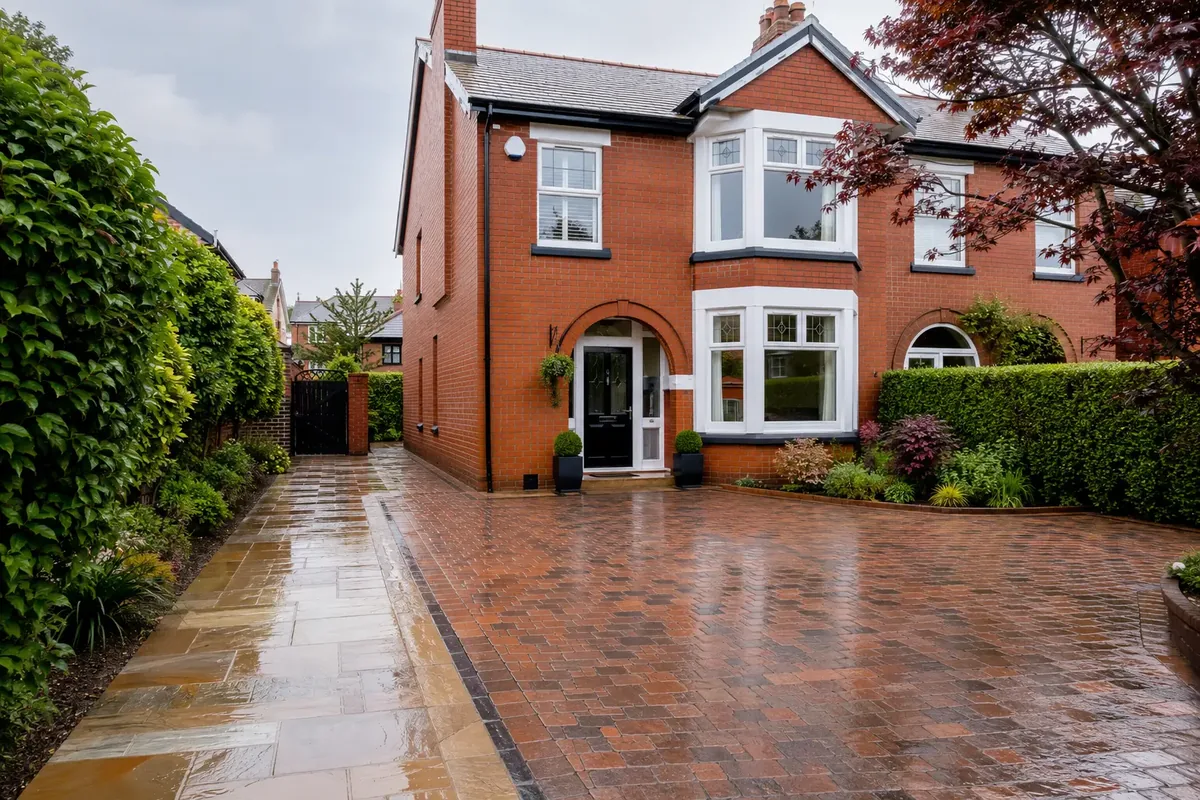
Your front path and drive are what people judge the house on before they reach the door. A green drive reads as neglect even when everything behind it is immaculate. It counts double when you are selling, because the drive is in the first photograph on the listing and the agent takes that shot from the pavement.
There is a practical side as well. Algae on a sloping drive in Cyncoed or a steep front path in Penylan goes slick as soon as it is wet, and any Cardiff frontage that faces north or sits under a street tree never dries out properly between showers. Growth is the normal state of a drive here, not a sign you have done something wrong.
Oil does not sit on a driveway, it soaks in. Concrete and unsealed block paving are porous, so engine oil and gearbox fluid wick into the pores and keep bleeding back up. Hitting a fresh spill with a jet makes it worse, because the pressure drives the oil deeper and widens the halo. The answer is chemistry and dwell time. A degreaser, left to work, agitated with a stiff brush, then lifted with hot water. Bad stains take two or three cycles.
Be realistic about the result. Last week's spill usually comes out completely. A stain fed by the same parking space for five years will lighten a long way but can leave a shadow, and we say so before we start rather than after. On block paving a ruined block can be lifted and turned, or swapped for a spare if you have any left from the original job. On tarmac we keep solvent degreasers off entirely, because they soften the bitumen holding the drive together.
The sand in a block paved driveway is structural. It locks the blocks against each other so the surface carries a car instead of rutting under one wheel. Cleaning takes some of it out, because the water goes where the dirt is and the dirt is in the joints. A drive left unsanded starts to rock underfoot and spreads at the edges, and once the edge restraint moves the repair is a paving job rather than a cleaning one.
So the last stage on any block paving job is refilling the joints. It has to be dry kiln dried sand on a dry surface, or it clogs at the top of the joint and never reaches the bottom. We spread it, brush it in with a soft broom in more than one direction, then go over it again once it has settled. Expect the level to drop a little after the first heavy rain. That is normal and worth a top up rather than a worry.
Everything that comes off your drive has to go somewhere. A wash produces a surprising volume of silt, sand and dead moss, and flushed into a gully it settles in the trap and stays there. We screen the gullies while we work, shovel the solids instead of washing them down, and clear the traps before we leave. On a drive that runs to a soakaway it matters more again, because silt is exactly what clogs one.
Borders and lawns are soaked with clean water first and rinsed again afterwards. Garage thresholds, door seals and airbricks get checked, because a lance pointed the wrong way puts water under a garage door in seconds. On the terraced streets around Canton, Grangetown and Splott, where the drive runs straight out to the footway, we also keep the run-off off the pavement so nobody walks through it on their way past.
Expect a properly cleaned Cardiff drive to look right for roughly twelve to eighteen months before green shows again. It is shorter under trees, on a north-facing frontage, or anywhere the sun never reaches, which covers a lot of drives in Penylan, Cyncoed and Lisvane. Nothing stops spores landing. What slows them is a moss and algae treatment after the clean, keeping leaf litter swept off through autumn, and on block paving a sealer once the surface is bone dry. Most people here do best with a clean every year or two, booked before the growth thickens rather than after it has taken hold.
We cover Cardiff, Barry, Newport and the towns in between, and we work out of Cardiff, so most of the city is a short run. Roath, Canton, Pontcanna, Llandaff, Whitchurch, Rhiwbina, Radyr, Llanishen, Cathays and Splott included. Our Google rating is 5.0 from five reviews, all of them five stars. Call 07576 128903 or email Liamdunn2406@outlook.com. We answer seven days a week, 7am to 9.30pm, and quotes are free whether you send photos or ask us to call round.
Price comes down to size in square metres, the surface, how heavy the growth is, and what the job needs once the cleaning is done. Block paving that has to be re-sanded costs more than a bare concrete drive of the same size. Oil treatment, sealing, awkward access and no usable water supply all move the figure. Quotes are free, from photos or in person, and you have the number before we start rather than an open hourly rate that climbs if the job runs slow.
A single width concrete drive or a front path is often 60 to 90 minutes. A typical double block paved driveway is a half day once you count protection, pre-treatment, the main clean, detailing and re-sanding. Large drives, heavy moss, or oil work that needs two or three cycles push it to a full day. Sealing is never same day. The paving has to dry out fully first, so we book that as a separate visit after a few dry days.
It can, if it is done with the wrong tool. Tarmac loses chippings to a turbo nozzle. Resin bound surfaces shed stone if a lance is held close. Old concrete frets and goes rough. Imprinted concrete looks patchy once the seal is disturbed and not replaced. Done properly, none of that happens: a rotary flat surface cleaner at a pressure matched to the surface, chemical pre-treatment instead of brute force, and a test patch first whenever we are not certain what we are looking at.
Roughly twelve to eighteen months in Cardiff before green starts creeping back, less on a shaded or north-facing frontage and under overhanging trees. Rain is not really the problem, shade and standing damp are. A moss and algae treatment applied after cleaning slows regrowth noticeably, and sealing block paving or imprinted concrete stretches it further while making the next clean easier. Sweeping leaves off in autumn helps more than people expect, because rotting leaf litter is what feeds the algae over winter.
No, as long as we can reach the drive and an outside tap, and any cars are moved before we arrive. Plenty of customers leave a key with a neighbour or simply let us get on with it while they are at work. We confirm the time the day before, message you when we arrive, and send photos once the drive is finished. Payment is after the work, when you have had a proper look at it, not upfront.
Borders and lawns get soaked with clean water before we start and rinsed again once we finish, which dilutes anything that reaches them. Gullies are screened while we work so silt and sand cannot fill the trap, and we sweep and bag the solids rather than flushing them into a drain or a soakaway. If your drive runs towards a neighbour's boundary or a shared parking area, tell us at the quote and we will plan where the run-off goes before a hose comes out.
We work all year, seven days a week. Spring and early autumn are the sweet spot, because moss growth is obvious and the surface still dries fast enough to re-sand the same day. Winter cleaning is fine and usually the quickest to book, though joints may need topping up on a second visit once the drive has dried out. Sealing is the one job with a real weather window, as it needs a genuinely dry, mild spell to cure properly.
Re-sanding with kiln dried sand is part of every block paving clean we do, not an extra. Sealing is optional and quoted separately. It has to wait until the paving is dry all the way through, which usually means returning a few days later, because sealing over trapped moisture leaves a milky finish. Sealed paving holds its sand, resists oil and stays cleaner for longer. Imprinted concrete is the surface that most often needs resealing, since cleaning takes off what remains of the original coat.
Great company come out gave a good price and done the job straight away highly reccomend chris great guy

Very reliable, showed up on time to give a quote, and started work straight away! Wanted the back done after the front. Stunning work on my front driveway and porch with the power washer, simply removed all the algae on my walls too that the pressure washer team we had last year couldn't do.

Hard working and reliable pressure washing company! Completely transformed my paving stones and patio

Very happy with the service provided from pressure washing Cardiff, also very friendly and professional many thanks, Simon
What a good quality service have provided done a superb job of pressure washing my driveway + house. Many thanks, Shane
My husband and I are very happy with the work done at our house, to our gutters, our pool area and other concrete areas around our house. You were a pleasure to deal with and I will definitely use your services again!
Pressure Washing Cardiff did a fabulous job: our concrete driveway and retaining walls look like new! What a delight to have a tradesman visit who takes pride in his work and does a thorough job.
These guys are experts and were able to give us a great quote for a complete exterior makeover. Power washing, gutter cleaning, window cleaning as well as pressure washing for our patio and driveway. Thank you so much!!
Send a photo and a rough size and we will come back with a price, usually the same day.
20% off enquiries via WhatsApp