
H
Great company come out gave a good price and done the job straight away highly reccomend chris great guy
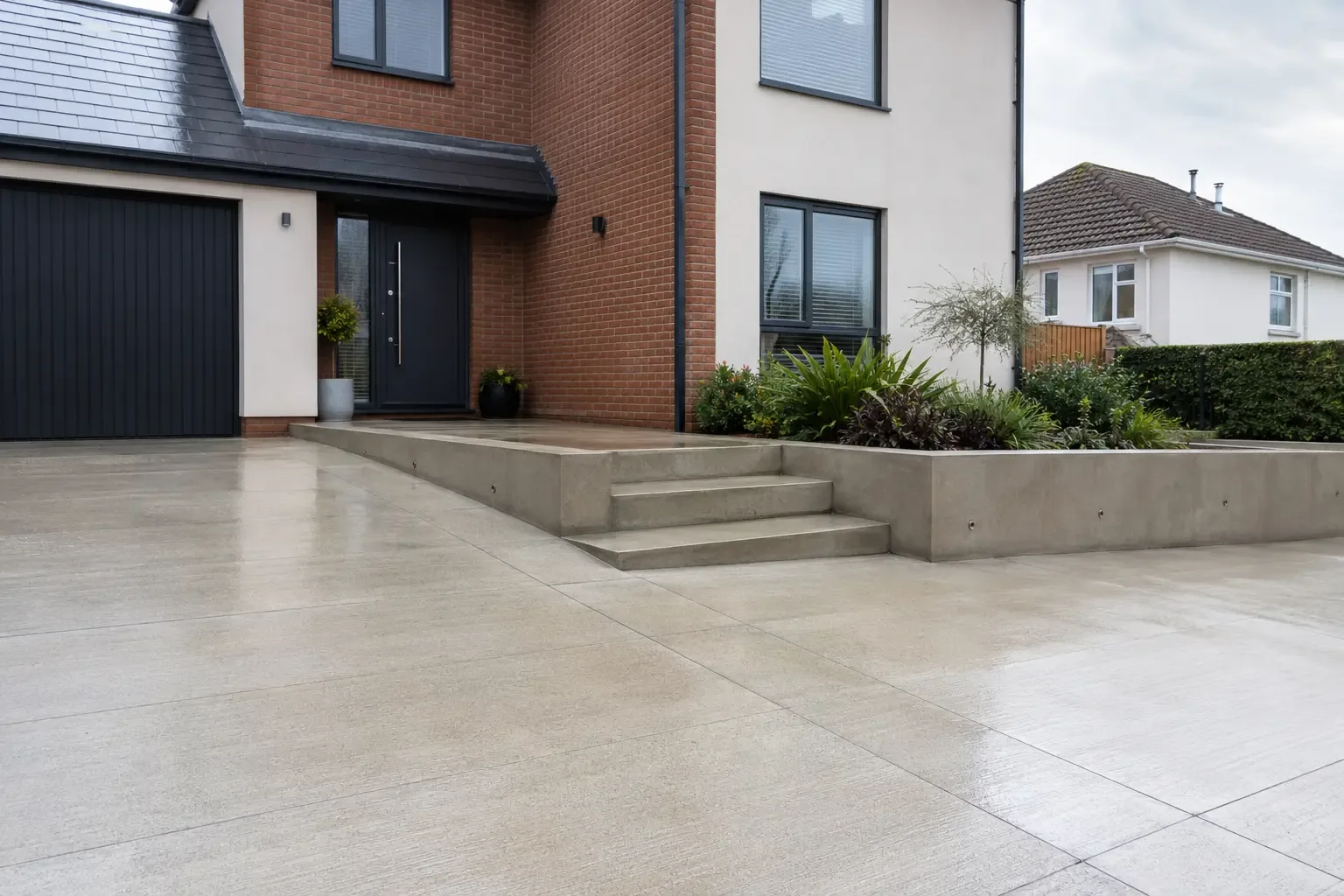
Concrete cleaning in Cardiff is mostly a fight with one thing: porosity. Concrete drinks in oil, algae and rainwater, so the dirt sits below the surface rather than on it. We clean concrete paths, steps, garage floors, yards and imprinted drives across the city with rotary equipment and hot water, and we leave an even finish rather than a striped one.
Step 1 of 3 · no obligation, reply the same day
The same care and clear communication, whether it is a single path or a whole house.
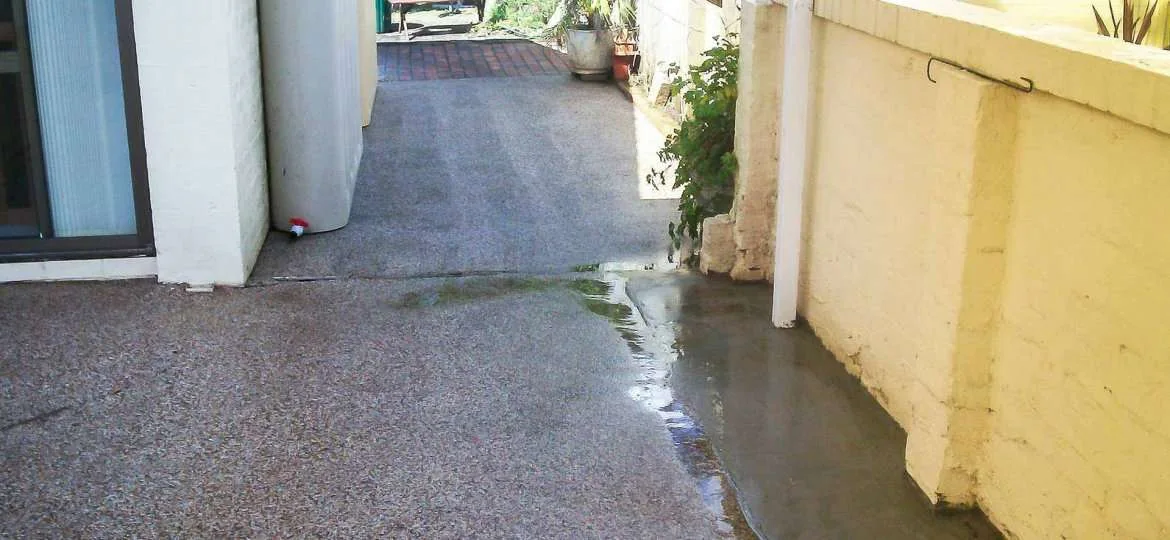
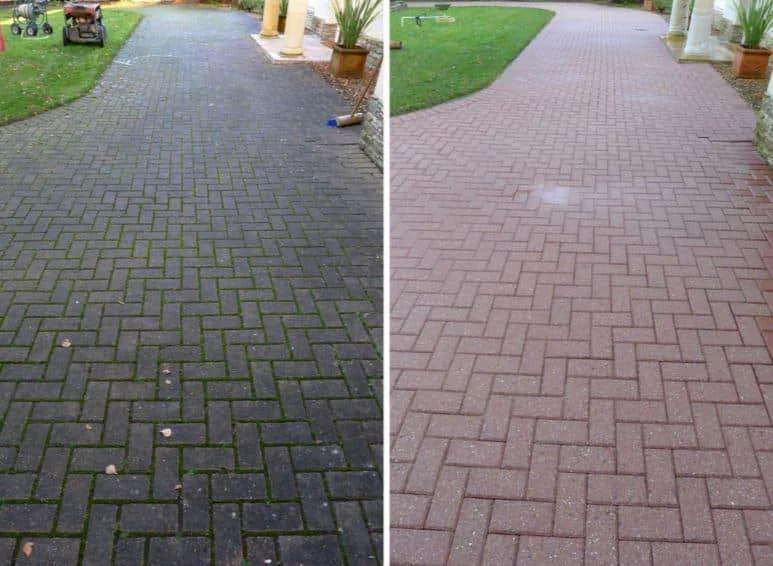
Unsealed concrete looks solid and behaves like a sponge. The surface is full of open capillaries, so oil, grease, chewing gum, chemical spills, tyre marking and mould soak in rather than sitting on top. In Cardiff the bigger culprit is usually biological. A shaded, north-facing yard behind a terrace in Roath or Canton grows a black and green film within two winters, and that film holds water against the slab, which feeds more growth the following year.
That depth of contamination is why concrete defeats most people who try it themselves. A hire shop washer running 100 to 130 bar at around 8 litres a minute lifts the loose dirt and leaves the ingrained staining exactly where it was. Flow matters as much as pressure. Professional machines move far more water, and it is volume, not the bar figure printed on the box, that carries broken-down dirt out of the pores and off the slab.
We work with hot water on most concrete. Heat softens oil and fat so it releases from the pores instead of being driven deeper, and it kills surface growth as it passes. It reduces how much chemical a job needs without replacing it. Oil still wants a degreaser, rust still wants an acid based remover, and heavy algae still wants a biocide to kill what the water only knocks off. We use the mildest product that will do the job, dilute it properly and rinse it out.
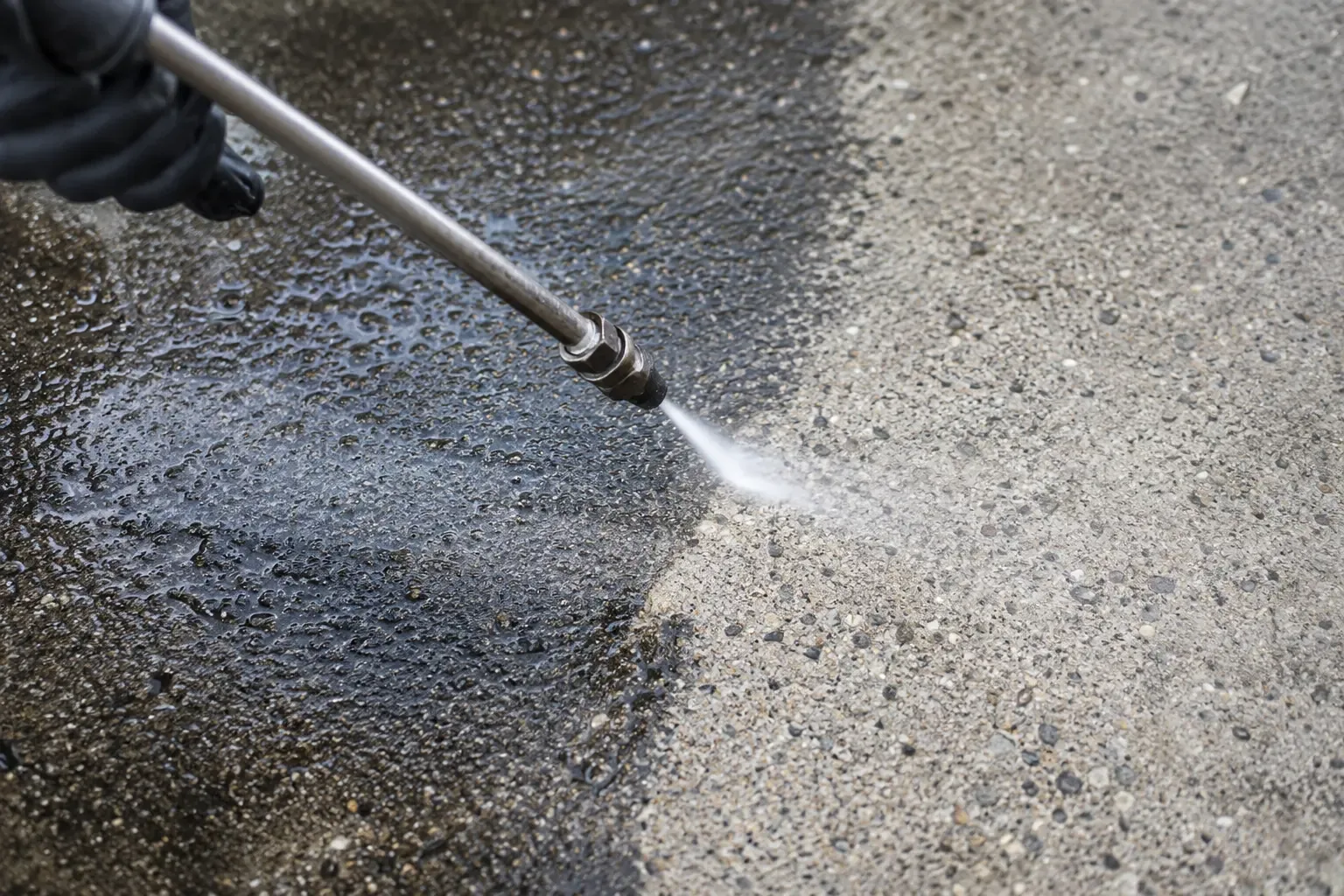
Imprinted concrete is not solid colour all the way through. The colour sits in the top few millimetres, under a sealer that usually needs redoing every three to five years and starts looking patchy and grey well before that. Hit it with a turbo nozzle held close and you strip the colour off in arcs that cannot be put back. We clean it with a rotary head at reduced pressure to lift the dead sealer, the algae and the joint growth, then recommend a fresh seal to bring the colour back up.
Exposed aggregate fails the opposite way. The stones are held by a thin cement matrix, and too much pressure in one place washes that matrix out and drops the pebbles, leaving a pitted patch that only spreads. Constant movement and a fixed distance are the whole job here. If your aggregate is already shedding stones, we will tell you, because cleaning shows that up rather than hides it.
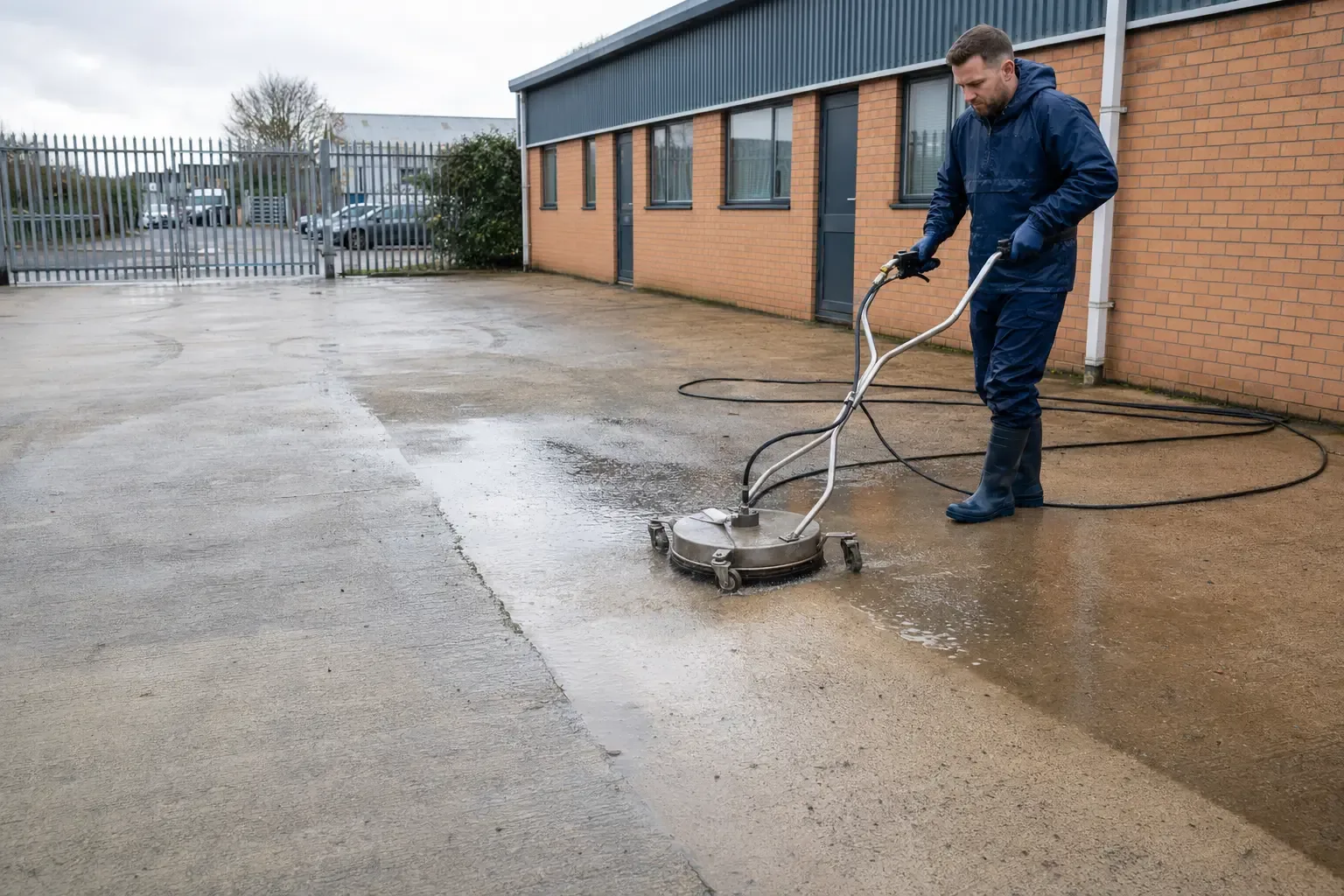
Most of the bad concrete cleaning you see around Cardiff was done with a lance on its own. A lance concentrates everything into a narrow band, so the finish depends on how steady the operator's arm was. You get zebra striping: clean arcs, dirty arcs, and a slab that reads worse than before because now the dirt has a pattern.
A rotary surface cleaner solves that mechanically. Jets spin under a shrouded head that rides at a set height, so every square metre gets the same distance, angle and dwell time. The shroud also contains the splash, which matters in a yard hemmed in by walls, windows and a neighbour's washing. The lance comes out only where the rotary cannot reach: edges, kerb lines, step nosings, corners and gullies.
Oil is not a surface mark on concrete. It has wicked down into the pores and has to be drawn back up. We apply a degreaser, let it dwell until it emulsifies the oil, then flush it out with hot water. Recent drips normally come out completely. A patch that has been feeding into a garage floor for ten years will lighten a long way and may still leave a shadow, and we would rather say that at the quote than afterwards.
Rust behaves differently again. It comes off garden furniture feet, wheelie bin frames, fertiliser granules or reinforcement sitting too close to the surface, and blasting at it just erodes the concrete around the stain while the orange stays put. It needs an oxalic acid based remover, given time to work and then rinsed off thoroughly. Paint is judged case by case. Emulsion often lifts with heat and a rotary pass, while a two-pack floor paint usually needs a stripper and a second visit.
A clean slab is normally a safer slab. The slippery layer on a Cardiff path or yard is almost always biofilm, and taking it off gives back the grip the concrete had when it was laid. Two exceptions are worth knowing about.
The first is a power-floated garage or workshop floor. That finish is deliberately smooth, and once it is clean and wet it can be genuinely slick. If you want it sealed, ask for an anti-slip additive in the coat rather than a straight gloss.
The second is steps and slopes. Sealer on a step nosing or a driveway ramp can cut grip in the rain, so we either leave those areas unsealed or use a grit-loaded finish. Tell us if anyone in the house is unsteady on their feet and we will treat the steps accordingly.
On an open, sunny drive in somewhere like Lisvane or Radyr, two years is realistic. On a shaded yard behind a Grangetown or Splott terrace, with a north-facing wall and a gutter that drips, twelve months is nearer the mark. Sunlight and drainage decide it. Clearing your gutters and cutting back whatever overhangs the slab buys more time than any product will. A breathable sealer stretches the interval further and makes the next clean quicker, because the dirt then sits on the sealer instead of down in the concrete.
We cover the whole of Cardiff, including Roath, Penylan, Cyncoed, Lisvane, Llanishen, Whitchurch, Rhiwbina, Radyr, Llandaff, Canton, Pontcanna, Grangetown, Splott, Rumney, Llanrumney and Cathays, and we work out across South Wales to Barry, Newport and beyond. Concrete is often booked alongside driveway or patio cleaning, or with gutter cleaning, since a leaking gutter is usually what put the green stripe down the path in the first place.
We have been cleaning exterior surfaces around Cardiff since 2019, and our Google rating is 5.0 from five reviews. Call or text 07576 128903, or email Liamdunn2406@outlook.com with a photo and a rough size and we will come back with a price. We are based in Cardiff and answer seven days a week, 7:00 to 21:30. If a slab is past saving we will say so rather than take the job.
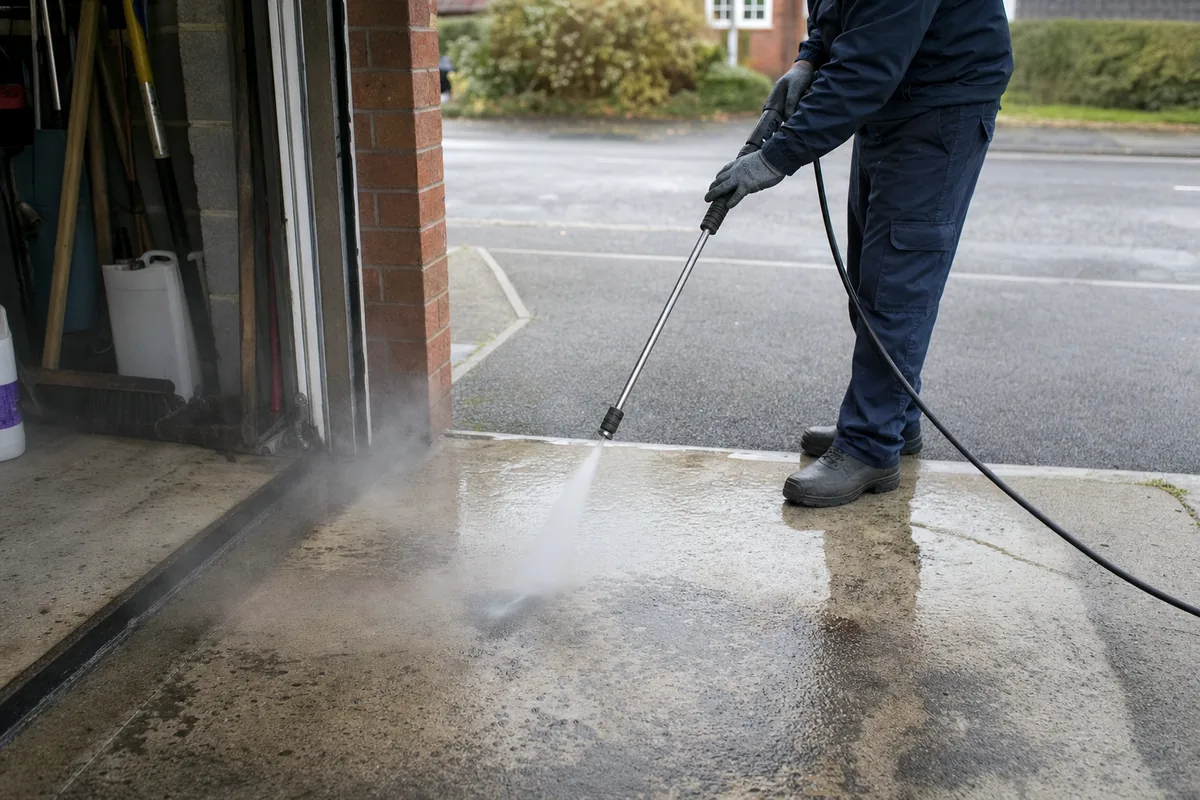
There is no fixed price, because concrete jobs vary enormously. As a guide, a short path or a set of steps usually lands between £80 and £150, a single concrete drive, garage floor or small yard between £180 and £350, and larger yards or commercial hardstanding are priced by the square metre. What moves the figure is area, how ingrained the staining is, whether oil, rust or paint need separate treatment, access for the machine and water, and whether you want the surface sealed afterwards. We quote on the actual slab and the quote is free. Call 07576 128903.
Most domestic concrete cleans are a half day. A path and a set of steps is often 60 to 90 minutes. A single garage floor or a small yard is usually two to three hours. A drive plus paths and a rear yard can fill a full day. Heavy oil, rust or paint work adds time, because those need dwell time rather than more pressure. Sealing is a separate visit around 48 hours later, once the concrete has dried right through. We give you the expected timing when we quote, not on the morning.
Concrete is durable, but it can be damaged by careless washing. The two failures we get called out to fix are stripes burned in by a turbo nozzle held too close, and exposed aggregate with the cement matrix washed out so the stones are dropping. Both come from too much pressure in one spot for too long. We use a rotary surface cleaner at a fixed height so the pressure is spread evenly, drop the pressure on imprinted and decorative surfaces, and keep the machine moving. Concrete that is already spalling or crazing will show its condition once clean, and we flag that first.
Between one and two years for most Cardiff properties. An open, sunny driveway holds up close to two years. A shaded yard behind a terrace, or a path under a north-facing wall or an overhanging hedge, can green up again within twelve months. How much sun the surface gets, and how fast it drains, decides which end you land on. The cheapest thing you can do to extend the result is clear your gutters and cut back anything that drips or overhangs, because standing damp is what feeds the algae. A breathable sealer helps too, by slowing regrowth and making the next clean faster.
Not for the whole job. We need access to an outside tap or another water source, and we need to agree what gets moved before we start. After that you are welcome to go out. What we do ask is that someone is around at the end, or reachable by phone, so we can walk the finished area together while it is still damp and the true colour is showing. If nobody can be there, we send photos taken before and after, and take payment once you are happy.
We plan the water before we plan the cleaning. Beds and borders next to the slab are covered or pre-wetted so any run-off is diluted, we check the gullies are actually running before we start, and we direct the slurry to a drain rather than letting it soak into planting or dry back onto the slab. Where a biocide or degreaser is used, it goes on the surface being treated and is rinsed off properly rather than sprayed about. Tell us about a pond, vegetable beds or a nervous dog and we will work around them.
Any month works in Cardiff as long as it is above freezing. Spring and early summer are the most popular, because the winter growth has just peaked and you get the longest run of clean months out of the job. Autumn is a good second choice, ideally before leaf fall stains the slab. We avoid cleaning when a hard frost is due within a day or two, because water sitting in the pores and then freezing can cause surface damage. Sealing is the fussy one: it needs a dry slab and a dry forecast, so it is a spring to autumn job.
Usually a big improvement, sometimes a complete removal. Drips that are weeks or months old normally come out entirely with a degreaser, proper dwell time and hot water. A patch that has been feeding into the floor for years has soaked deep into the pores, and it will lighten considerably but may leave a shadow. Repeat treatments help. On a badly contaminated slab, a floor coating is the honest answer rather than more cleaning. We look at the stain and tell you which of those three you are dealing with before you commit.
Great company come out gave a good price and done the job straight away highly reccomend chris great guy

Very reliable, showed up on time to give a quote, and started work straight away! Wanted the back done after the front. Stunning work on my front driveway and porch with the power washer, simply removed all the algae on my walls too that the pressure washer team we had last year couldn't do.

Hard working and reliable pressure washing company! Completely transformed my paving stones and patio

Very happy with the service provided from pressure washing Cardiff, also very friendly and professional many thanks, Simon
What a good quality service have provided done a superb job of pressure washing my driveway + house. Many thanks, Shane
My husband and I are very happy with the work done at our house, to our gutters, our pool area and other concrete areas around our house. You were a pleasure to deal with and I will definitely use your services again!
Pressure Washing Cardiff did a fabulous job: our concrete driveway and retaining walls look like new! What a delight to have a tradesman visit who takes pride in his work and does a thorough job.
These guys are experts and were able to give us a great quote for a complete exterior makeover. Power washing, gutter cleaning, window cleaning as well as pressure washing for our patio and driveway. Thank you so much!!
Send a photo and a rough size and we will come back with a price, usually the same day.
20% off enquiries via WhatsApp