
H
Great company come out gave a good price and done the job straight away highly reccomend chris great guy
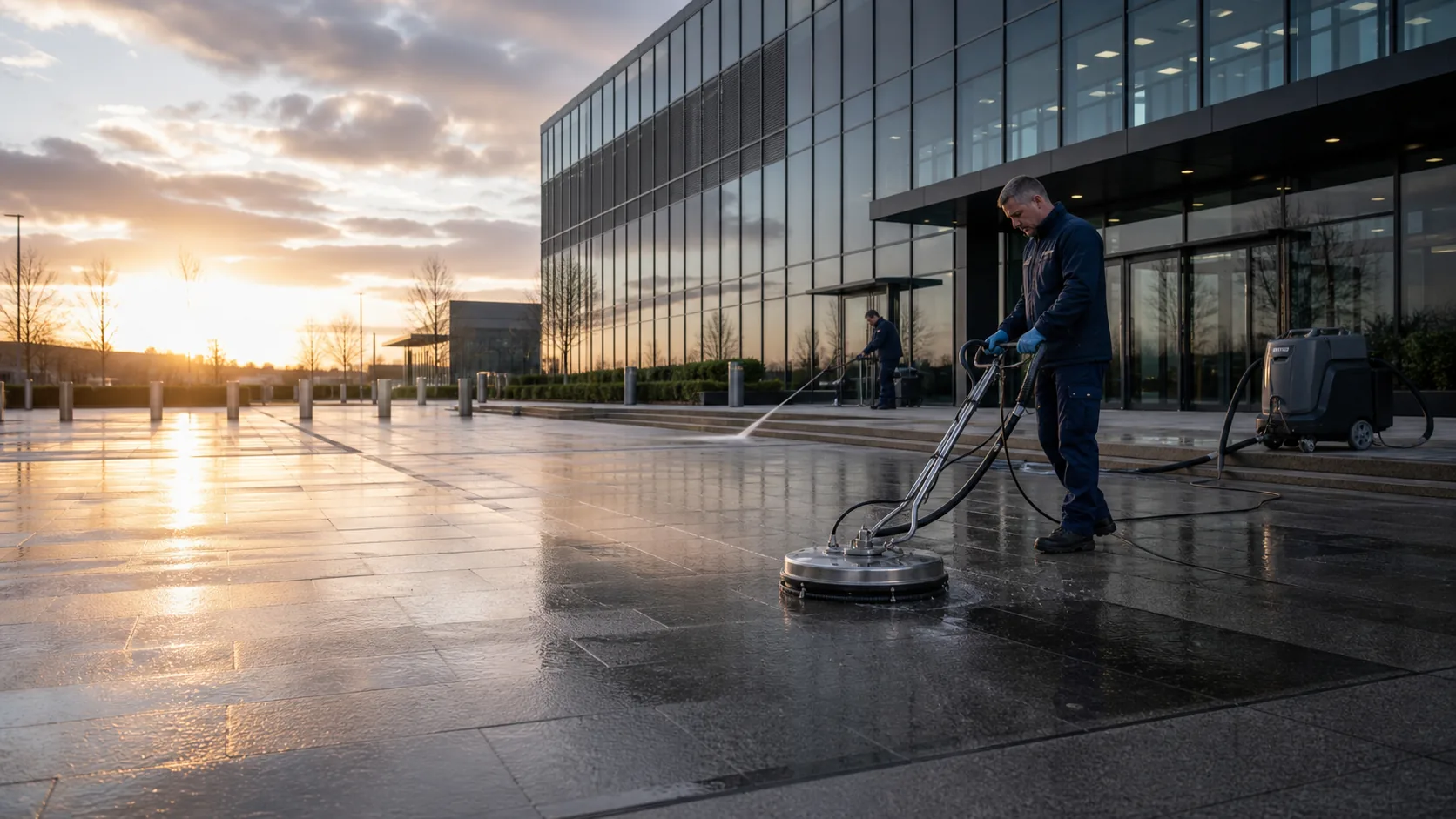
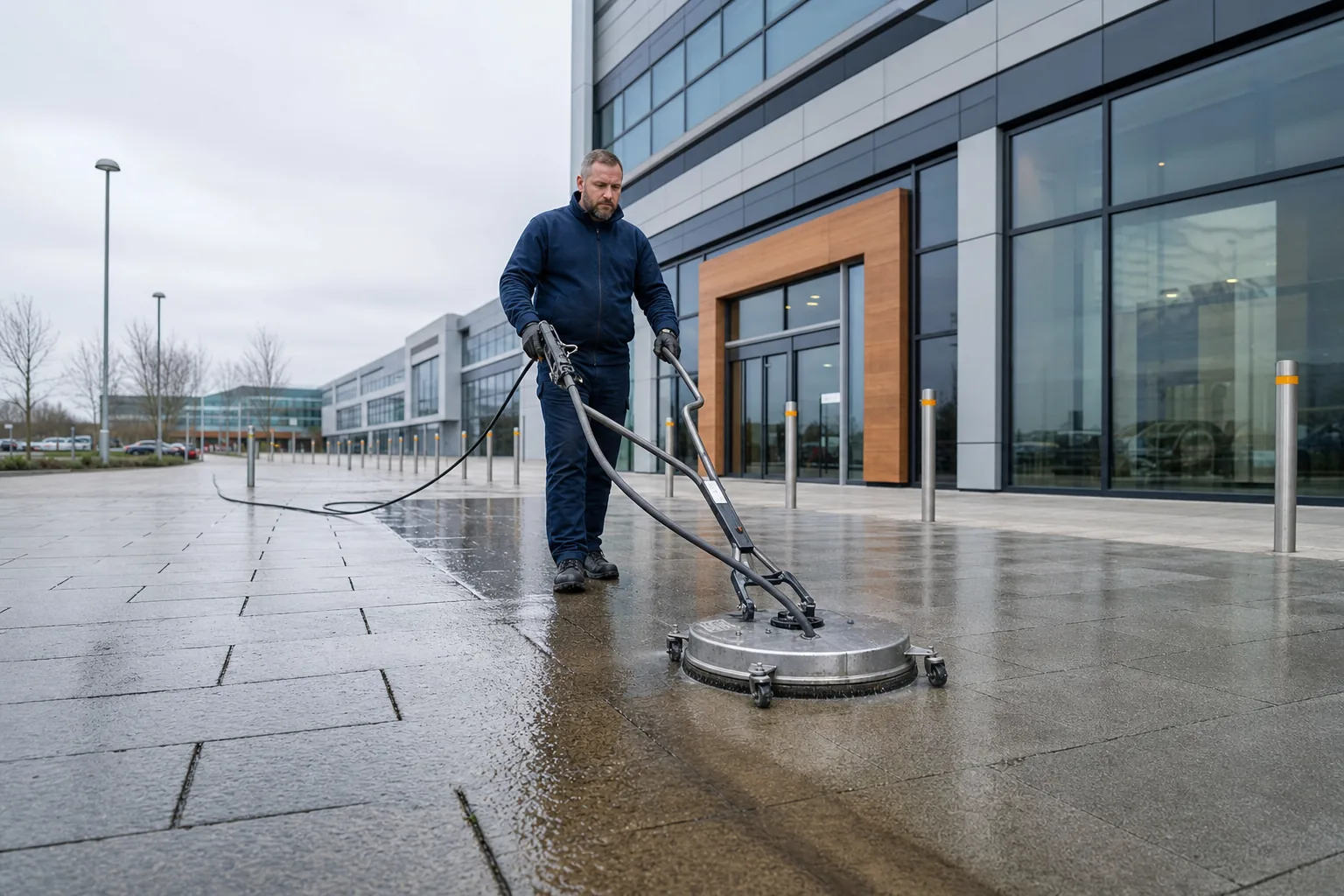
Commercial pressure washing in Cardiff has to fit around a working business rather than stop it. In practice that means an early start, cones and wet floor signs, and a site that looks open and safe before the first customer arrives. We clean car parks, forecourts, shop fronts, bin stores and industrial units across Cardiff and South Wales.

Step 1 of 3 · no obligation, reply the same day
The same care and clear communication, whether it is a single path or a whole house.
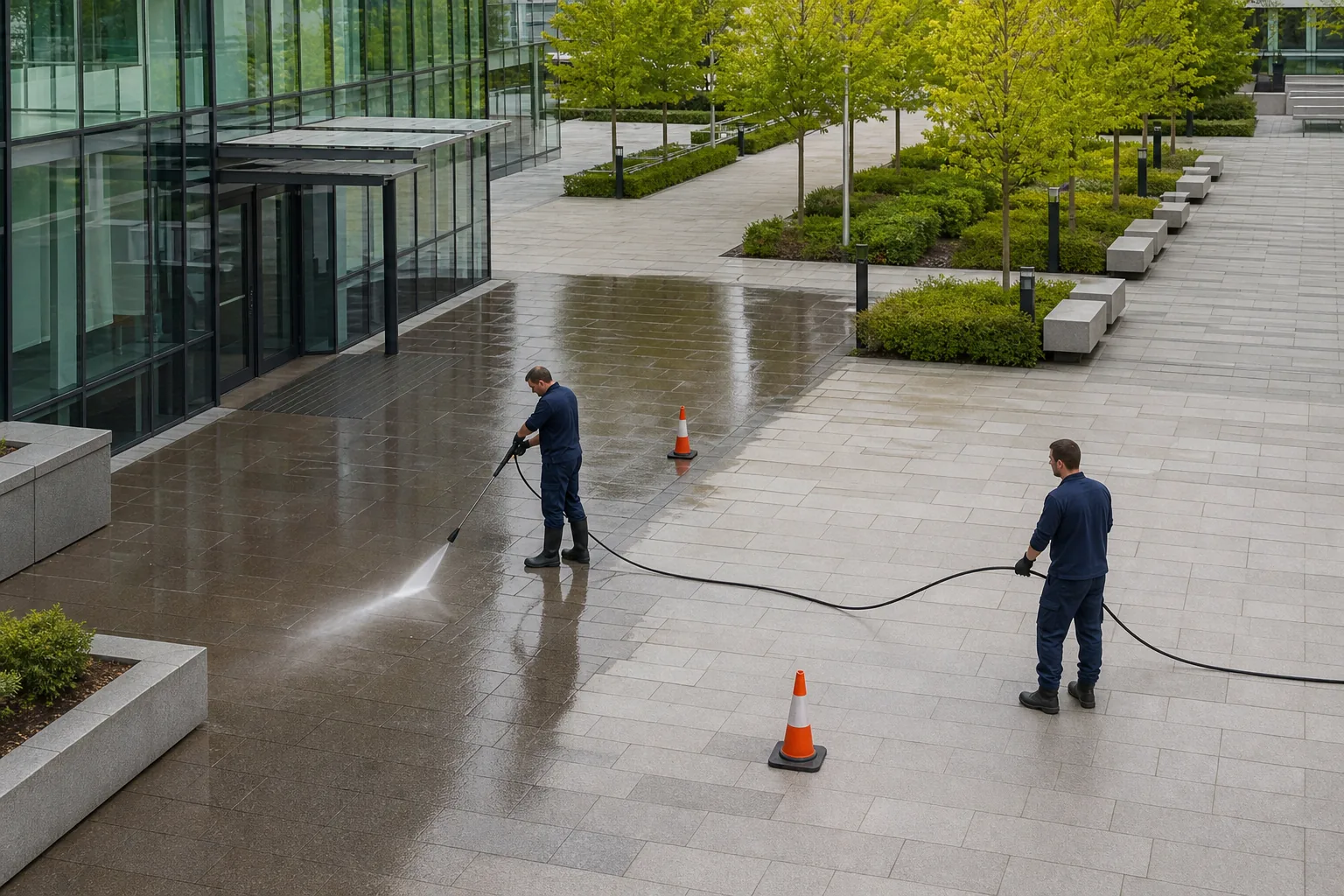
Commercial work splits into two jobs. Hard surfaces the public walks on, which is a safety problem, and elevations the public looks at, which is a presentation problem. Most sites have both, and almost none of them want two separate visits.
None of those take the same machine setting. Poured concrete and tarmac take full pressure and a rotary surface cleaner. Block paving needs the pressure backed off and the joints refilled with kiln dried sand afterwards, or you get sunken blocks and weeds back inside a season. Painted line markings, resin bound surfaces and rubber play surfacing are treated far more gently, because a surface cleaner held still for two seconds leaves a permanent circle.
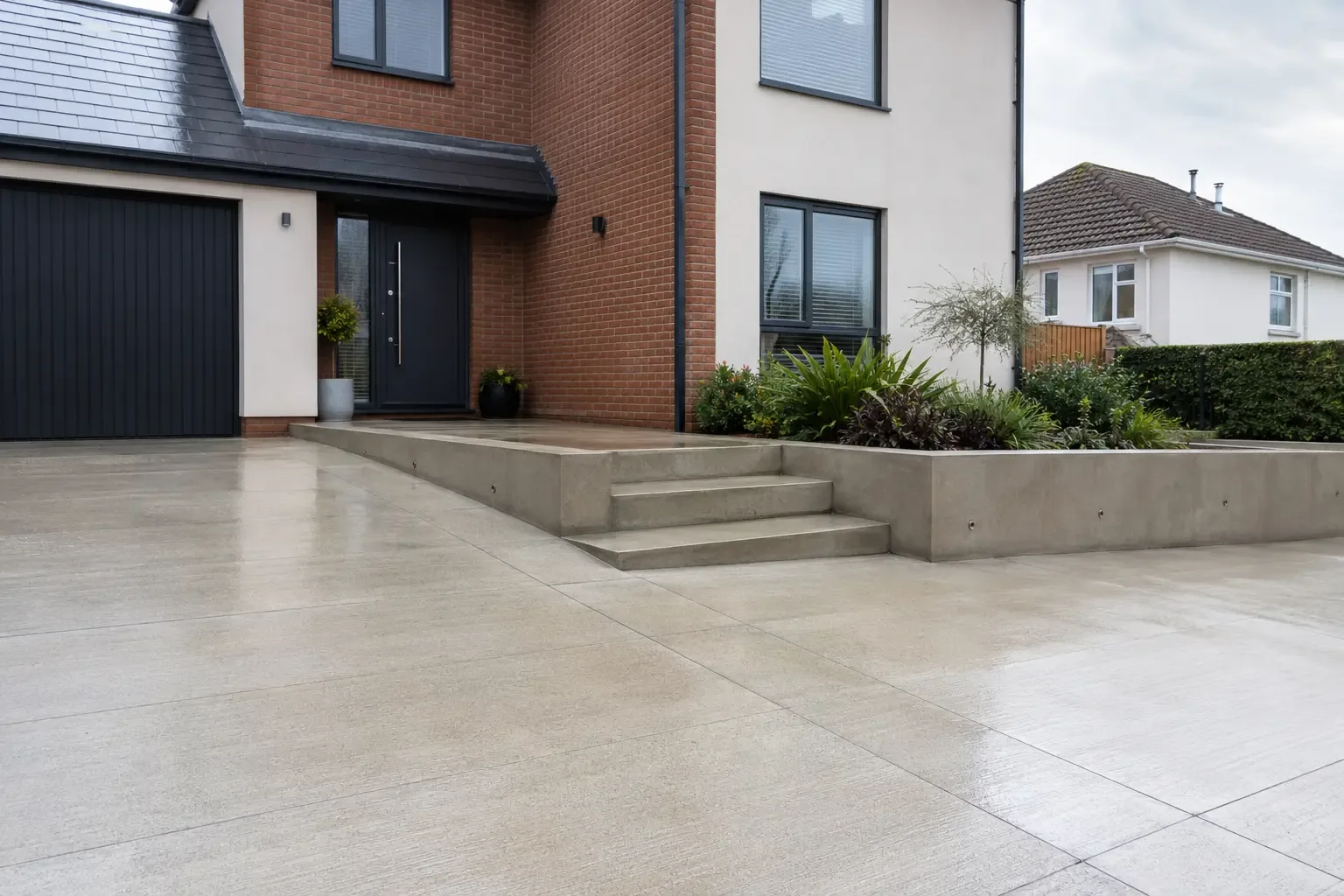
Algae, diesel film and rotting leaf mulch are what put people on the floor. Algae is worst on north-facing paths and under trees, and it is most dangerous when it is barely visible. A thin green film goes from grippy to treacherous the moment it rains, and Cardiff gives it plenty of chances. Steps, ramps and the transition from car park to entrance are where the incidents happen.
You have a duty of care to everyone who comes onto your site under the Occupiers' Liability Act, and a slip claim costs you money long before it reaches an insurer. We log every visit with dates and photographs, so there is something in the file if an incident is raised months later. That is why most managed sites move to a schedule rather than ringing us once it already looks bad.
Cold water will not shift chewing gum. It flattens it and works it further into the surface. We lift gum with heat and a low pressure lance, which softens it and releases it without blasting a lighter patch into the paving around it. On a busy parade you can be working through hundreds of pieces across a single frontage. Gum is priced by area or by the hour, because the time it takes has very little to do with the size of the site.
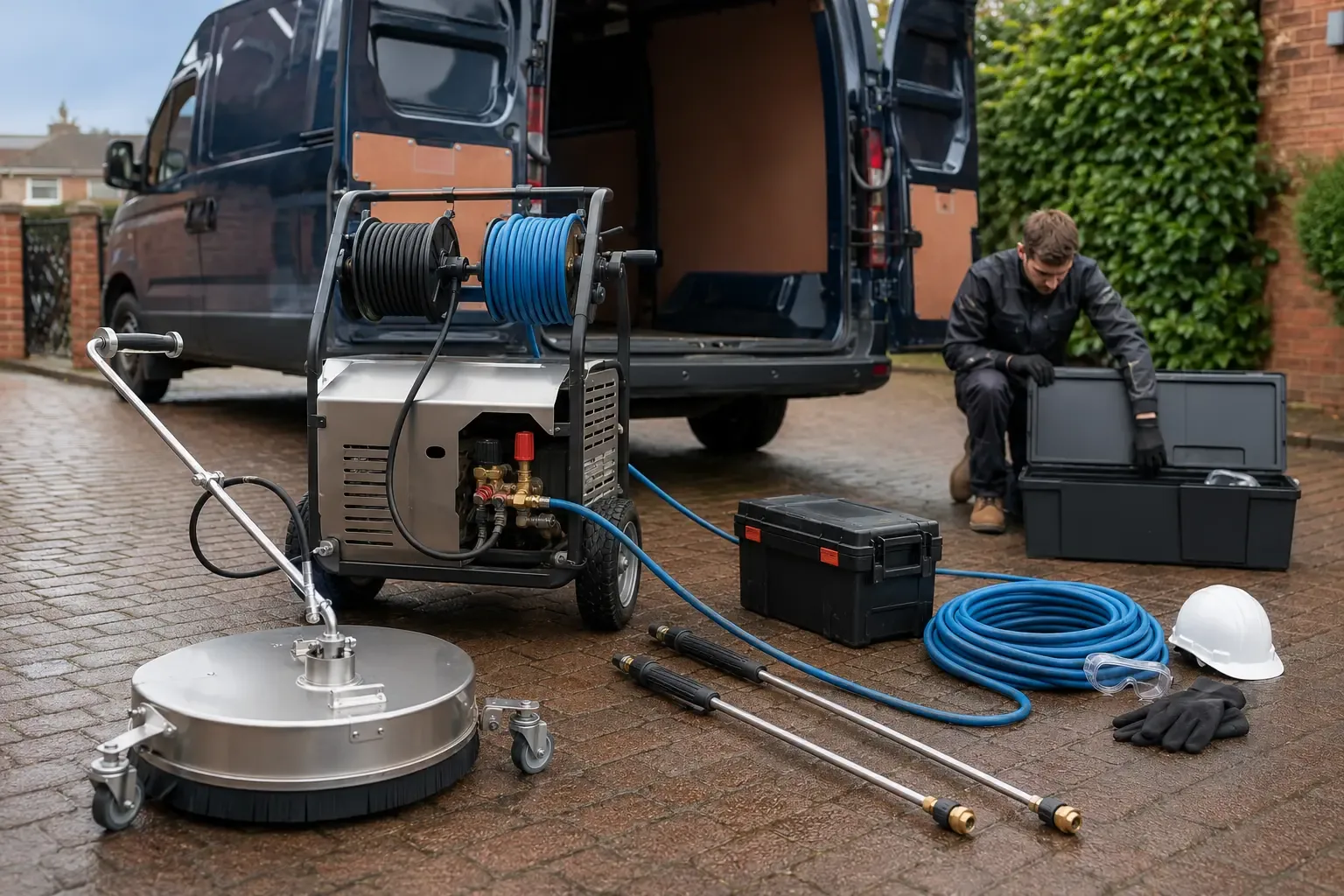
Car parks are mostly a logistics problem. Bays have to come clear in blocks, so it is either a section at a time behind cones or a full clear overnight. We check where the gullies run before we start rather than after they back up. On forecourts the real work is the oil. Diesel and engine oil soak into unsealed concrete and cold water only spreads them, so those areas get a degreaser, dwell time and hot water.
Loading bays and yards on the trading estates around Cardiff, Leckwith and Cardiff Gate collect oil, rubber and whatever the last delivery leaked. None of it lifts in one pass. If a stain is a shadow that will never fully go, we tell you before we quote rather than after we have finished. Unsealed concrete holds a ghost of anything that has sat on it for years.
Cladding and painted render are not pressure washing jobs. Composite panels, powder coated aluminium and coloured render get soft washed, which means a low pressure application of a diluted biocide that kills the algae and lichen sitting in the surface, time for it to work, then a gentle rinse. We keep bleach based mixes off coloured render and paintwork, because they lighten pigment and mark whatever sits below them. A turbo nozzle on a panel joint drives water behind the cladding and strips the coating, and that streaking never comes back out.
Stairwells, bin stores and refuse compounds are the jobs nobody wants and the ones tenants complain about most. They are enclosed, so containment matters. We cover drains where the work needs it, keep dirty water out of surface water gullies, and sanitise bin areas rather than moving the smell around. On the managed blocks around Cathays, Roath and the Bay, the bin store needs doing more often than anything else on site.
Most beer garden work lands in March and April. Timber decking goes green over the winter and gets slippery enough to close a terrace, and the wood is soft, so it takes a wide fan worked along the grain rather than a hammering that raises the fibres. Terraces, smoking shelters and the step up from the pavement are the parts that matter. Pub work in Canton, Pontcanna and Whitchurch usually goes in on a Monday morning before opening.
School sites get cleaned when the pupils are not in. Playgrounds, canopies, covered areas and nursery surfaces are done over the summer or at half term. We sign in, work to your safeguarding rules, and fence the working area off from any part of the site still in use. Painted playground markings and rubber safety surfacing need controlled pressure, or you take them off along with the dirt.
We are set up for it. Our hours run 7:00 to 21:30, seven days a week, and most commercial work sits at the ends of those days. Retail before opening, pubs on a Monday morning, offices and car parks on a Sunday, schools in the holidays. Weekend slots are not automatically dearer. They are often better value, because we are not stopping every ten minutes for cars and pedestrians.
One off cleans are fine, but a site is cheaper to keep clean than to rescue. A schedule stops algae ever getting established, so later visits are shorter and cost less than the first deep clean did. The patterns that work:
Dates are fixed in advance, so the work lands in your diary and your budget instead of turning up as an emergency in October when the first wet week makes the steps slippery.
Quotes are free and written. For anything bigger than a shop front we would rather visit than price off a map, because access, water supply and the actual state of the surface move the figure more than the area does. Every quote is itemised section by section, and the price holds unless the site changes between the visit and the date.
We invoice by email with your purchase order or job reference on it, and work to normal commercial terms rather than asking for payment on the day. Clients with several sites can have one invoice per site or one consolidated invoice, whichever suits your accounts team.
Call 07576 128903 or email Liamdunn2406@outlook.com with the site, the surfaces and the window you can give us. We are based in Cardiff, and we cover Cardiff, Barry, Newport and the rest of South Wales. We have been cleaning commercial and domestic property here since 2019, and our Google rating is 5.0 from five reviews.
There is no list price, because the variables move it too far. What changes the number: the total area in square metres, the surface type, how bad it has been allowed to get, access for the machine and hoses, whether there is a usable water supply on site, whether the work has to happen overnight or at a weekend, and whether gum, oil or graffiti are involved. Small jobs such as a shop front and its paving are usually a fixed sum, often in the low hundreds. Car parks, yards and forecourts are priced by area or as a day rate. Every figure is indicative until we have walked the site. Call 07576 128903 for a free written quote.
Yes, and for most sites it is the sensible option. We work 7:00 to 21:30, seven days a week, so retail and hospitality are usually cleaned before opening, offices and car parks at a weekend, and schools during the holidays. Working when the site is empty is faster and safer, because we are not stopping every few minutes for cars and pedestrians, so it often works out better value rather than dearer. Tell us the window you need and who holds keys, alarm codes and barrier access, and we will build the visit around it.
Not if the pressure matches the surface, which is the whole skill. Concrete, tarmac and stone take full pressure and a rotary surface cleaner. Block paving needs less pressure and fresh kiln dried sand in the joints afterwards. Timber decking is washed along the grain with a wide fan. Painted line markings, resin bound surfaces, rubber play surfacing, render and cladding are never hit with high pressure at all, they are soft washed and rinsed. Damage in this trade almost always comes from one setting being used for everything, the lance held too close, or the operator standing still. We check the surface before the machine comes off the van.
A shop front and its immediate paving is usually a couple of hours. A pub frontage and beer garden takes most of a morning. A small office car park of around 500 square metres is typically a full day. Large car parks, industrial yards and forecourts run into multiple days and are normally split into sections so part of the site stays open throughout. Gum removal, oil treatment and graffiti add time that has nothing to do with the area covered. You get a realistic time estimate with the quote, plus which sections need to be clear and when.
On an open hard surface with footfall and daylight, a good clean holds for around twelve months before the green starts coming back. Shaded areas, north-facing steps, ground under trees and enclosed bin stores go again much faster, sometimes inside six months. Sites down by the Bay and anywhere under heavy leaf fall are worse again. A biocide treatment after the wash slows regrowth noticeably, because washing only strips what you can see while the growth left in the pores of the surface starts again from there. That is the argument for a schedule: keeping on top of it costs less per visit than letting it get bad and rescuing it.
Yes. A site specific risk assessment and method statement goes over before the first visit rather than on the day, so your facilities or health and safety contact has time to read it. It covers the hazards that actually apply on your site: wet surfaces, hoses across pedestrian routes, hot water equipment, working near the public, and how the area is cordoned and signed. We will also complete your own contractor induction, permit to work or supplier approval forms if you use them. If your compliance file needs anything else from us, ask at the quote stage and it comes with the same pack.
Waste water is the part most people forget about. We check where the gullies run before starting, protect or cover drains where the work needs it, and keep dirty water away from surface water outfalls and planted areas. Beds, planters and grass borders are rinsed with clean water afterwards if any solution has drifted onto them. Soft washing solutions are diluted and rinsed off, but they are not something you want sitting in a flower bed. If your site has a drainage restriction or an interceptor, tell us at the quote stage so it is planned for.
We work all year. Spring and early autumn are the busiest windows. Spring because algae has had all winter to grow and beer gardens need to be ready, autumn because leaf fall and the first wet weeks are when slips spike. Winter work is perfectly possible in Cardiff. We simply avoid a hard frost, because water freezes on the surface faster than it drains and you end up with a worse hazard than you started with. Summer suits schools and any site that has to be empty. If you want a schedule, book the spring dates early, because they go first.
Great company come out gave a good price and done the job straight away highly reccomend chris great guy

Very reliable, showed up on time to give a quote, and started work straight away! Wanted the back done after the front. Stunning work on my front driveway and porch with the power washer, simply removed all the algae on my walls too that the pressure washer team we had last year couldn't do.

Hard working and reliable pressure washing company! Completely transformed my paving stones and patio

Very happy with the service provided from pressure washing Cardiff, also very friendly and professional many thanks, Simon
What a good quality service have provided done a superb job of pressure washing my driveway + house. Many thanks, Shane
My husband and I are very happy with the work done at our house, to our gutters, our pool area and other concrete areas around our house. You were a pleasure to deal with and I will definitely use your services again!
Pressure Washing Cardiff did a fabulous job: our concrete driveway and retaining walls look like new! What a delight to have a tradesman visit who takes pride in his work and does a thorough job.
These guys are experts and were able to give us a great quote for a complete exterior makeover. Power washing, gutter cleaning, window cleaning as well as pressure washing for our patio and driveway. Thank you so much!!
Send a photo and a rough size and we will come back with a price, usually the same day.
20% off enquiries via WhatsApp