
H
Great company come out gave a good price and done the job straight away highly reccomend chris great guy
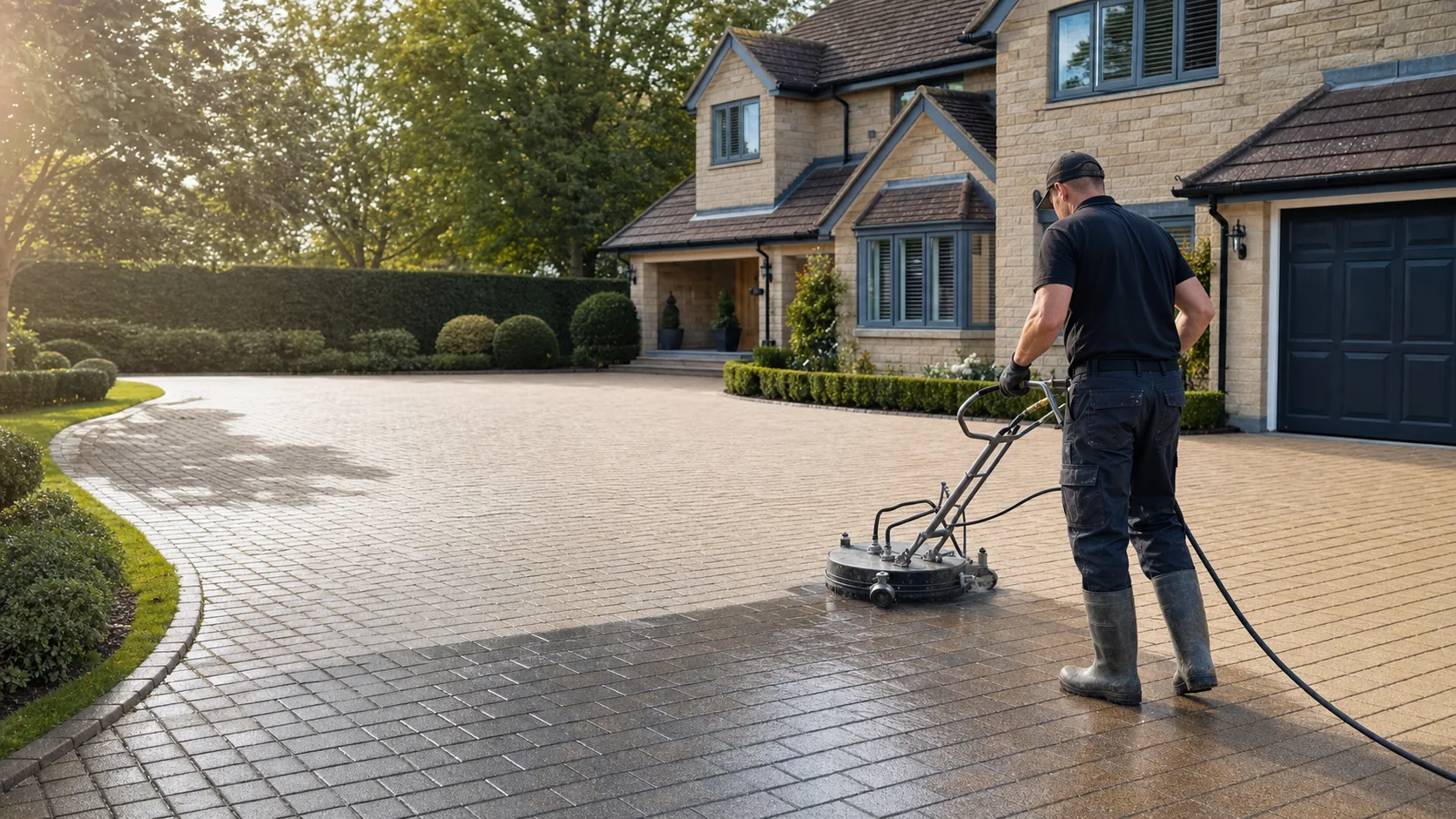
Block paving cleaning and sealing in Cardiff is three jobs, not one. A deep clean, a full re-sand with kiln dried sand, then a sealer applied to dry paving in a dry weather window. Skip any one of them and the driveway either fails early or never looks right. Here is exactly how we do it, and when we will tell you not to bother.
Step 1 of 3 · no obligation, reply the same day
The same care and clear communication, whether it is a single path or a whole house.
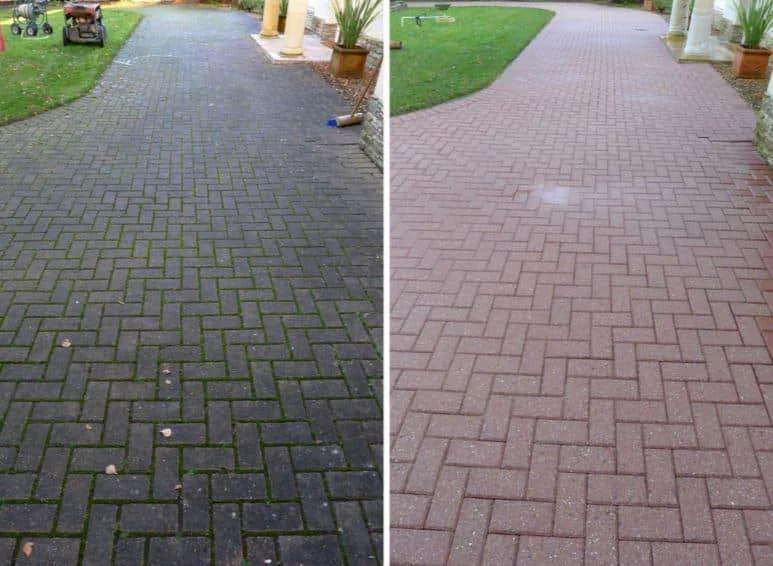
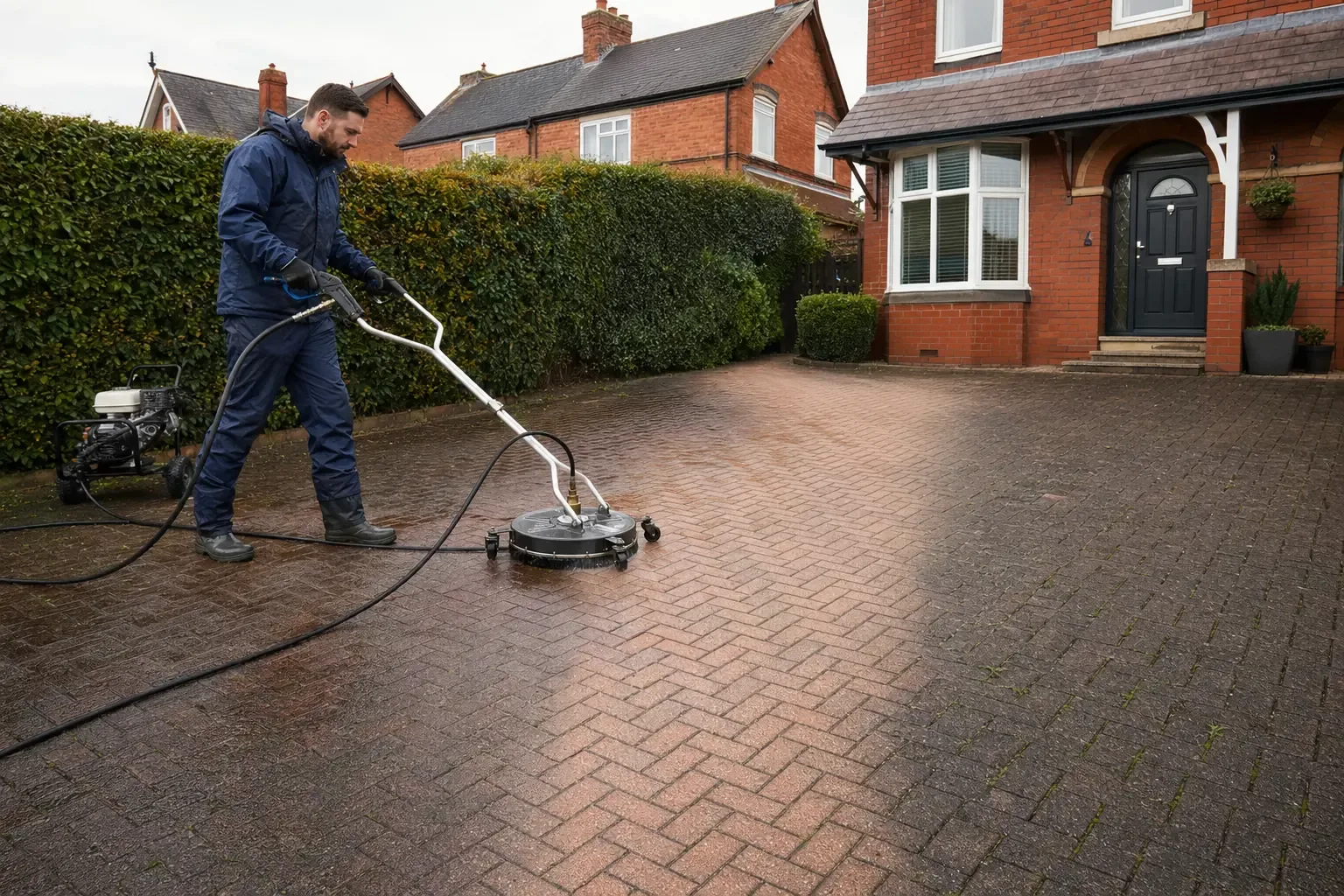
Block paving collects a predictable set of problems in South Wales. Road silt and roof grit settle into the joints and turn greasy. Moss roots in that. North-facing driveways in Llanishen, Rhiwbina and Lisvane grow black spot lichen, the flat tar-coloured discs that a jet washer will not shift no matter how long you stand there. Then there is tyre rub in the turning area, engine oil where the car sits, and leaf tannin under the limes and sycamores on the older streets. We pre-treat the lichen and give it dwell time, then clean with a rotary surface cleaner rather than waving an open lance about. The lance comes out afterwards for edges, kerbs and gullies.
A block driveway is not glued down. The blocks sit on a screeded bed of sharp sand over a compacted sub-base, and the whole thing works by interlock. Each block leans on its neighbours through the sand in the 2 to 5mm joint, and that sand passes the weight of your car sideways instead of letting it punch down through one block. Empty the joints and leave them empty, and blocks start to rock, top edges chip, wheel tracks appear where you turn in, and water runs down the sides of the blocks into the bedding layer. That is how a driveway ends up rutted. Plenty of Cardiff front gardens were converted to parking on a thin sub-base, so those joints are doing even more work than they should. Every clean takes joint sand out, so re-sanding is not an upsell. It is part of the job.
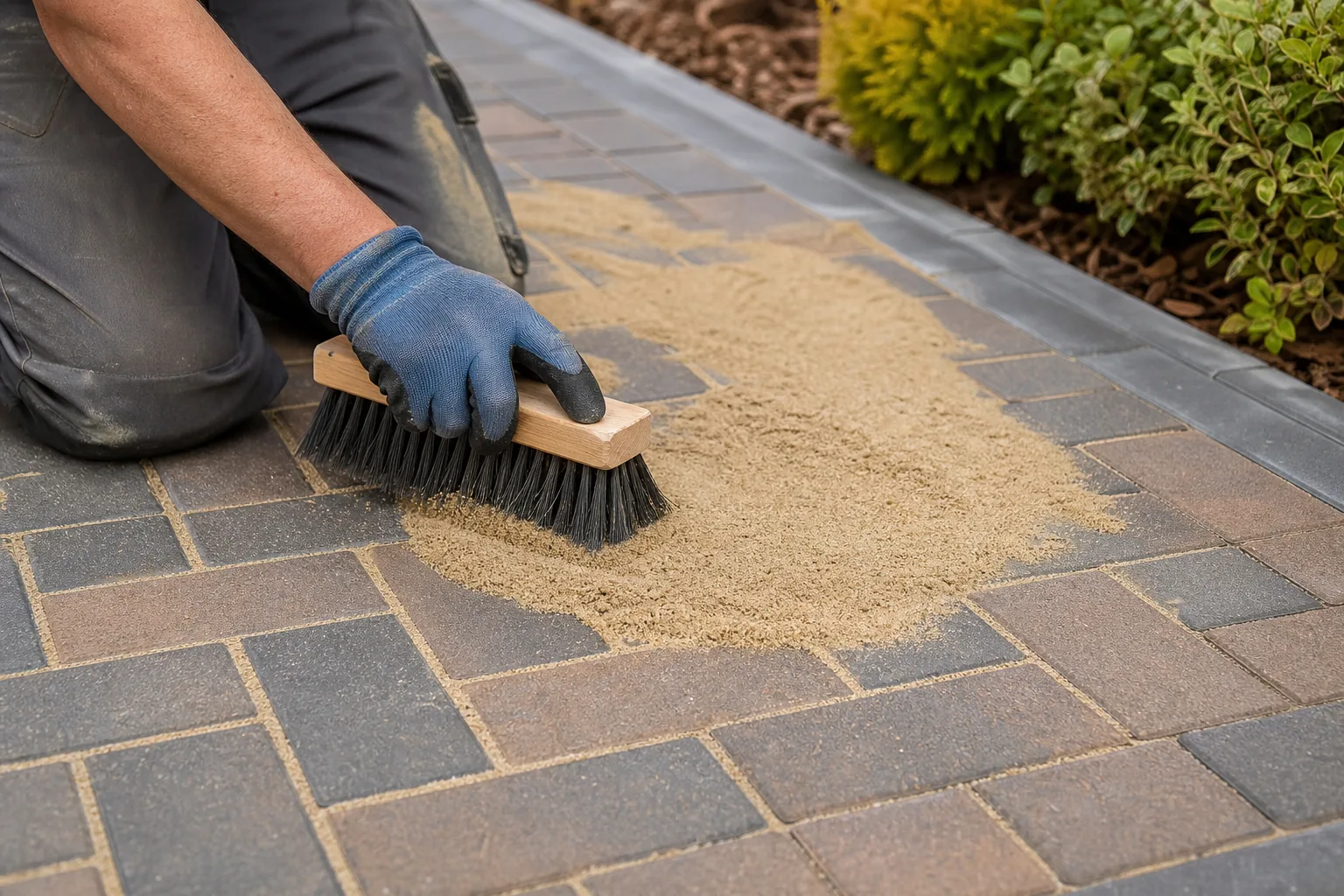
Kiln dried sand is silica sand, washed, graded to a tight particle size and dried until it holds almost no moisture. Bone dry sand pours like a liquid and reaches the bottom of the joint. Damp builders' sand clumps, bridges near the top and leaves a void underneath, and the silt in it is exactly what moss and weed seed feed on. We carry it sealed and keep it covered on site, because a bag left open in a Cardiff front garden for one wet afternoon is no longer kiln dried sand.
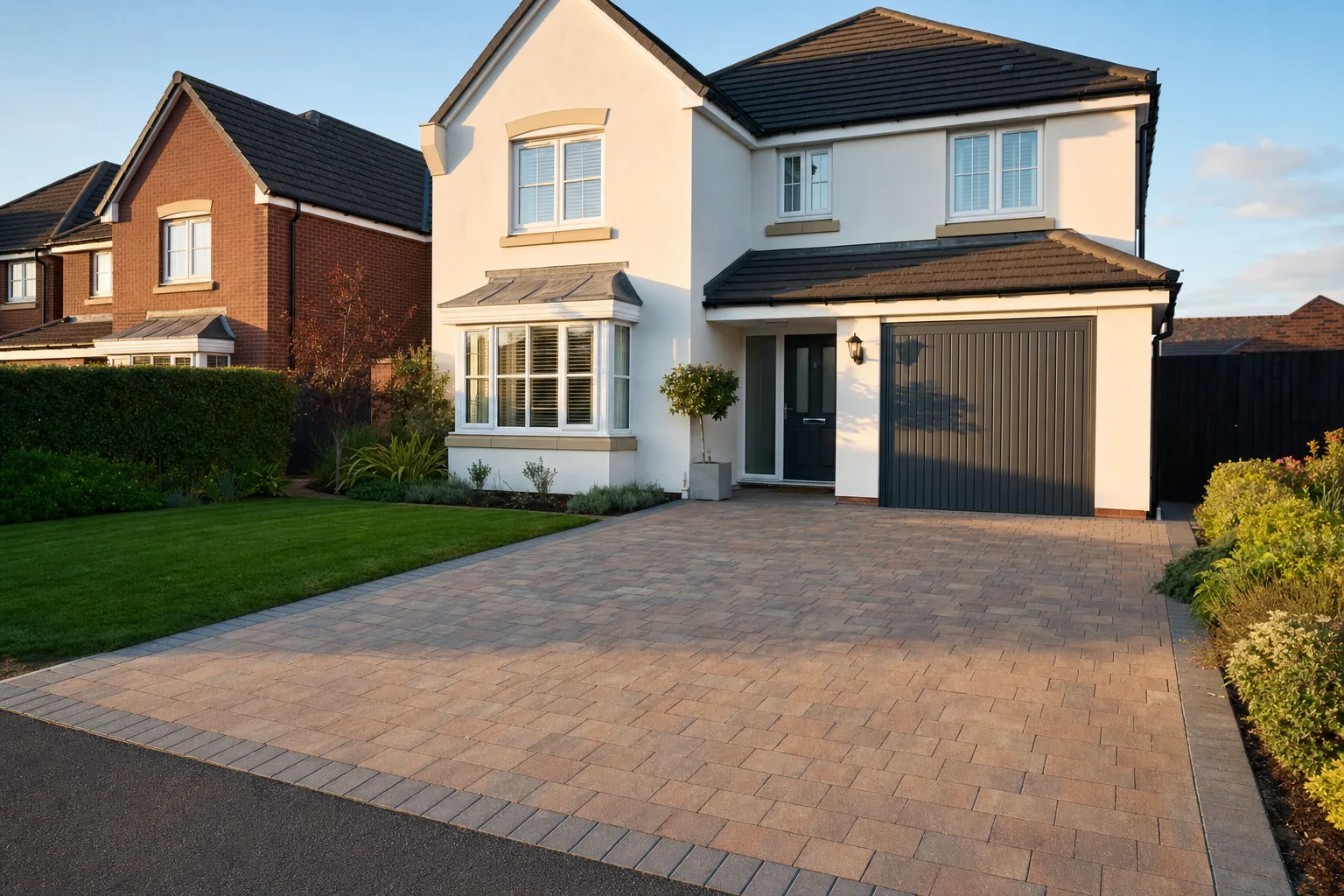
There is no best sealer, only the right one for your blocks and the look you are after. Most driveway sealers are acrylic. Solvent based versions soak in further, bind the joint sand harder and darken the colour more. Water based versions smell far less and stay closer to the natural tone. Both want the same thing from the weather. Ask to see samples on your own paving in daylight before you choose, because a block that reads charcoal in a brochure can come up almost black under a wet look coat.
Sealer needs dry paving and a dry forecast, which in Cardiff is the whole problem. After a wash the blocks need 24 to 48 hours of decent weather to dry through, and longer on a shaded frontage that catches an hour of sun. Once it is on, most products are touch dry in one to three hours, walkable the same evening and driveable after 24 to 48 hours, with full cure taking up to about a week. Rain in the first few hours is the failure mode. Water landing on a part cured film blushes it white, and the fix is stripping it off and starting again. Below about 8 degrees Celsius the film will not form properly either, and on a cold frontage the surface sits colder than the air. In practice the sealing season here runs April to September, and we work off the forecast rather than the calendar.
Efflorescence is a white powdery haze that comes out of the concrete itself. Free lime inside the block dissolves in moisture, wicks to the face and reacts with the air, drying there as a white salt deposit. It is not dirt and it is not a cleaning failure. It is worst on paving in its first year or two, and rain usually weathers it off over a few seasons. It matters here for one reason. Sealing over active efflorescence traps the salts under the film and leaves the driveway permanently milky. On young paving we check for it, then either treat and rinse it thoroughly before sealing, or tell you to give it another season.
Sealing is not right for every surface, and we would rather say so at the quote than take the money. We advise against it on paving under about a year old, on paving still throwing efflorescence, and on blocks whose faces are already flaking. Permeable paving is meant to drain through its joints, so a film sealer works against the drainage the driveway was built for. Paving previously sealed with an unknown product needs a test patch, because incompatible sealers can lift or wrinkle. And if there is standing water, rutting or a dropped section, the sub-base comes first. Sealing that driveway just gives you a smart looking dip. In those cases we clean and re-sand, which on its own transforms most paving, and we revisit sealing another year.
Two to four years is realistic on a domestic driveway. A frontage taking three cars a day will not hold like a patio with a table and chairs on it, and the strip where you swing the wheel to line up with the gate always goes first. Shaded frontages green over faster than open sunny ones. There is a simple test. Tip a bucket of water onto the worn part. If it beads and sits, the sealer is still working. If it darkens the block and soaks straight in, the film has gone. Caught at that point, a re-seal is a wash, a sand top-up and usually a single coat. Leave it seven years and you are back to the full job.
We have been cleaning driveways and patios across Cardiff since 2019 and hold a 5.0 rating from 5 Google reviews. Our unit is in Cardiff, so most of the city is a short run for us. We work in Roath, Penylan, Cyncoed, Lisvane, Llanishen, Whitchurch, Rhiwbina, Radyr, Llandaff, Canton, Pontcanna, Grangetown, Splott, Rumney, Llanrumney and Cathays, and travel out to Barry, Newport and across South Wales. Call 07576 128903 or email Liamdunn2406@outlook.com, seven days a week from 7:00 to 21:30. Tell us the rough size of the driveway and the finish you have in mind, and we will tell you honestly whether sealing is worth it on your paving.
Prices are worked out per square metre and vary a lot, so treat these as guidance rather than a quote. Cleaning and re-sanding a domestic driveway usually falls somewhere around £4 to £8 per square metre, and sealing typically adds another £6 to £12 per square metre depending on the product and how many coats it takes. A common Cardiff front driveway of 40 to 60 square metres often lands between £400 and £1,200 for the full clean, re-sand and seal. Heavy lichen, oil patches, blocks needing re-bedding and awkward water access all move the figure. We measure and quote free.
Cleaning and re-sanding an average driveway is normally a single day. Sealing is a separate visit, because the paving has to dry through first. Allow 24 to 48 hours of dry weather between the two, and longer if your frontage is shaded. The sealing visit itself is usually half a day for two coats. So a full clean, re-sand and seal is realistically spread across three to four days from start to finish, most of which is simply waiting for the surface to dry. Large areas, steps and heavy black spot treatment add time to the first visit.
Not when the pressure and the technique are matched to the surface. Damage happens when someone attacks concrete blocks with a narrow zero degree nozzle held too close, which erodes the face and leaves permanent stripes. We use a rotary surface cleaner that holds a fixed distance and overlaps evenly, and keep the lance for edges and detail work. The real cost of any wash is the joint sand it takes out, which is why re-sanding with kiln dried sand is part of the job rather than an extra. Blocks that are already flaking will lose more face whoever cleans them, and we will say so before we start.
Two to four years is a fair expectation on a domestic driveway, and longer on a patio that only takes foot traffic. Traffic and shade shorten it, and so does winter de-icing salt and anything spilled and left to sit. What stretches it out is a gentle wash once a year at low pressure rather than a full jet blast, plus sweeping leaves off before they stain. To check where yours stands, pour a little water on the busiest strip. Water that beads means the film is intact. Water that soaks in means it has gone. Re-sealing before it fails completely is a wash, a sand top-up and usually one coat, so it costs less than the original job.
Not for the whole job, but it helps if you are there at the start. We need an outside tap and access to the full area, and we like to agree the finish with you before any sealer goes on. Cars have to be off the driveway for cleaning day, off it again for the sealing visit, and kept off for 24 to 48 hours after sealing while it cures. Plenty of customers leave a key or a gate code and come home to a finished driveway. If something unexpected turns up, a rocking block or an old sealer, we ring you before carrying on.
We wet down borders and planting next to the paving before any treatment goes on, cover what needs covering and rinse foliage afterwards. Products are applied at working dilution and rinsed thoroughly. Run-off is kept on the property where we can and away from open watercourses. The part most people forget is the solids. The slurry that comes off block paving is sand, moss and silt, and it sets hard if it is left sitting in a gully. We flush the surface, collect the arisings and check the drains before we finish, rather than leaving a blocked gully behind us.
Cleaning can be done all year in Cardiff, and late winter into early spring works well because moss growth peaks after the wet months. Sealing is different. It needs dry paving, a dry forecast and a surface temperature above roughly 8 degrees Celsius, so the sealing season realistically runs from around April to September. Spring dates go first, so it is worth getting the clean booked early and holding a sealing slot behind it. We pick the day off the forecast and will move a sealing visit rather than gamble on the weather, because a shower on a part cured film means stripping it off and doing it again.
Cleaning and re-sanding on its own restores most of the look and all of the structure, and plenty of customers stop there quite happily. Sealing is what buys you easier maintenance: bound joint sand, slower moss return, and stains that sit on the surface long enough to be lifted. It is worth doing on paving that is sound and that you plan to keep. It is not worth doing on paving under a year old, on blocks that are already flaking, or on permeable paving meant to drain through its joints. We will tell you which category yours falls into.
Great company come out gave a good price and done the job straight away highly reccomend chris great guy

Very reliable, showed up on time to give a quote, and started work straight away! Wanted the back done after the front. Stunning work on my front driveway and porch with the power washer, simply removed all the algae on my walls too that the pressure washer team we had last year couldn't do.

Hard working and reliable pressure washing company! Completely transformed my paving stones and patio

Very happy with the service provided from pressure washing Cardiff, also very friendly and professional many thanks, Simon
What a good quality service have provided done a superb job of pressure washing my driveway + house. Many thanks, Shane
My husband and I are very happy with the work done at our house, to our gutters, our pool area and other concrete areas around our house. You were a pleasure to deal with and I will definitely use your services again!
Pressure Washing Cardiff did a fabulous job: our concrete driveway and retaining walls look like new! What a delight to have a tradesman visit who takes pride in his work and does a thorough job.
These guys are experts and were able to give us a great quote for a complete exterior makeover. Power washing, gutter cleaning, window cleaning as well as pressure washing for our patio and driveway. Thank you so much!!
Send a photo and a rough size and we will come back with a price, usually the same day.
20% off enquiries via WhatsApp