
H
Great company come out gave a good price and done the job straight away highly reccomend chris great guy
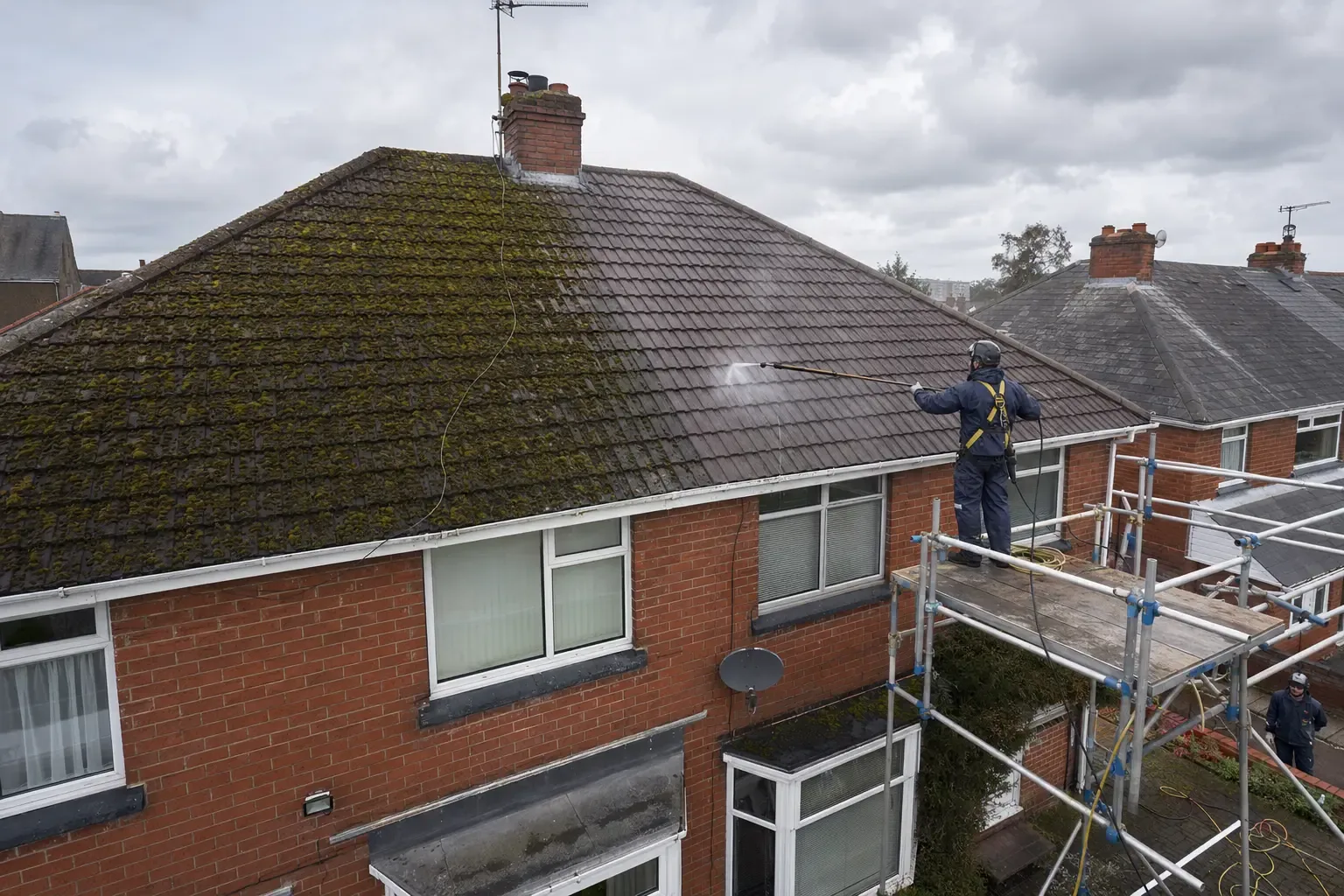
Exterior cleaning in Pontypridd with particular attention to shaded surfaces, roof moss, drainage and safe access.
Step 1 of 3 · no obligation, reply the same day
Driveways, patios, roofs, render and gutters each need their own method.

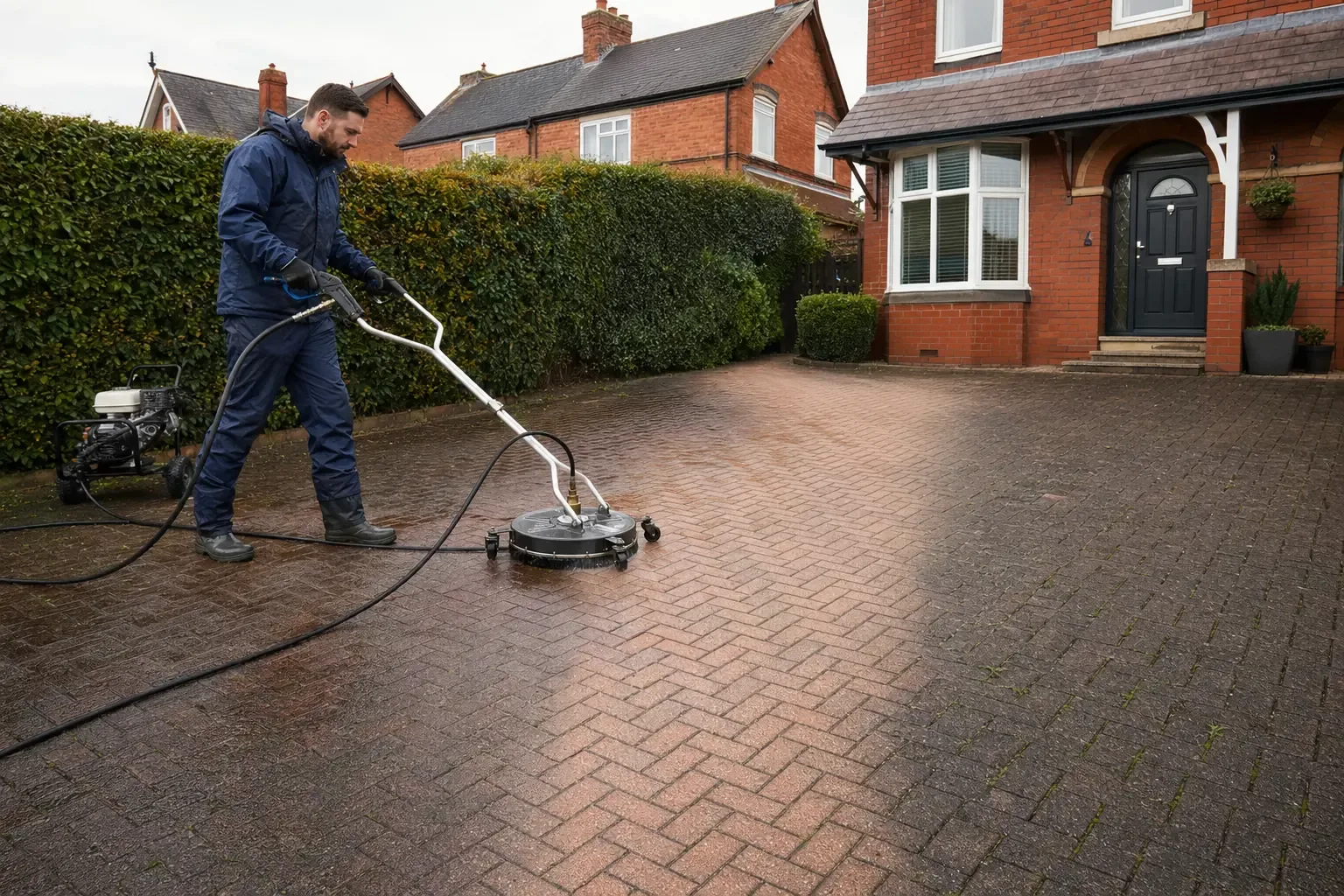
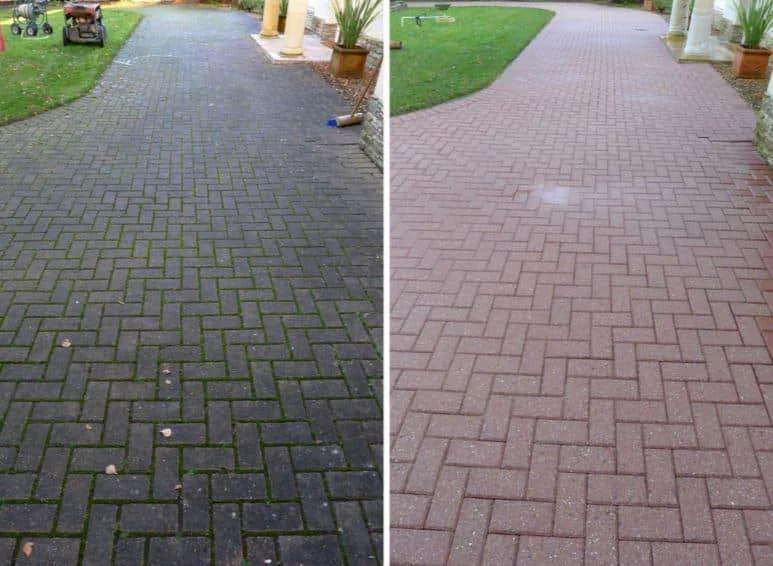
Block paving, concrete, tarmac and imprinted concrete brought back to the colour you forgot it was.
Driveways details
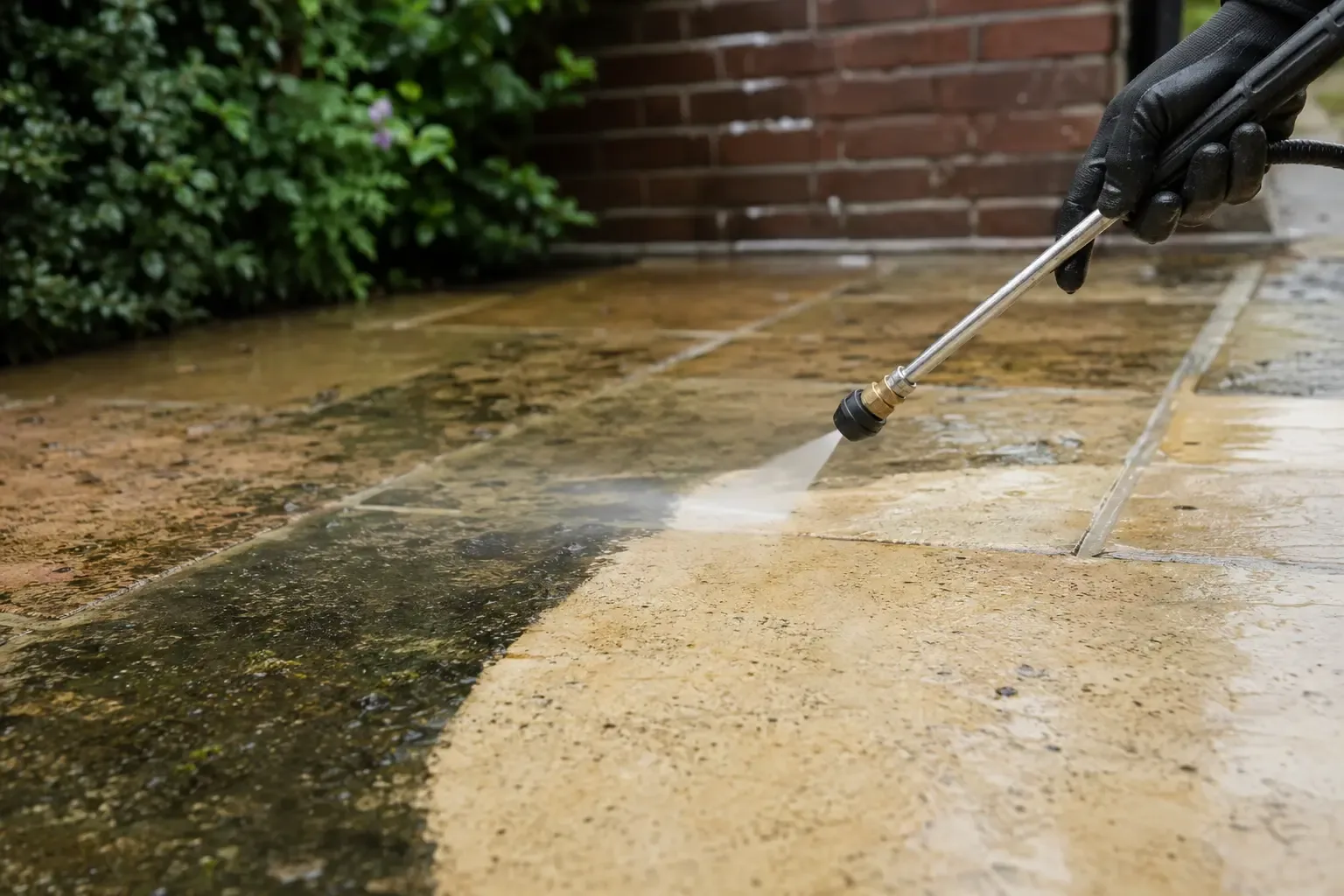
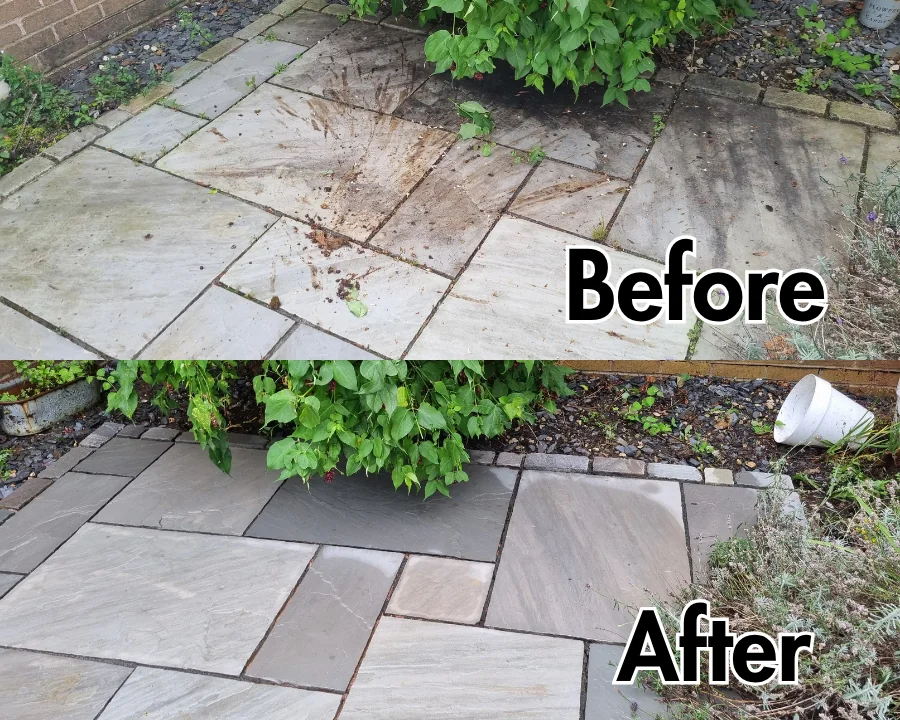
Sandstone, porcelain, limestone and concrete slabs cleaned without stripping the surface or blowing the joints.
Patios details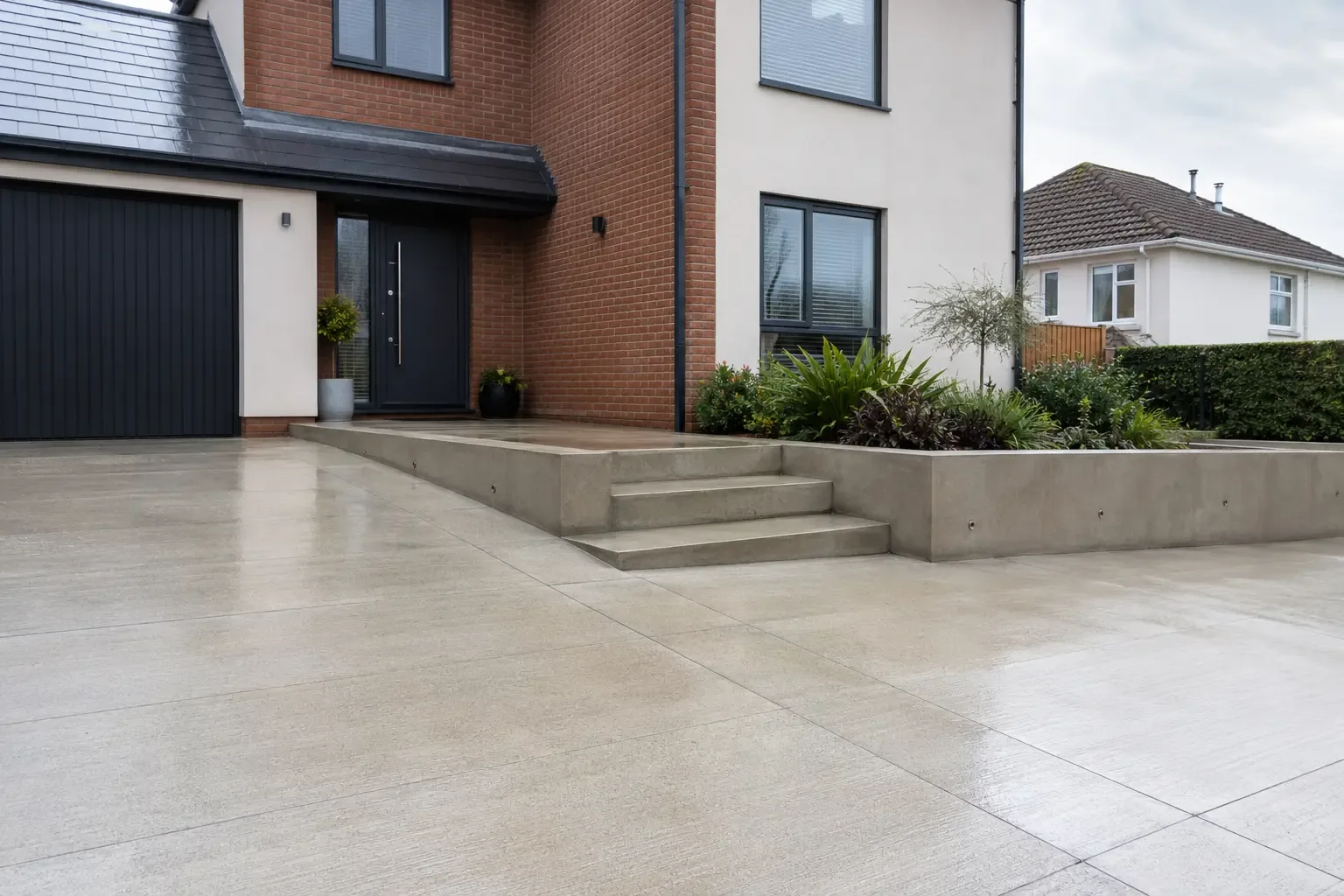
Paths, steps, garage floors and hardstanding cleaned evenly, with no lance stripes left behind.
Concrete details
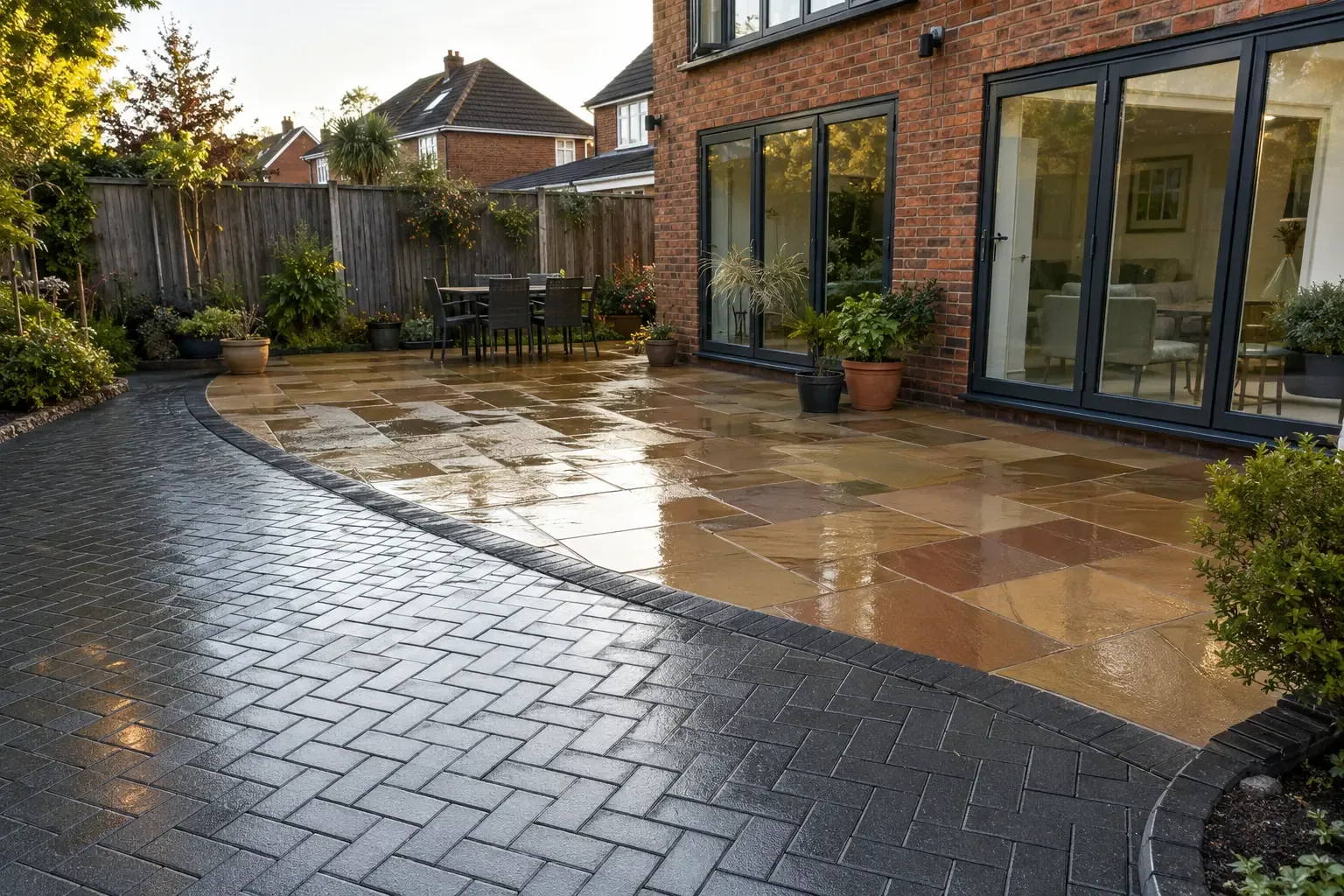
Cleaned, re-sanded with kiln dried sand, then sealed so the weeds and the black spot stay gone for longer.
Sealing details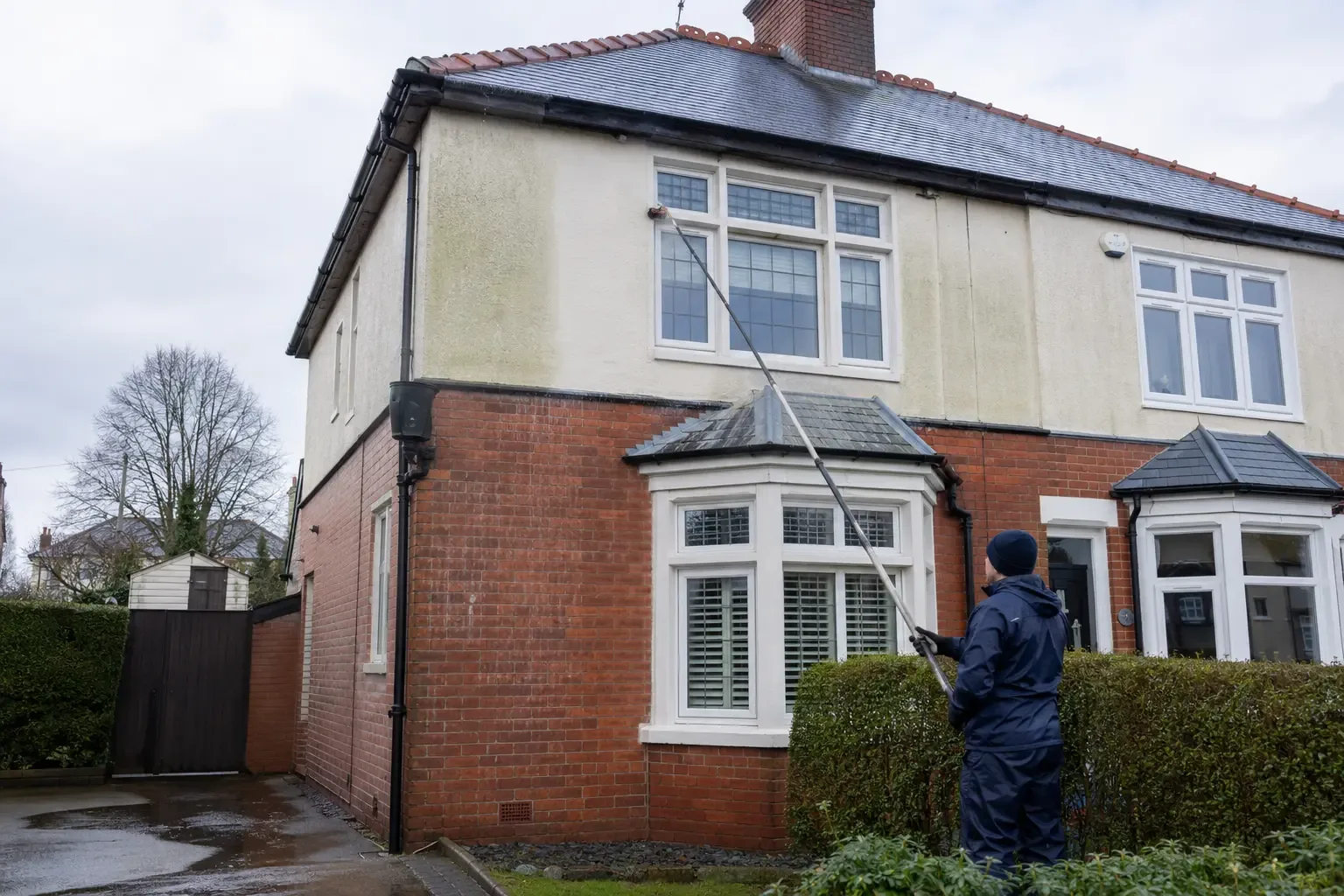
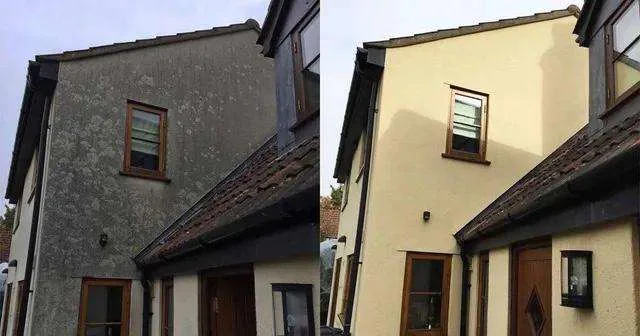
A gentle soft wash for the whole exterior, lifting green algae off render, pebbledash and brick without forcing water into it.
House Washing details
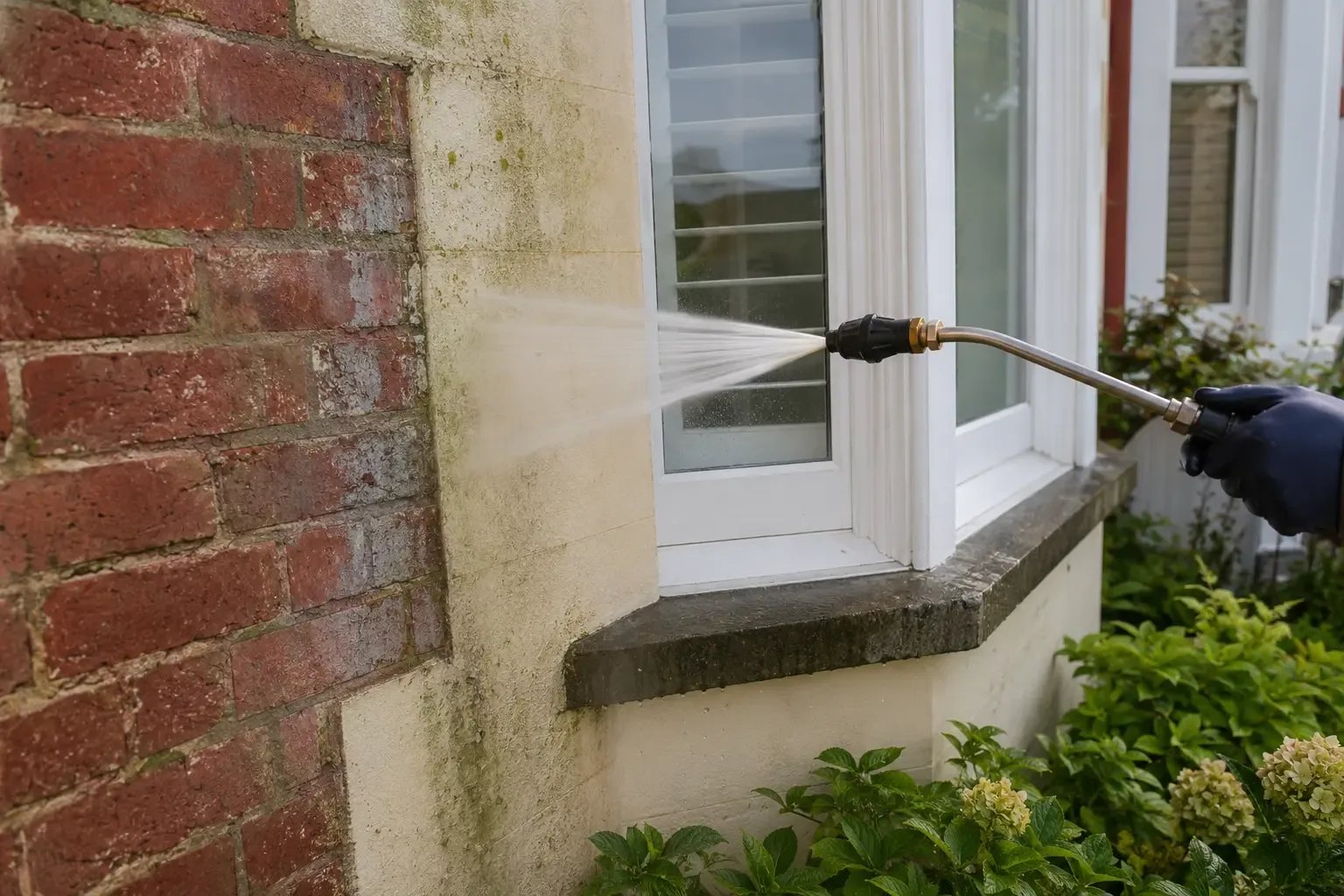
K Rend, silicone and monocouche render cleaned by soft wash and biocide, never by a pressure lance.
Render details
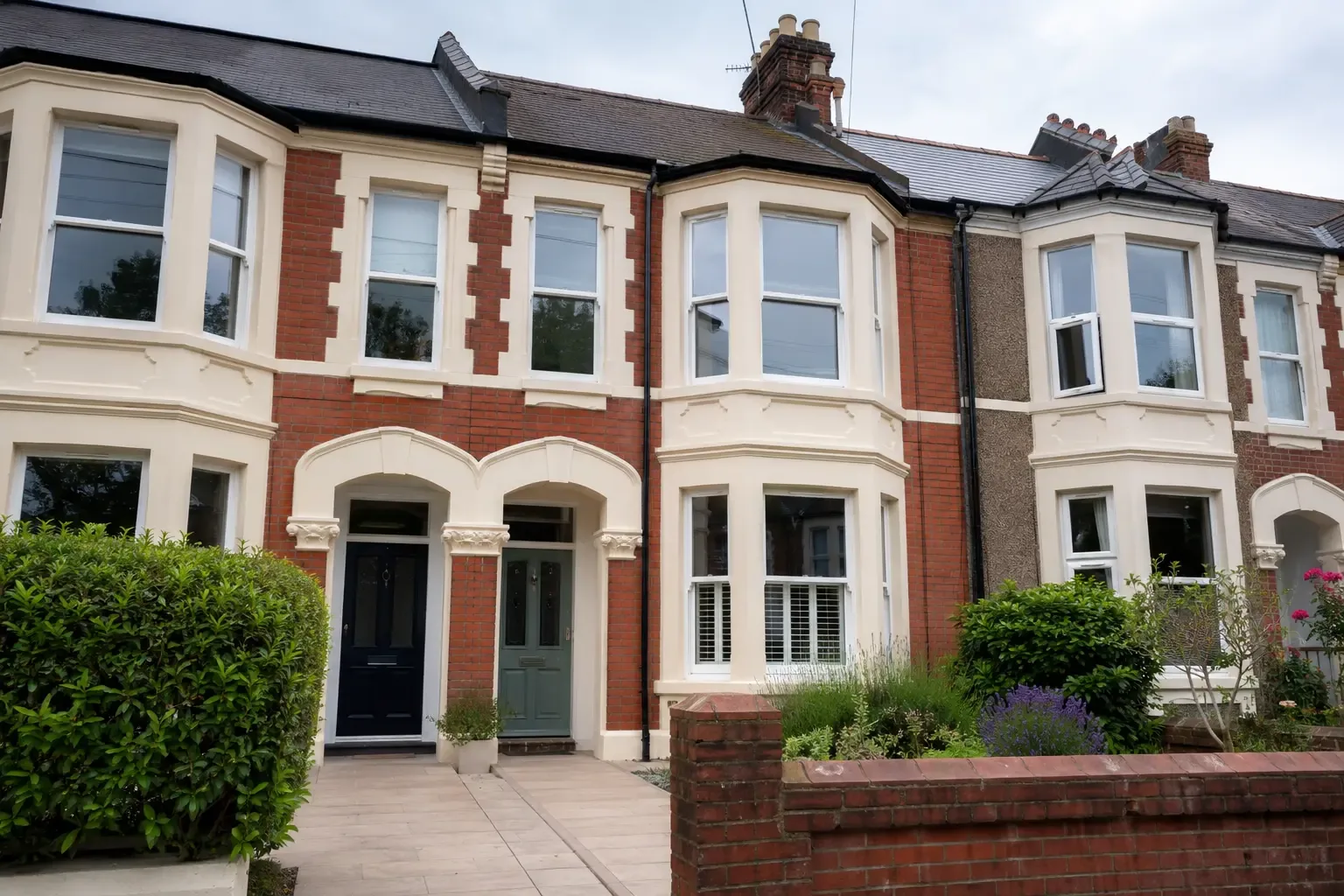
Low pressure, high chemistry. The right method for anything a pressure washer would damage.
Soft Wash details
Moss scraped, the roof soft washed, and the gutters cleared of everything that came down with it.
Roofs details
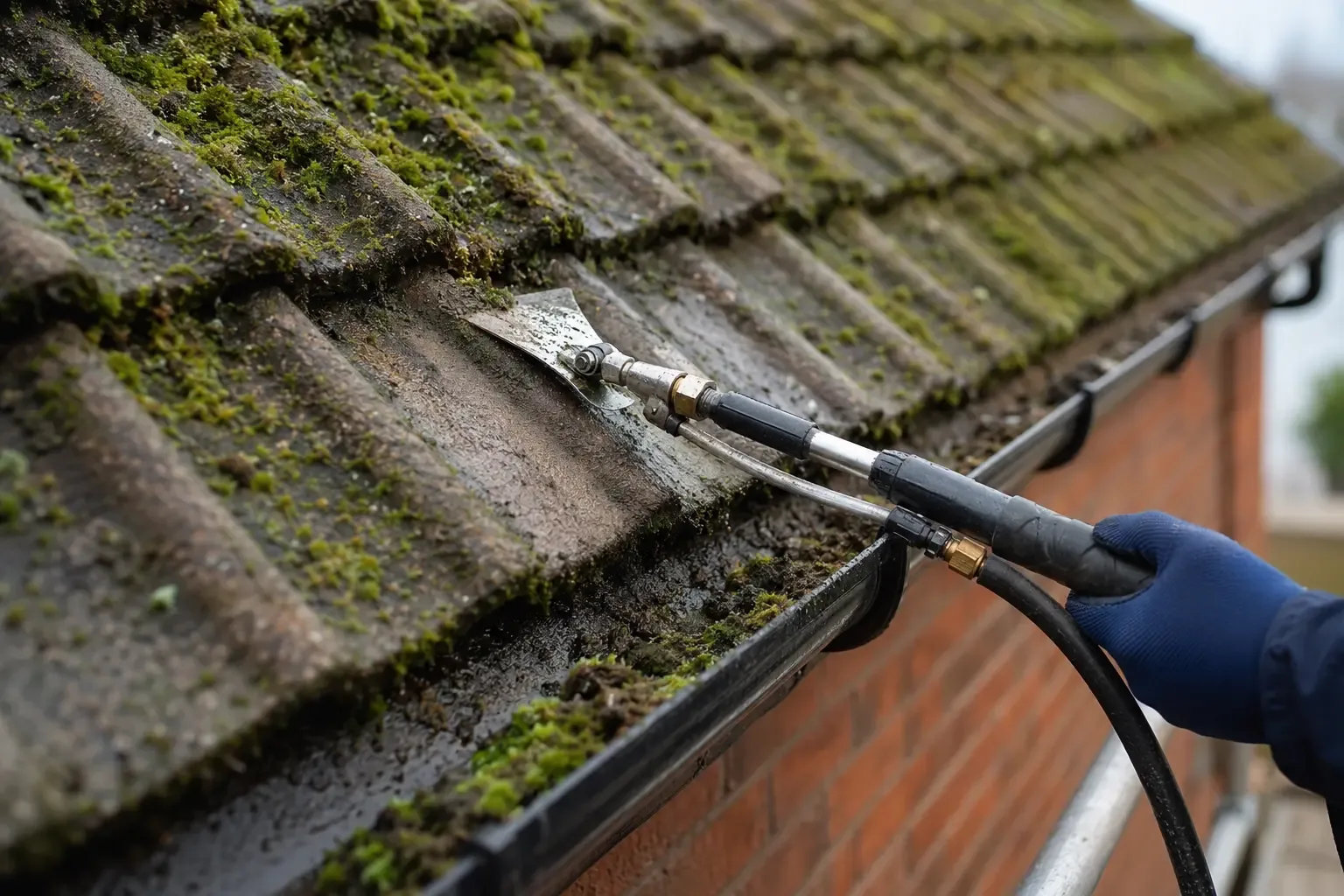
Taking the moss off is the easy part. Treating what it grew from is why it stays off.
Moss details
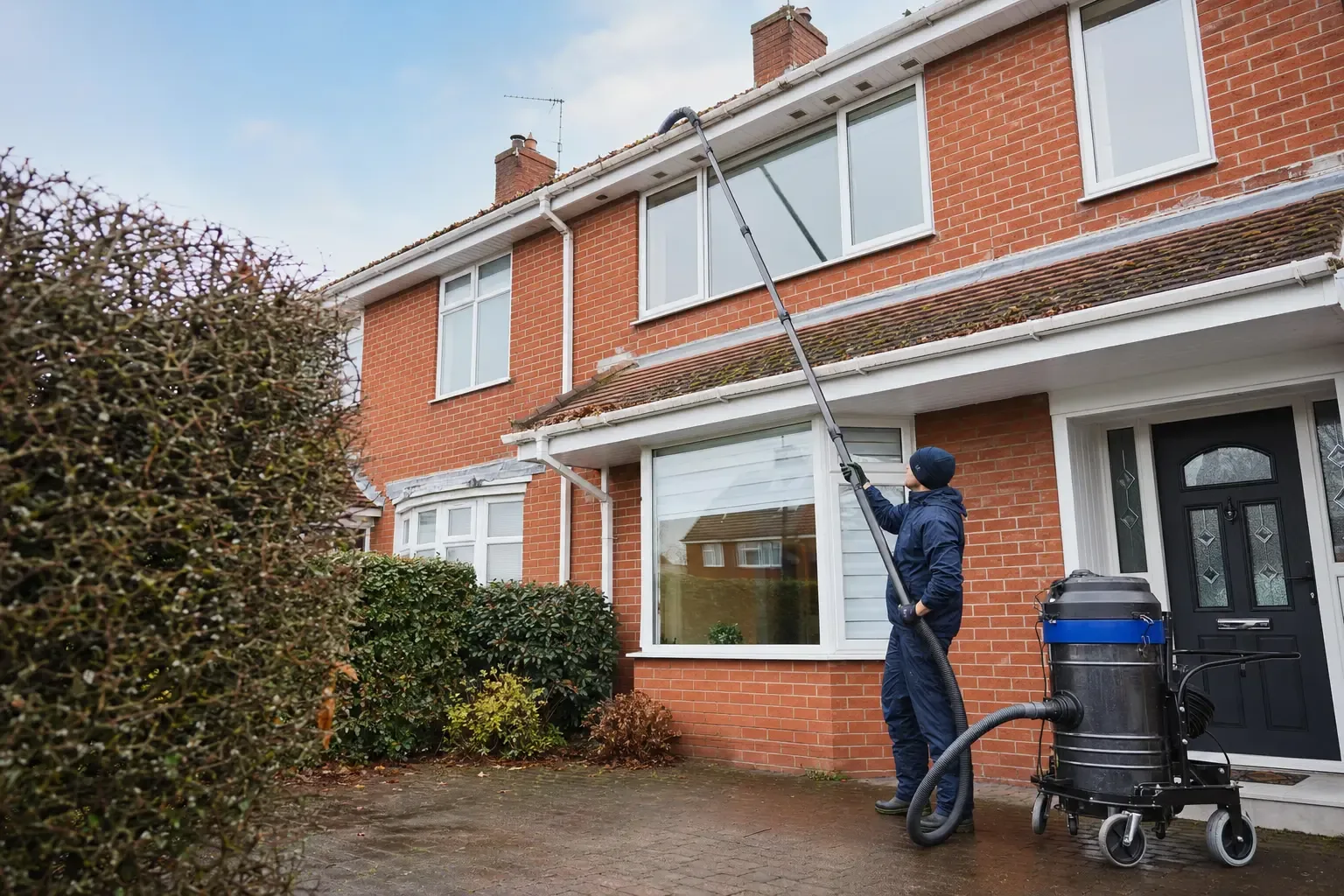
Cleared from the ground by vacuum, with camera footage before and after so you can see it is actually empty.
Gutters details
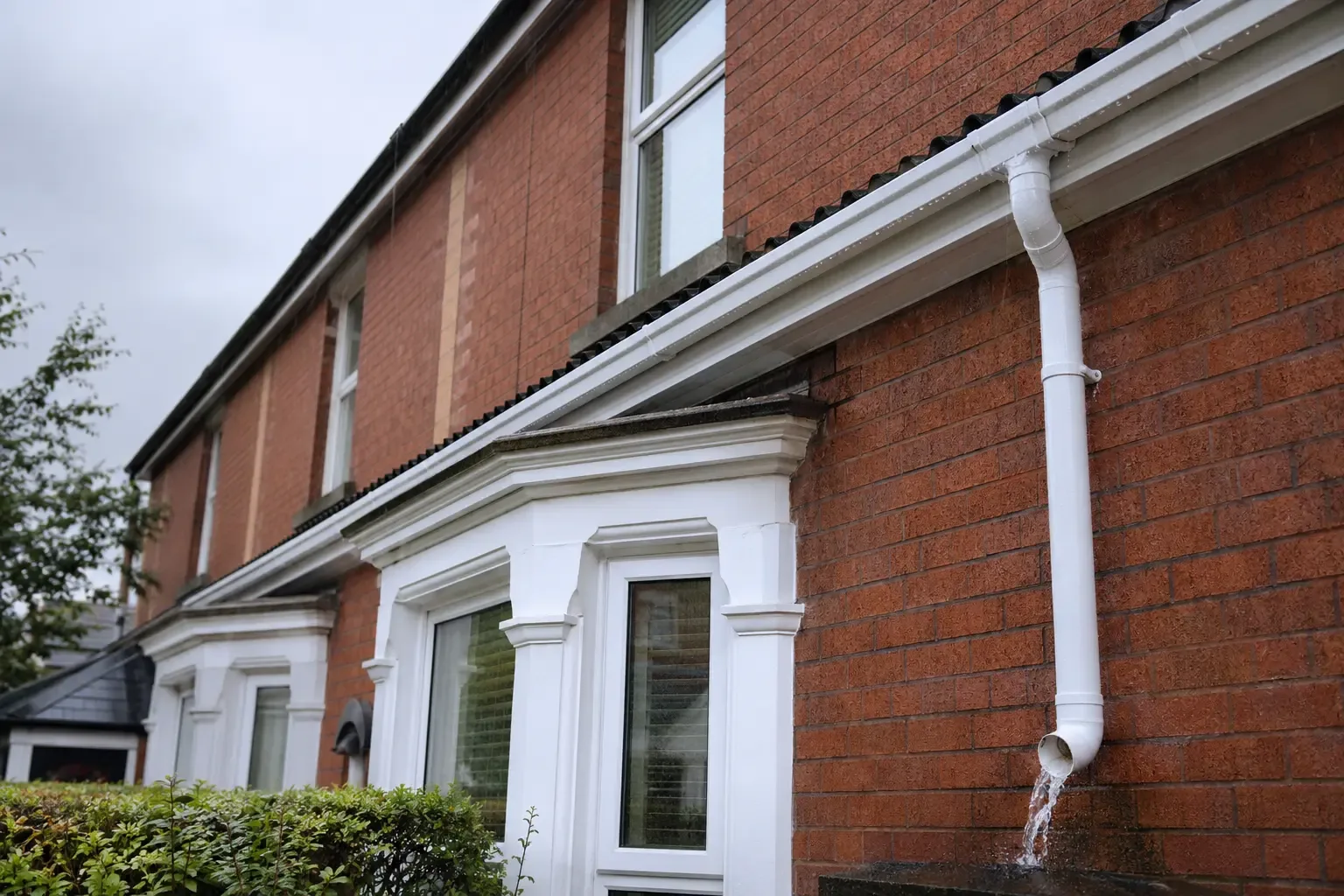
White plastic that has gone green and grey, brought back without scratching or bleaching it.
Fascias details
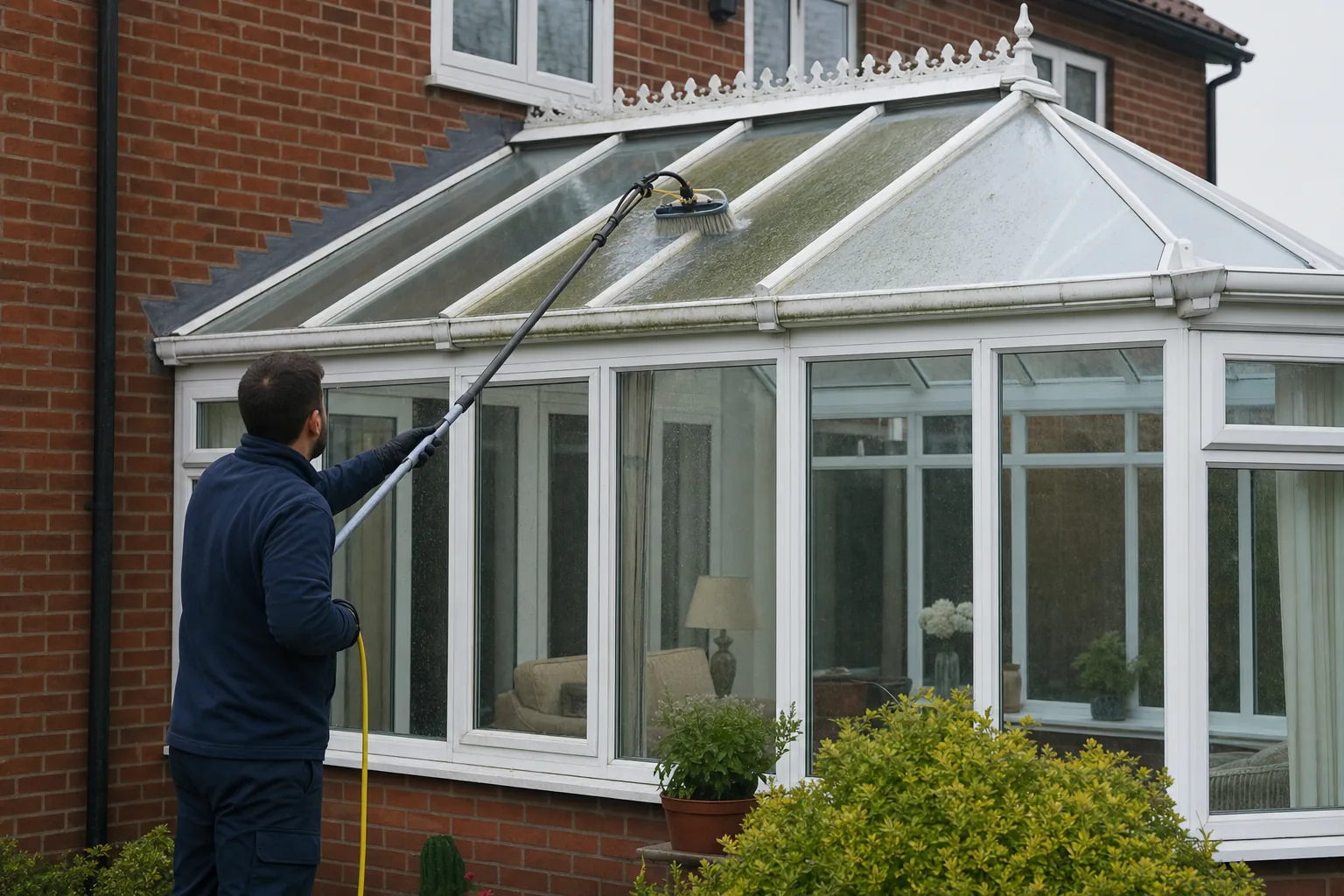
Glass, polycarbonate, bars and finials cleaned from the ground, so nobody stands on your roof.
Conservatories details
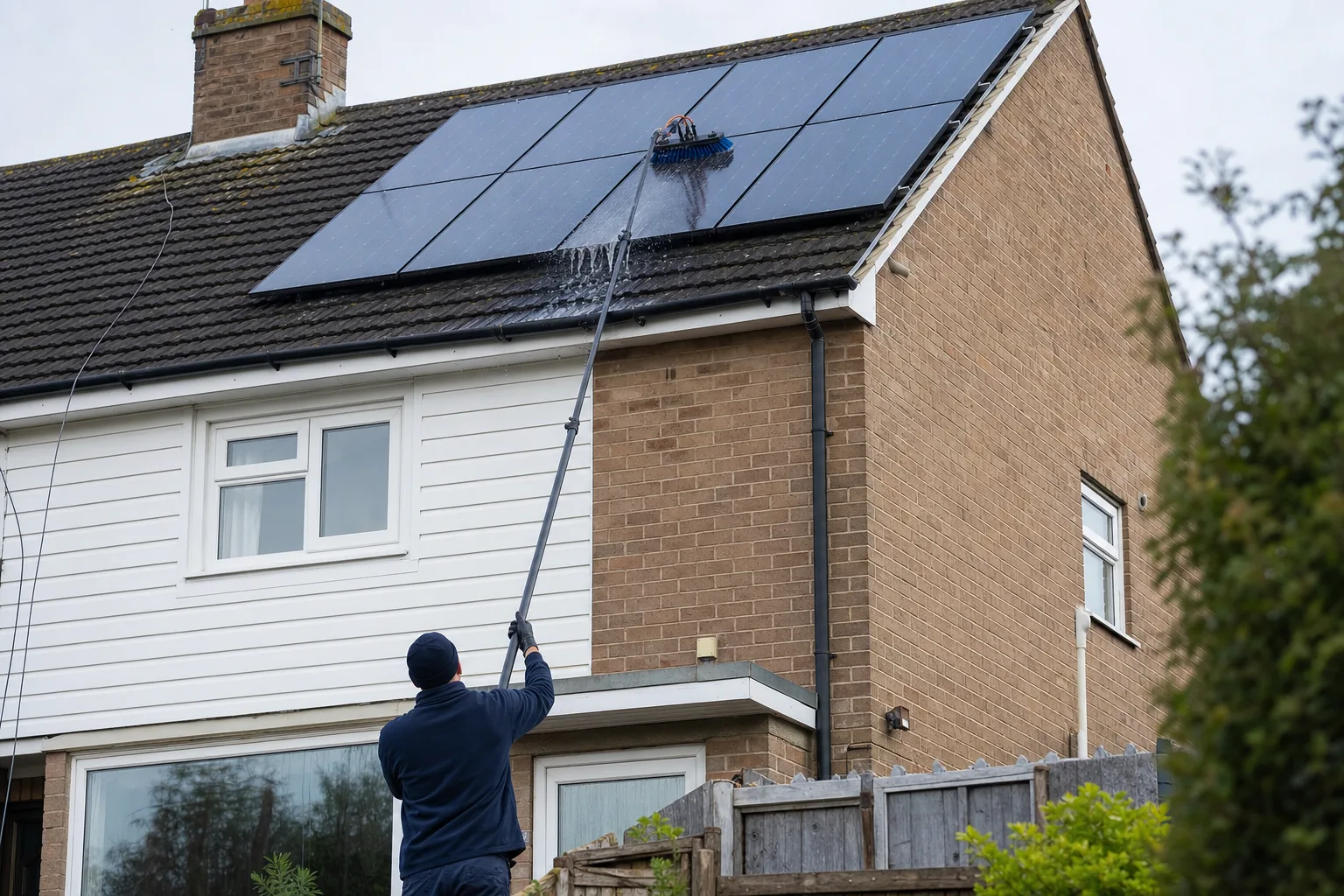
Dirty panels quietly cost you output. Pure water, soft brush, from the ground, no scratching.
Solar details
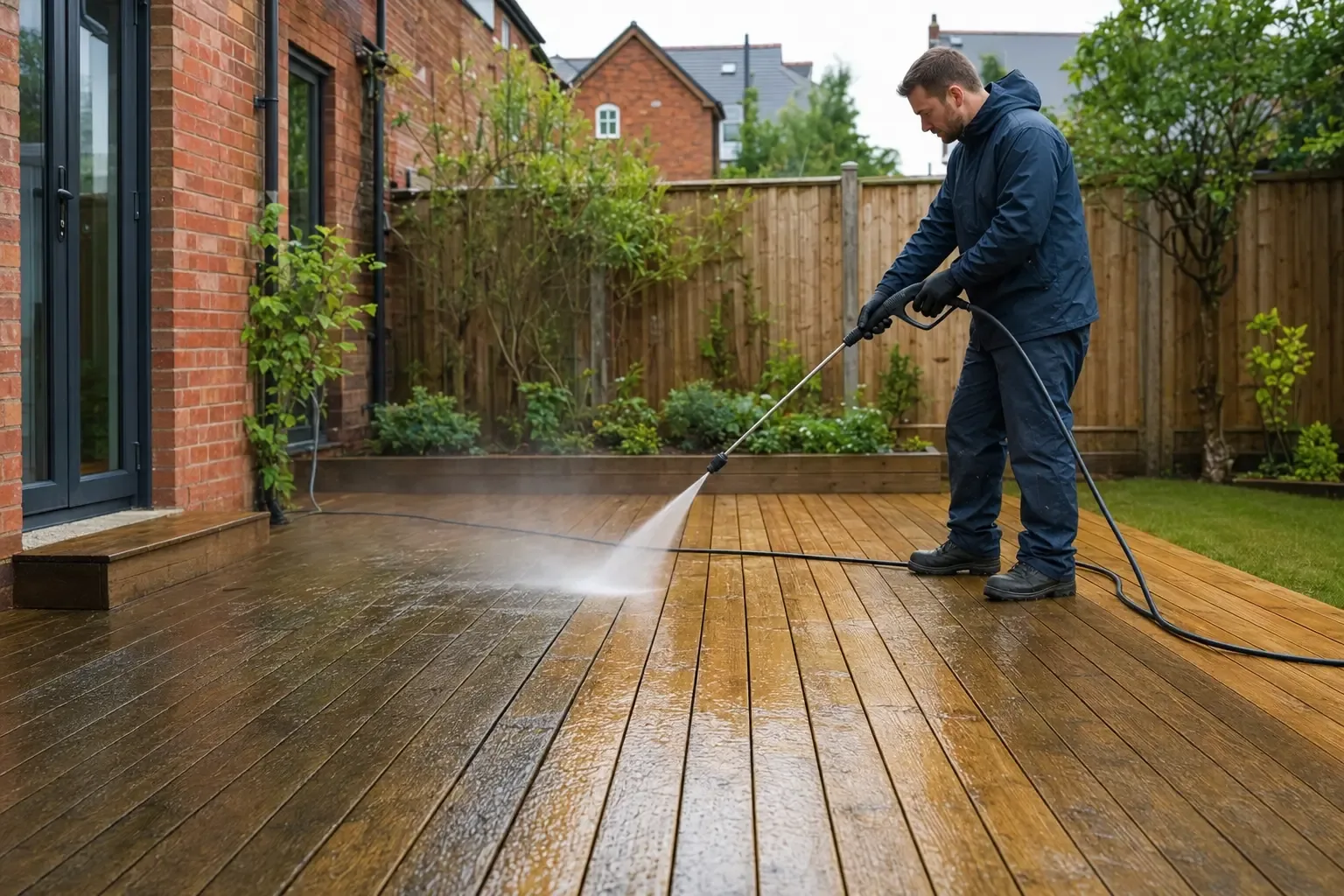
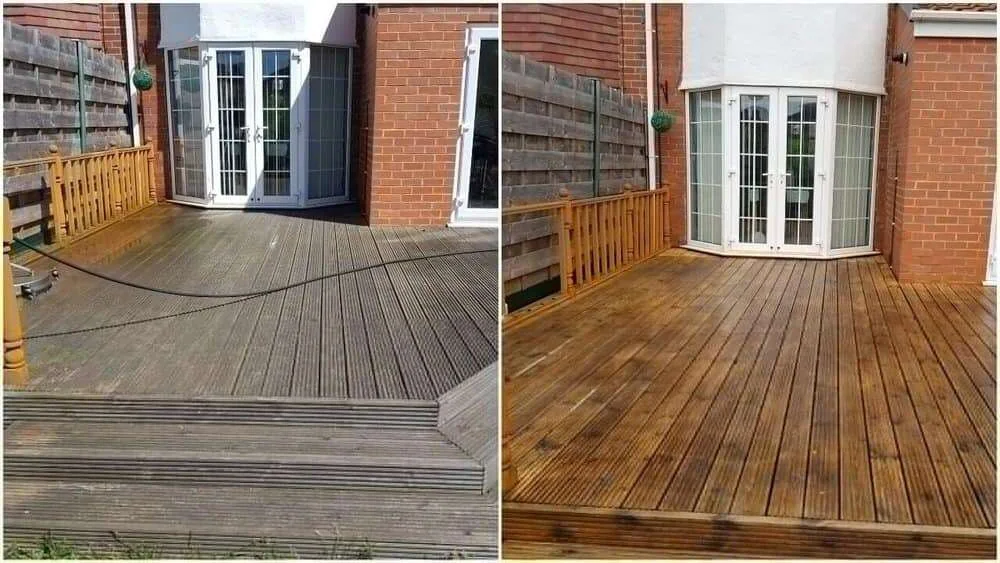
Timber and composite decking, and the fence behind it, cleaned at a pressure that will not raise the grain.
Decking details
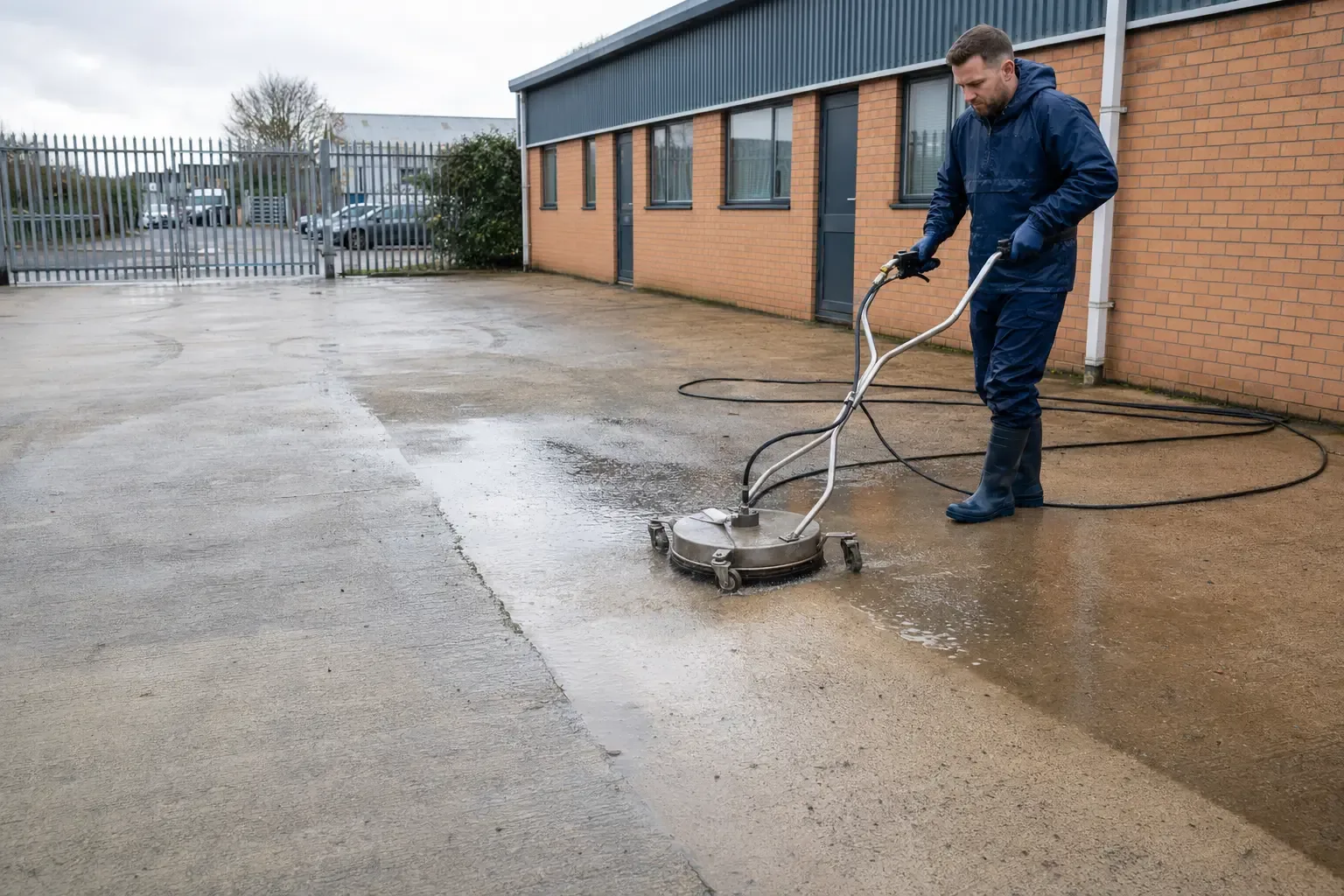
Car parks, forecourts, shop fronts and walkways, cleaned out of hours so trade is not interrupted.
Commercial details
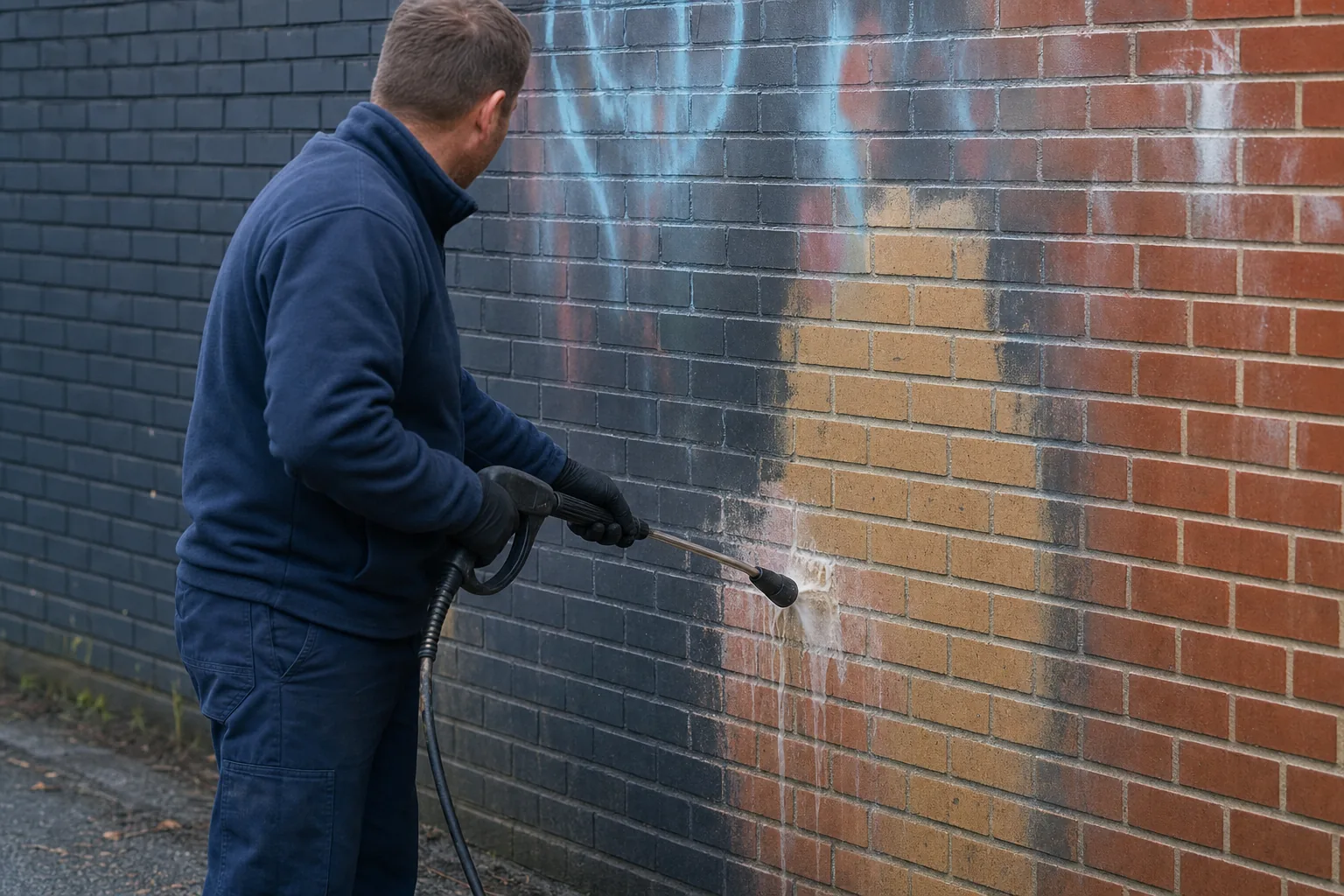
Removed from brick, render, stone and signage, with an anti graffiti coating so the next one wipes off.
Graffiti details
Soot, algae and mortar smears off brickwork without opening up the face of the brick or scouring the pointing.
Brickwork details
The white bloom on new brickwork and block paving, treated at the surface and traced back to the water bringing it out.
Efflorescence details
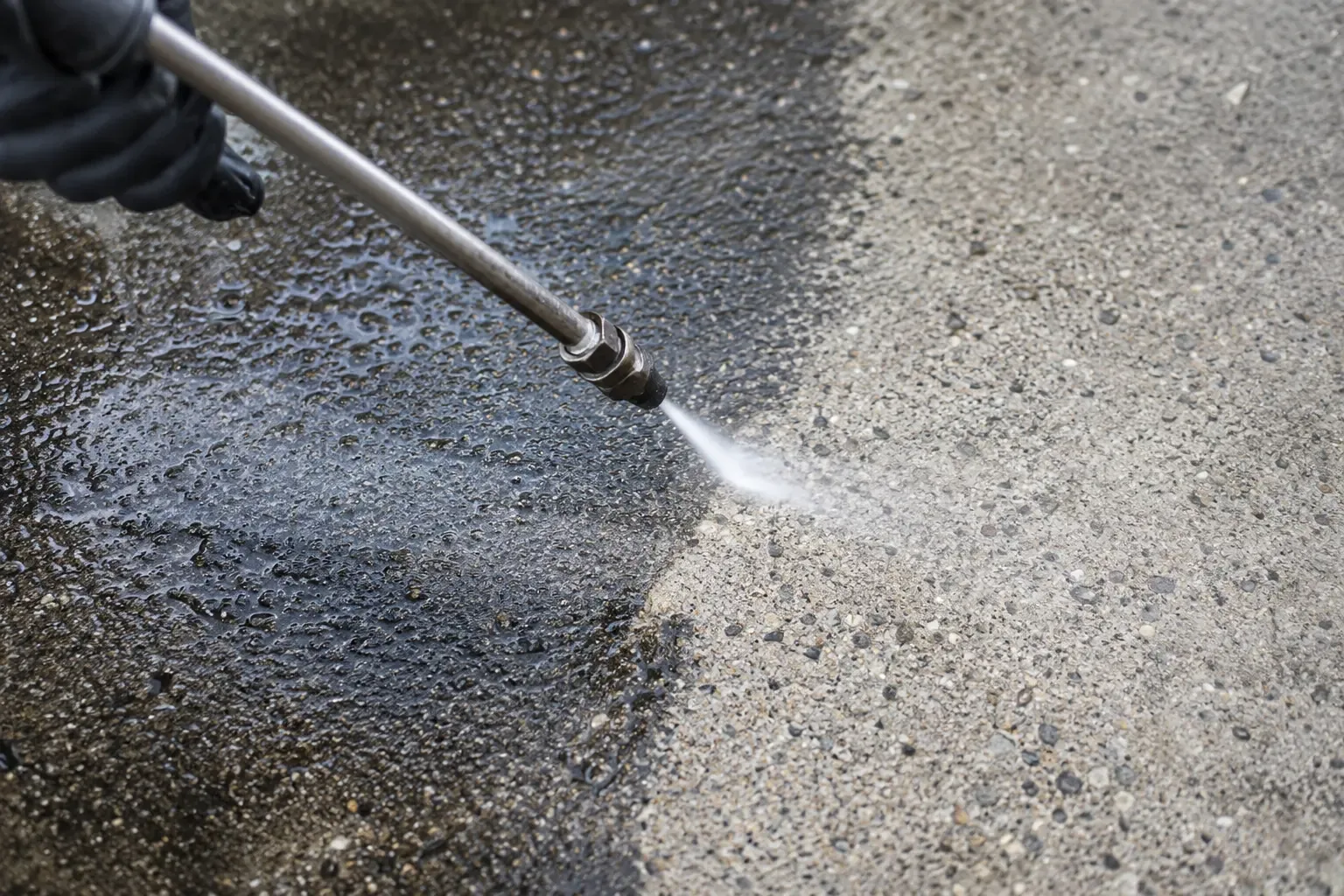
Engine oil drawn back out of concrete and block paving, instead of being smeared into a wider grey patch.
Oil stains details
Orange fertiliser spotting, furniture marks and iron bleed taken off paving without leaving a pale patch behind.
Rust stains details
Sandstone, limestone and York stone cleaned at a pressure and chemistry the particular stone can actually take.
Stone details
Profiled steel, composite panel and rendered elevations washed down from proper access, usually outside trading hours.
Cladding details
Yards, loading bays, service roads and elevations, cleaned around your shifts rather than across them.
Warehouses details
Decks, bays, stairwells and lobbies cleaned with the run off controlled rather than pushed towards the nearest gully.
Car parks details
Steam lifted rather than scraped, so the gum goes and the paving underneath is not left pitted with pale marks.
Gum removal details
Roofing splashes and tracked tar softened and drawn off, rather than smeared further into the surface.
Bitumen details
Wetpour, rubber matting and equipment cleaned with products safe for the children who use it the next morning.
Playgrounds details
Beer gardens, frontages and bin areas cleaned early enough that the first customers never see it happening.
Pubs detailsA sloping approach, close planting or a shaded roof changes how a job should be approached. We work from a surface-and-access plan, protecting drainage routes and selecting a method that removes the growth without treating the property like an open concrete yard.
Cardiff sits at sea level and dries out between showers. Pontypridd sits twelve miles up the A470 where the Rhondda meets the Taff, hemmed in by wooded slopes, and takes more rain across the year than the coast does. Cold air settles on the valley floor overnight, mist hangs over Ynysangharad Park until mid-morning, and the shade off Craig yr Hesg and the Graigwen hillside keeps north-facing walls damp for weeks at a time.
Growth then arrives in a predictable order. Green algae film first, on shaded render and on concrete paths. Then moss, packing into block paving joints and into the bottom courses of slate roofs where water sits longest. Then lichen, the flat grey and orange crusts that bond into Pennant sandstone and old slate and will not shift under a jet. Three different problems, three different methods. Treating them all the same is how people damage their own property.
Ponty runs in clear bands, and the band tells you most of the job before we arrive.
The coal-era terraces on the Graig, Trallwn, Coedpenmaen, Cilfynydd and up Graigwen are 1870s to 1910s stone, rendered or pebbledashed at some point since, with Welsh slate roofs and steep concrete front paths. Rhydyfelin, Hawthorn and Glyncoch are mostly interwar and post-war housing with pebbledash and concrete interlocking tiles. Church Village, Llantwit Fardre, Tonteg and Beddau are newer estates with block paving drives, uPVC fascias and large rear patios. Treforest holds a lot of rental and student property around the university campus, where exteriors often go years without anyone touching them.
Welsh slate is dense and sheds water, so what you get on a Pontypridd slate roof is lichen crusting the face and moss packed into the laps low down the pitch. The slate itself usually outlasts the nails holding it, so on a 120-year-old terrace a fair number of slates are sitting on friction rather than on fixings. A pressure lance strips the face and lifts them, so we do not pressure wash slate. Moss comes off mechanically, the gutters get cleared of everything that falls, and what is left is treated with a biocide that carries on working after we leave.
Concrete interlocking tiles, standard on almost everything built here after the war, are porous. Moss grips into the granular face and holds water against the tile, which speeds up frost damage over a valley winter. Same approach: lift it off by hand, then soft wash. Jet washing a concrete tile roof blasts that granular face off and takes years off the covering. It is the most expensive mistake we get called out to look at.
House washing here is soft washing. Low pressure, the right chemistry, and time. On a Pontypridd terrace that normally means a green cast across the shaded half of the front elevation and black streaking under the sills. Pressure forces water behind render, takes pebbledash off in patches, and soaks lime mortar that was never built to hold it. We apply a biocide at low pressure, let it dwell, rinse gently, and the growth carries on dying back for weeks afterwards. Pennant sandstone gets the same treatment, because the lichen is bonded into the face of the stone rather than sitting on top of it.
A large share of Pontypridd properties are approached up steps. Front paths on the Graig and Graigwen climb at gradients that would count as a driveway anywhere else, and a winter of algae on a wet concrete step is genuinely dangerous. It is the most common reason people ring us from up here, and it is not a cosmetic job. We clean the steps and the path, then treat them so the film takes longer to come back. If an older relative lives on a stepped terrace, get it done before the first frost rather than after it.
The valley sides are wooded and it all ends up in your guttering. Terraces backing onto the slopes above Trallwn, Cilfynydd and Ynysybwl fill with leaf litter, washed-down roof moss and slate grit, then overflow down the wall, and in a climate this wet that stains render fast. We clear gutters with a ground-based vacuum system where there is nowhere safe to foot a ladder, which is most Ponty terraces, and wash the fascias, soffits and downpipes at the same time.
These streets were laid out before cars and it shows. We work off long hose runs from the van, so it can sit further down the hill or round the corner and the job still gets done. Where there is no usable outside tap we bring our own water. Rear lanes, shared entries and split-level gardens are normal here, and plenty of Ponty jobs are reached on foot with the kit carried up. Tell us about permit bays or parking restrictions when you book, and mention Sardis Road match days.
We run out of a unit in Cardiff in Cardiff, which is roughly 25 to 35 minutes up the A470 depending on how Upper Boat is behaving. Ponty is a regular route for us and we cover the surrounding Rhondda Cynon Taf area on the same trip.
Call 07576 128903 or email Liamdunn2406@outlook.com. Someone answers Monday to Sunday, 7am to 9.30pm, and you will usually have a figure the same day. Quotes are free and there is no sit-down sales visit. We have been cleaning exteriors across Cardiff and the valleys since 2019, and our Google rating is 5.0 from five reviews, every one of them five stars.
There is no single price, because there is no standard Pontypridd property. A front path and a flight of steps on a terrace is a small job. A block paved driveway in Church Village, cleaned and re-sanded, is a bigger one. A full slate roof on the Graig is bigger again. The figure moves with the area in square metres, how thick the growth is, whether we can get the van anywhere near you, how far the water has to be run, and whether you want sealing afterwards. Send photos and the address and we will give you a real number, free, usually the same day.
Most domestic jobs in Pontypridd are finished inside a day. A front path, steps and a small forecourt is often 60 to 90 minutes. A driveway and rear patio together tends to run from half a day to a full day. Roof work takes longer, because the moss is removed by hand before anything is treated, and a terraced slate roof can be a full day on its own. Weather matters more up the valley than it does in Cardiff, since soft washing needs a dry window for the biocide to dwell, so we may move you if the forecast turns.
It can, if the wrong method is used, which is exactly why we do not pressure wash everything. Welsh slate, concrete roof tiles, painted render, pebbledash, Pennant sandstone and old lime mortar all get soft washed at low pressure with the chemistry doing the work. Concrete, paving flags and block paving take a rotary flat surface cleaner, which spreads the pressure evenly instead of cutting stripes into the surface. Tarmac, Indian sandstone and porous flags get reduced pressure so the surface is not opened up. We check pointing, slate condition and render before we start and tell you if something is already failing.
Longer than most people expect, but not as long as the same job would last in Cardiff. In our experience a soft washed roof or render elevation in Pontypridd stays clean for two to four years, because the biocide carries on killing regrowth after we have left. Paving and steps on the shaded, north-facing side of a valley street will start to green again inside a year or two, quicker if there are trees overhead. Sealing block paving stretches it further. The honest answer for Ponty is that a light annual treatment on the shaded surfaces beats a heavy clean every five years.
Not for most jobs. We need access to the areas being cleaned, an outside tap if you have one, and somewhere reasonable for the van. If you are out, leave a side gate unlocked or a key with a neighbour and we will send photos when it is finished. For roof and gutter work we would rather you were around at the start, so we can point out anything we have spotted from the ladder, and at the end so you can look at the result before we load up. On a terrace it also helps if next door knows we are coming.
Plants are watered down before we start and covered where they sit close to the work, then rinsed again afterwards. That dilution is what protects them. Biocides for soft washing are applied at low pressure and kept controlled, so there is no drift onto beds or ponds. Drainage matters more in Pontypridd than in most places, because everything runs downhill quickly and gardens often sit above someone else's. We check where your gullies actually go, keep runoff out of the property below you, and clear the silt and moss out of those gullies before we leave rather than letting it set and block them.
We work all year, Monday to Sunday, 7am to 9.30pm. Late spring through to early autumn is the easiest window for soft washing, because the chemistry needs a few dry hours and warmth speeds it up. Autumn is the practical time for gutters, once the trees on the valley sides have dropped. Winter is the right time for steps and front paths, because that is when algae makes them slippery and when people fall. Do not wait for a perfect settled week before booking. In this valley you will be waiting a long time.
Yes, and it is most of what we do up here. We run long hose lines from the van, so it does not need to be directly outside your door, which matters around the Graig, Trallwn, Coedpenmaen and Graigwen where there is often nowhere to stop at all. We carry our own water for properties with no usable outside tap. Steep steps, rear lanes and split-level gardens are normal Pontypridd jobs, and we price them on what they genuinely take rather than on a flat rate. Tell us about any parking restrictions when you book and we will plan the visit around them.
Great company come out gave a good price and done the job straight away highly reccomend chris great guy

Very reliable, showed up on time to give a quote, and started work straight away! Wanted the back done after the front. Stunning work on my front driveway and porch with the power washer, simply removed all the algae on my walls too that the pressure washer team we had last year couldn't do.

Hard working and reliable pressure washing company! Completely transformed my paving stones and patio

Very happy with the service provided from pressure washing Cardiff, also very friendly and professional many thanks, Simon
What a good quality service have provided done a superb job of pressure washing my driveway + house. Many thanks, Shane
My husband and I are very happy with the work done at our house, to our gutters, our pool area and other concrete areas around our house. You were a pleasure to deal with and I will definitely use your services again!
Pressure Washing Cardiff did a fabulous job: our concrete driveway and retaining walls look like new! What a delight to have a tradesman visit who takes pride in his work and does a thorough job.
These guys are experts and were able to give us a great quote for a complete exterior makeover. Power washing, gutter cleaning, window cleaning as well as pressure washing for our patio and driveway. Thank you so much!!
Send a photo and a rough size and we will come back with a price, usually the same day.
20% off enquiries via WhatsApp